
A Watering Place in Kis Bagh — História e Análise
In the delicate interplay of brushstrokes and color, transcendent moments arise, inviting us to linger in the space between reality and memory. Focus on the lush greenery that wraps around the tranquil watering place. The verdant tones blend harmoniously, each stroke revealing a depth that breathes life into the scene. Notice how the gentle ripples on the water's surface reflect the sky, creating a dialogue between earth and ether.
The varied shades of green draw your gaze to both the foreground and the background, while soft, warm light bathes the entire composition, invoking a serene calm that feels almost sacred. Hidden within this harmony lies a tension between nature and human presence. The figures, though small and seemingly insignificant, stand as symbols of our connection to the earth. Their quiet occupation of the watering place hints at a timeless ritual, yet the viewer senses a fleetingness, a reminder of our own transient existence.
The intentional placement of the animals and the figures invites reflection on the balance between the serenity of nature and the necessity of daily life, evoking a longing for a simpler, purer connection with the world around us. In 1883, Theodor Von Hörmann created this enchanting piece during his time in Vienna, a period marked by burgeoning artistic movements that celebrated the beauty of the natural world. As modernism began to take hold, the artist sought to capture a moment untouched by the chaos of industrialization, reflecting both personal and societal desires for transcendence amidst change.
Mais obras de Theodor Von Hörmann
Ver tudo →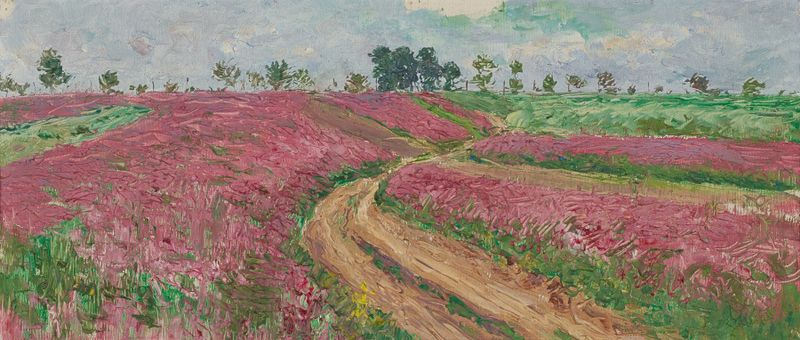
Esparsettenfeld Bei Znaim Ii
Theodor Von Hörmann

Blick Auf Paris
Theodor Von Hörmann

Auf Der Ligethi Puszta
Theodor Von Hörmann
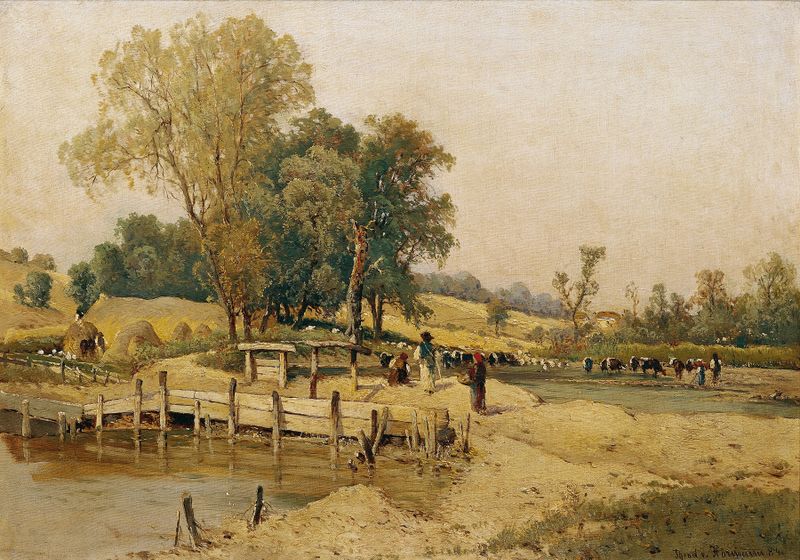
Ungarische Landschaft Mit Viehtränke
Theodor Von Hörmann
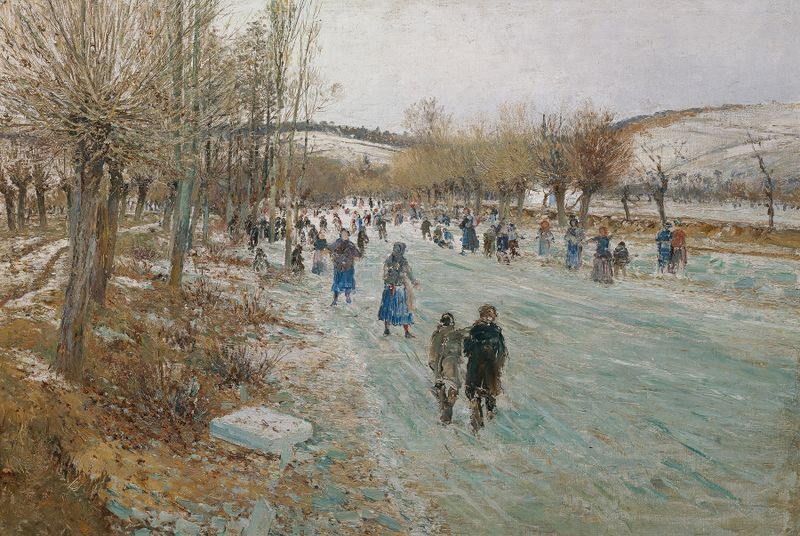
Eisläufer Auf Der Thaya Bei Lundenburg
Theodor Von Hörmann
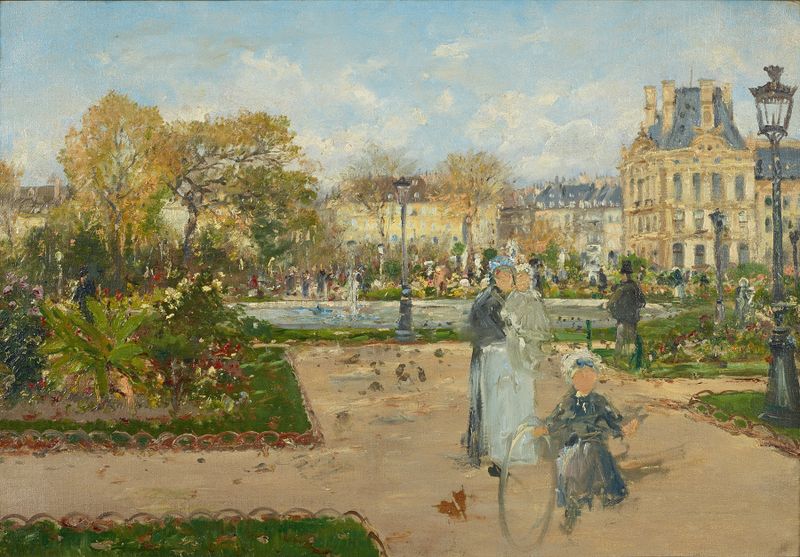
In Den Tuilerien
Theodor Von Hörmann

A Winter Day, Scene near St. Pölten
Theodor Von Hörmann

Znaim Im Schnee Ii
Theodor Von Hörmann
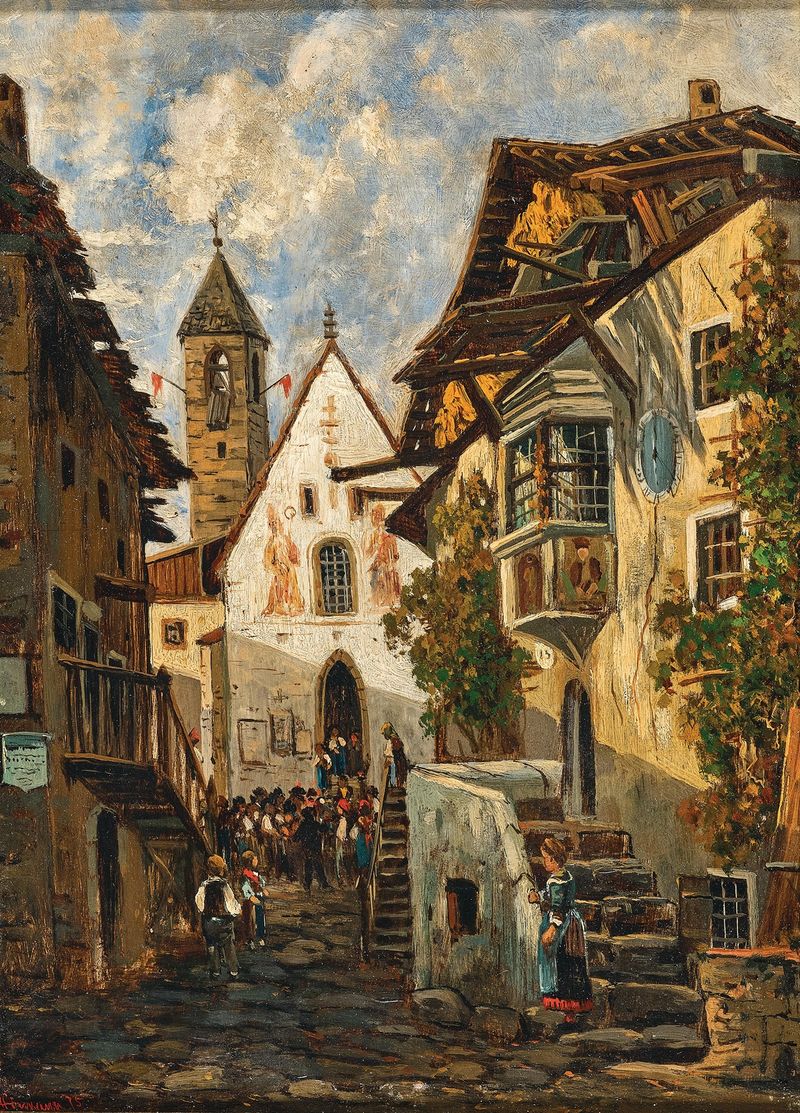
Dorfmotiv von Albeins bei Brixen, Tirol
Theodor Von Hörmann

Ungarische Landschaft
Theodor Von Hörmann





