An English Sloop Becalmed near the Shore — História e Análise
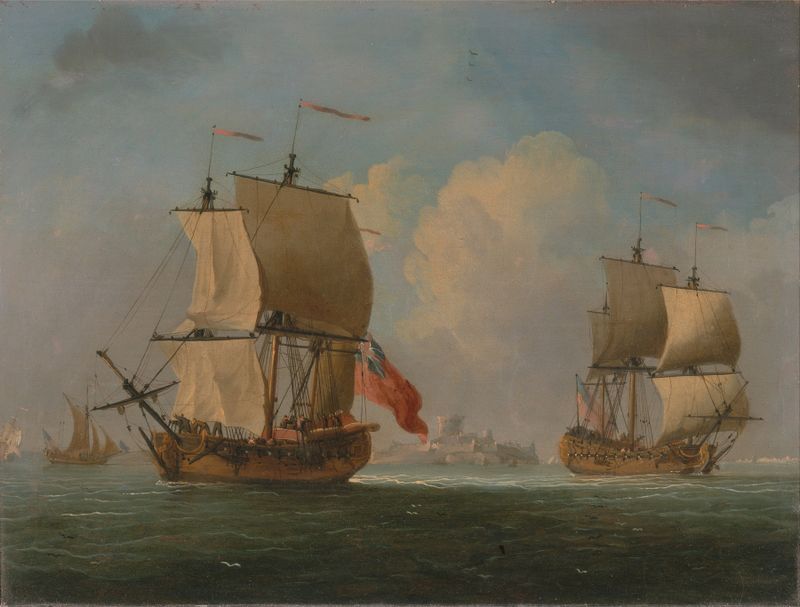
When did color learn to lie? In the vast expanse of this painting, a solitary sloop drifts, caught in a tranquil yet suffocating stillness that speaks of isolation rather than peace. The hues of blue and green blend seamlessly, a deceptive promise of calm that belies the underlying sense of loneliness permeating the scene. Focus on the sailboat, anchored in the center of the canvas. Notice how its white sails are ghostly against the vibrant backdrop; they seem to yearn for movement but are stilled by an invisible force.
The play of light is crucial here, casting soft shadows that evoke a melancholic ambiance while the shore glimmers invitingly, yet remains painfully out of reach. The meticulously rendered waves reflect this dichotomy, with gentle curls of foam hinting at an unfulfilled longing for adventure. Digging deeper, the contrast between the serene water and the sloop's stasis encapsulates a profound emotional tension. The creeping boundaries of the shore suggest both safety and confinement, highlighting the paradox of maritime life—freedom is just a breath away, yet the boat remains bound by fate.
This tension resonates with the viewer, as it reflects the universal experience of yearning and isolation, framed by the beauty of the natural world. Swaine painted this piece during the 18th century, a period marked by burgeoning maritime exploration and growing interest in depicting the intricacies of nature. As a British marine painter, he found himself amidst a cultural shift, where artists began to embrace the emotive power of landscapes and seascapes. Capturing this moment of stillness likely mirrored his own reflections on solitude and the vastness of the world around him.