An Incident on the English Channel — História e Análise
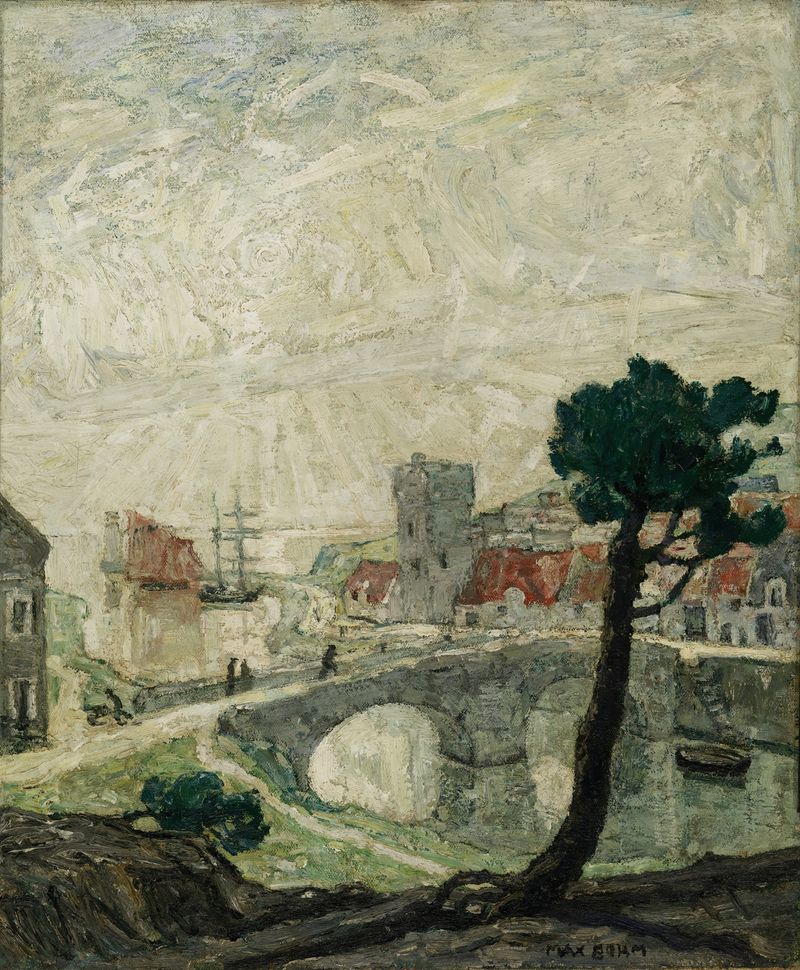
Can paint confess what words never could? In An Incident on the English Channel, vibrant hues collide and whisper secrets beyond the reach of language, inviting the viewer into a realm where color narrates the story. Focus first on the swirling blues and grays that dominate the canvas, radiating from the turbulent waters below. The tumultuous sky, a mixture of rolling clouds and piercing sunlight, provides a stark contrast to the darker elements, suggesting a fleeting moment caught between chaos and clarity. Notice how the brushstrokes convey movement, as if the waves are alive, while the distant ship emerges almost dreamlike, a fragile silhouette amid the drama of nature. Bohm’s use of light serves as a metaphorical bridge between turmoil and resolution.
The interplay of warm and cool tones evokes feelings of both danger and solace, while the interplay of serenity and unrest prompts reflection on life’s unpredictability. The ship itself, a symbol of human endeavor, stands juxtaposed against the overwhelming force of the sea, capturing the tension between mankind’s ambitions and nature’s merciless power. In 1919, shortly after World War I, Max Bohm painted this evocative piece during a time of significant transition in art and society. Emerging from a period of conflict, artists sought to express new emotions and ideas, moving towards modernism.
Bohm, then residing in Germany, was influenced by these shifting perspectives, and An Incident on the English Channel embodies this quest for meaning in the aftermath of turmoil, wrestling with the complexity of human experience.