
Arbres hivernaux — História e Análise
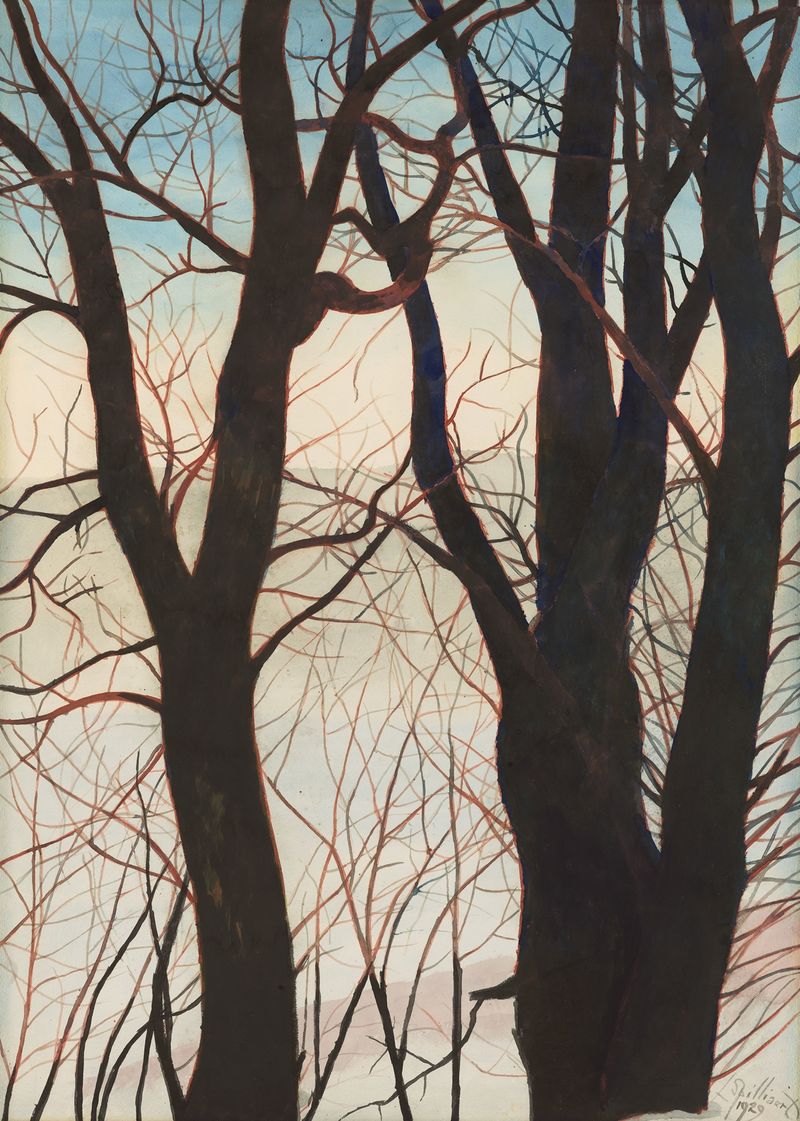
In the stillness of a winter's breath, a sense of emptiness unfurls, revealing the profound solitude of barren trees against a muted sky. Look to the center, where skeletal branches stretch skyward, reaching for an elusive light that feels just out of grasp. The cool palette of blues and grays envelops the scene, imbuing it with a chilling quietude. Each brushstroke speaks of isolation, while the delicate lines of the trees contrast sharply against the soft, unfocused background, pulling the viewer into a world at once stark and contemplative. In this stark landscape, the interplay of darkness and light hints at the duality of despair and hope.
The absence of leaves symbolizes a season of dormancy, yet the upward thrust of the branches suggests resilience in waiting for renewal. This contrast evokes a tension within the observer, oscillating between the beauty of desolation and the longing for rebirth, inviting a deeper reflection on the cyclical nature of existence. Léon Spilliaert painted Arbres hivernaux in 1942, a time marked by war and personal conflict. Living in Belgium during World War II, he faced both artistic and existential challenges, grappling with his identity and the encroaching shadows of history.
This painting emerged from a period of introspection, capturing the stillness and emotional weight of a world caught between loss and the yearning for renewal.
Mais obras de Léon Spilliaert
Ver tudo →
Beachview at night
Léon Spilliaert

Strand met maan
Léon Spilliaert

De zeedijk te Oostende van op het staketsel gezien
Léon Spilliaert
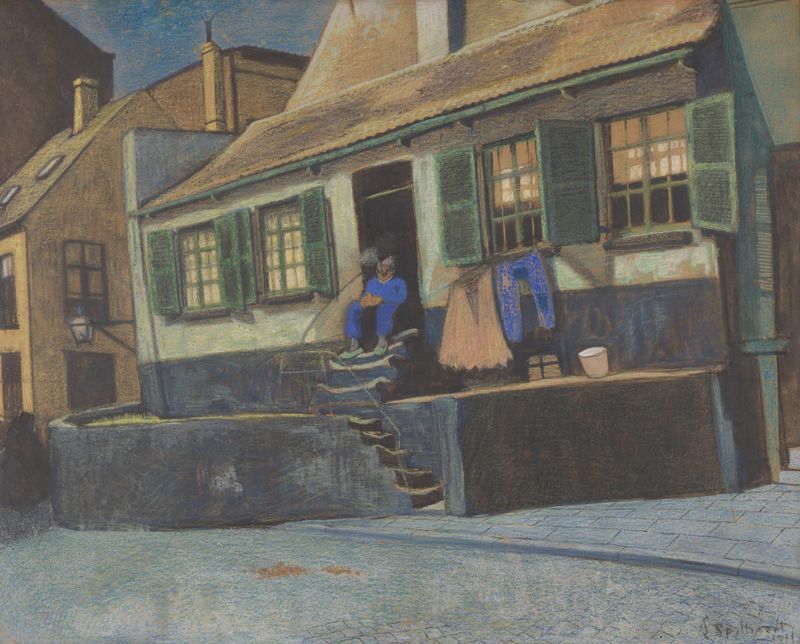
Het huis genaamd ‘De Preekstoel’ te Oostende
Léon Spilliaert

Vijgenboom in de winter, Grasse
Léon Spilliaert
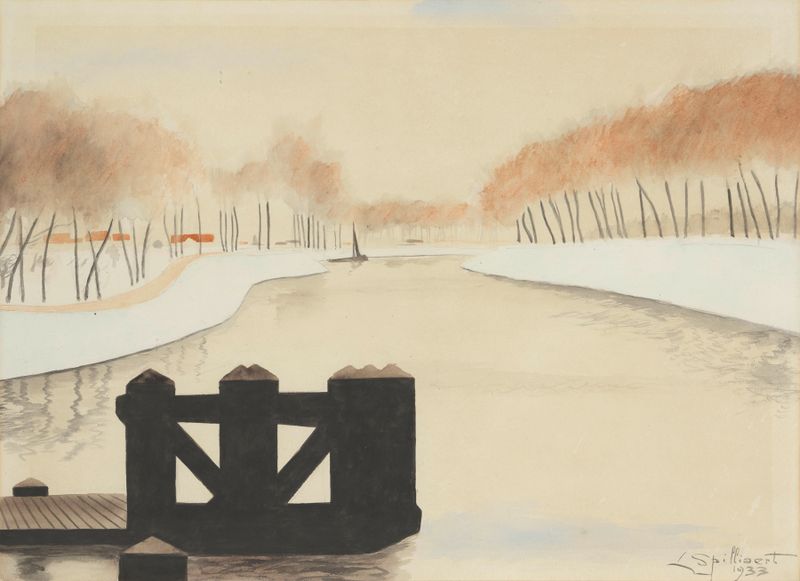
De Keignaertkreek in Zandvoorde
Léon Spilliaert
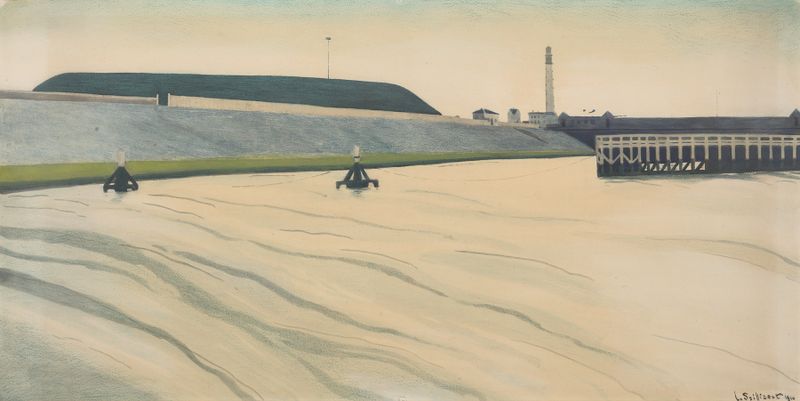
Haven te Oostende
Léon Spilliaert
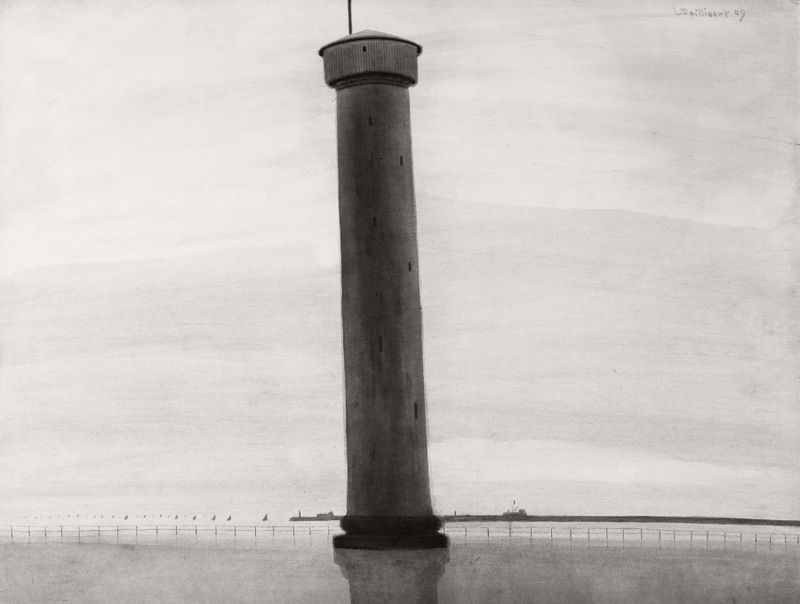
Le Phare aux signaux [De vuurtoren]
Léon Spilliaert
Bomen in de sneeuw
Léon Spilliaert
De Wellingtonrenbaan en het Royal Palace Hotel te Oostende kort na de Tweede Wereldoorlog
Léon Spilliaert





