Arcadian Landscape with several Figures and a Statue of Apollo — História e Análise
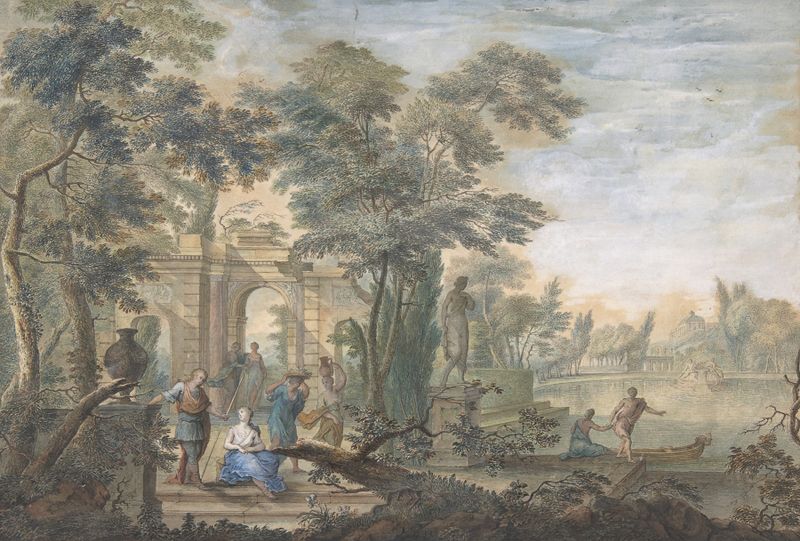
In the stillness of an Arcadian dream, the sharp edges of loneliness linger beneath a sunlit canopy, inviting reflection and solitude amidst the tranquility. Look to the left at the serene figures, their postures both relaxed and distant, as soft hues of green and gold envelop them. The soft brushwork creates a gentle contrast between the vivid landscape and the unmoving statue of Apollo, whose presence adds an almost haunting weight to the scene. Notice how the light dances across the figures’ skin, illuminating their expressions, yet paradoxically casting shadows of isolation that seem to stretch beyond the canvas. This tension between vibrant life and the eternal, stony gaze of the god reveals a profound commentary on longing and the human condition.
The figures, seemingly engaged with one another, are paradoxically isolated, suggesting a deep internal struggle despite their placement in this idyllic setting. The serene beauty of the landscape contrasts sharply with the sentiment of loneliness that permeates the composition, creating an emotional dissonance that resonates deeply. In the 18th century, as European art experienced a shift towards Romanticism, Gerard Melder crafted Arcadian Landscape with several Figures and a Statue of Apollo, a piece reflecting the era's fascination with nature and myth. Painted in a period marked by both enlightenment ideas and rising individualism, Melder’s work speaks to the isolation of the human spirit amid the beauty of the world, capturing both the serenity and solitude that defines existence.