
At the Côte d’Azur — História e Análise
Who listens when art speaks of silence? In the quiet embrace of At the Côte d’Azur, a powerful tension simmers beneath the surface, suggesting a narrative that diverges from mere leisure at the seaside. Look to the left at the languid figure resting on the beach, whose relaxed posture contrasts sharply with the tumultuous waves lapping at the shore. The warm hues of ochre and azure reflect the sun's golden caress, while the brushstrokes evoke a sense of languor that invites the viewer to linger. Notice how the figures in the background are rendered with simpler outlines, becoming less distinct as they retreat into the horizon — a stark reminder of the fragility of peace against nature’s relentless energy. The painting subtly reveals underlying struggles; the juxtaposition of tranquil leisure against the encroaching sea hints at an inevitable dissolution of calm.
The serene atmosphere belies a deeper violence — both within the turbulent waters and the unexamined tensions among the figures on shore. This duality evokes a sense of foreboding, as if the artist captures a fleeting moment before chaos asserts itself. Carl Moll painted this work around 1926 while living in Vienna, a time when the world was still reeling from the aftermath of World War I. The art scene was transitioning, with modernist movements beginning to gain traction.
Amid the changing tides of society and the shadows of conflict, Moll's brush conveyed an elusive serenity that concealed deeper undercurrents, reflecting both personal and collective experiences during a period of uncertainty.
Mais obras de Carl Moll
Ver tudo →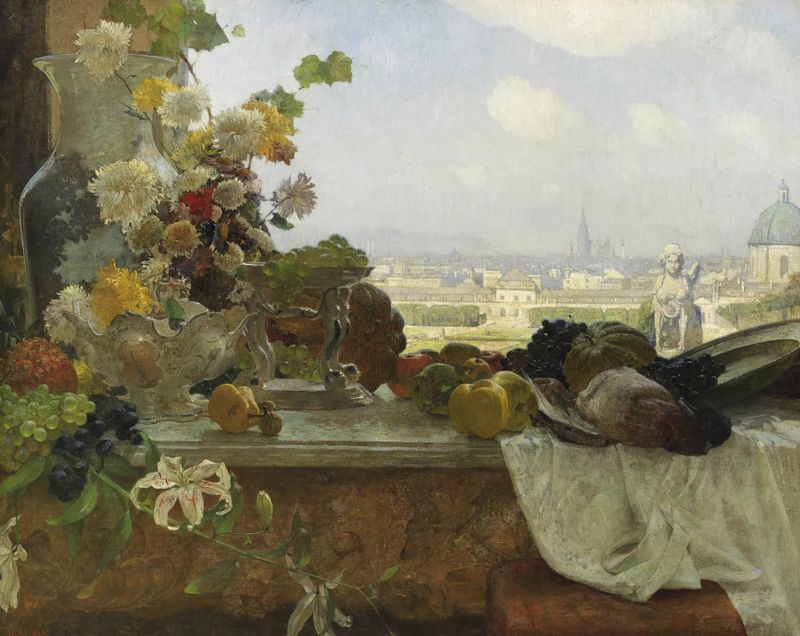
Blick vom Belvedere auf die Innere Stadt
Carl Moll

Garten in Döbling (Garden in Döbling, Vienna)
Carl Moll
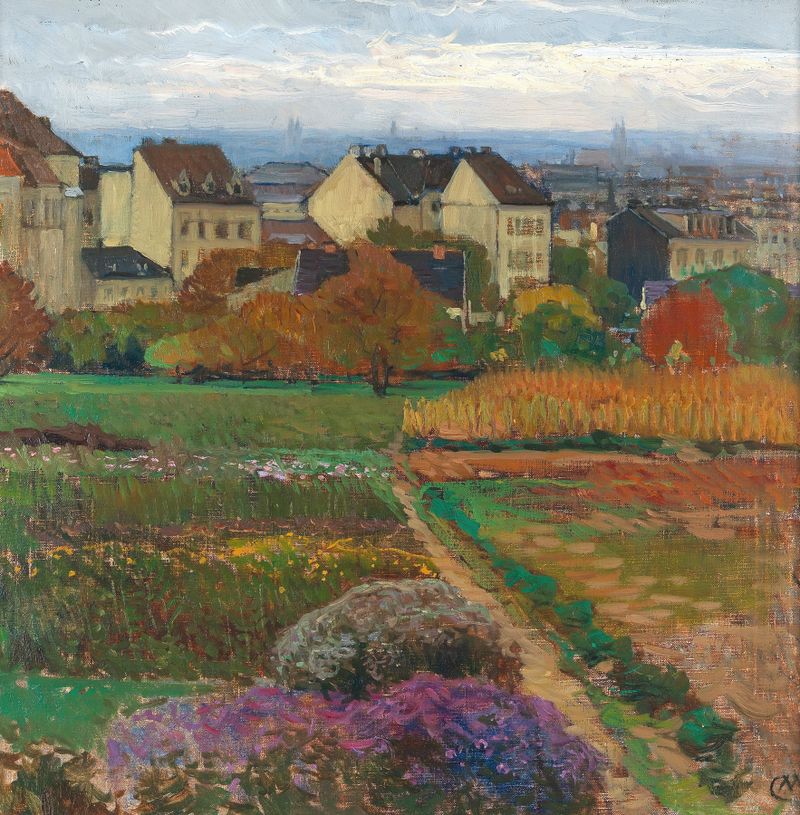
Döbling Wien
Carl Moll

Motiv aus dem Schloßpark in Jevisovice
Carl Moll
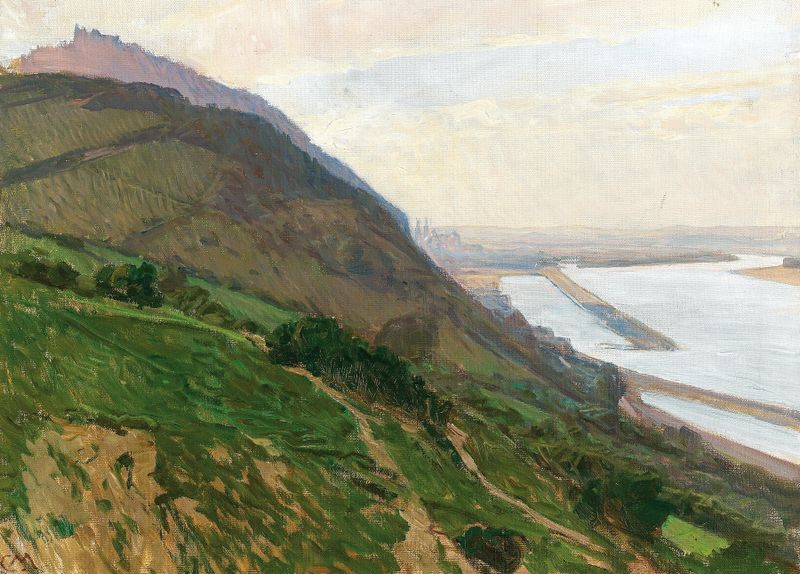
Donauansicht
Carl Moll
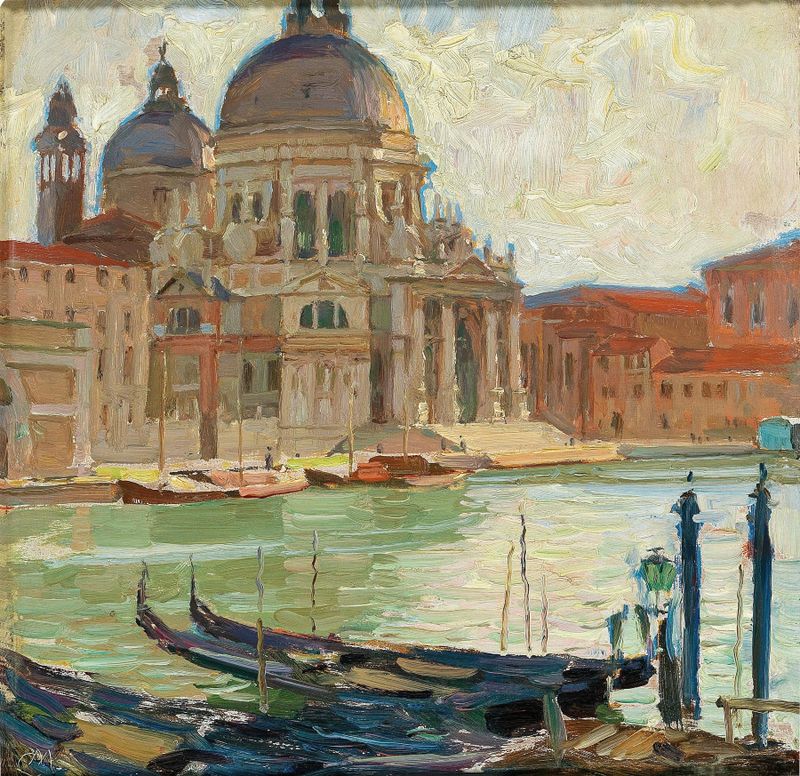
Kirche in Venedig
Carl Moll

Wassermühle in Goisern (nach Emil Jakob Schindler)
Carl Moll

Winter at Hohe Warte, Rothschild Gardens
Carl Moll

Römische Ruine in Schönbrunn
Carl Moll

Kirche St Michael in Heiligenstadt
Carl Moll





