
Au Jardin En Bretagne — História e Análise
In the vibrant world of art, color speaks not only to the eye but to the soul, whispering secrets that linger in the heart's quiet corners. Look to the left at the lush greens that envelop the figures, inviting you into a serene garden where nature flourishes. The soft strokes of the brush create a texture that invites touch, while splashes of color dance across the canvas, embodying the essence of a sunlit day. Notice how the light filters through the leaves, casting playful shadows that weave around the woman seated gracefully, her attire a delicate chorus of hues that harmonize with the surrounding flora. This piece encapsulates a moment suspended in time, where the vibrant colors evoke joy and a sense of tranquil intimacy.
The juxtaposition of the vivid blooms against the subtle skin tones hints at the delicate balance of life—the ephemeral beauty of nature meeting the timelessness of human connection. Each detail, from the way the fabric flows to the gentle arch of the branches, enhances the emotional resonance, inviting viewers to ponder the relationship between humanity and the natural world. In the late 19th century, when Au Jardin En Bretagne was created, Renoir was amidst his exploration of Impressionism, seeking to capture fleeting moments of beauty and light. France was a hub of artistic revolution, grappling with modernity and the emergence of new ideas.
This work reflects his ability to embrace color as more than a visual tool; it became a means of conveying the depth of human experience within the serene embrace of nature.
Mais obras de Pierre-Auguste Renoir
Ver tudo →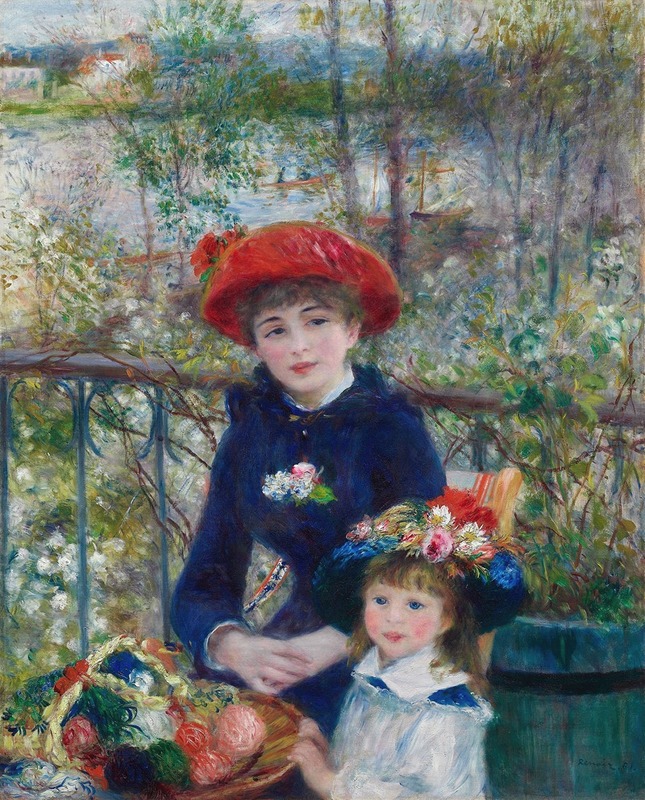
Two Sisters (On the Terrace)
Pierre-Auguste Renoir
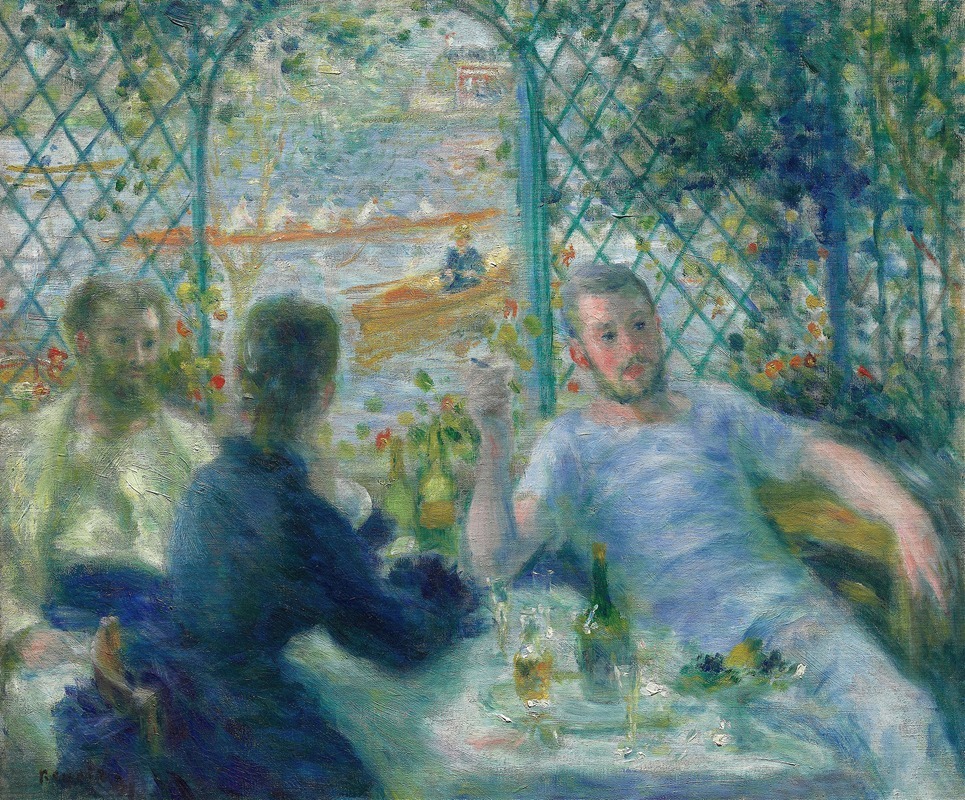
Lunch at the Restaurant Fournaise (The Rowers' Lunch)
Pierre-Auguste Renoir
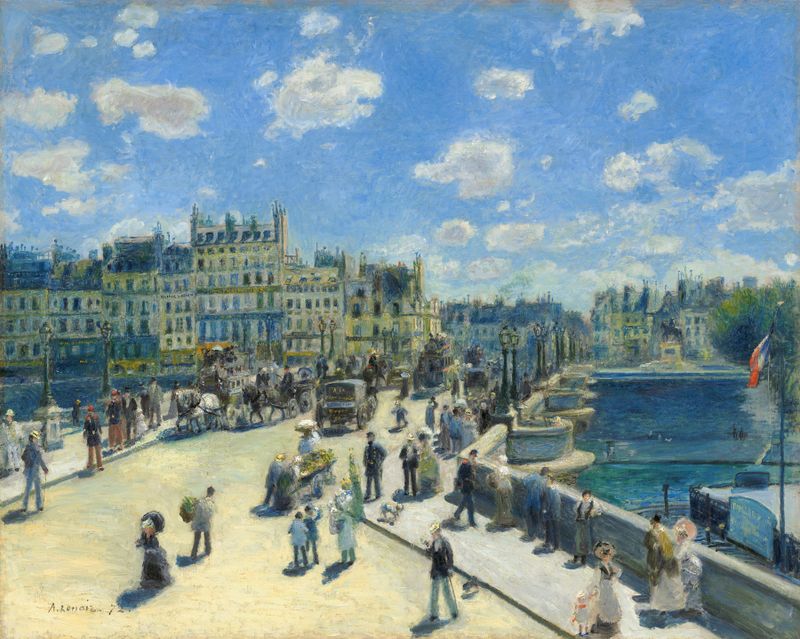
Pont Neuf, Paris
Pierre-Auguste Renoir
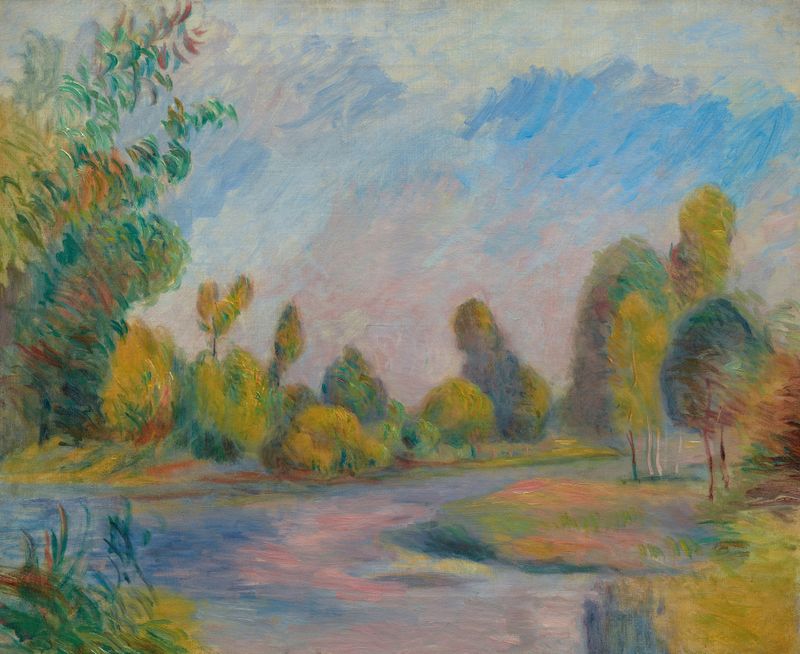
Au bord de la rivière
Pierre-Auguste Renoir

Near the Lake
Pierre-Auguste Renoir
The Mussel Harvest
Pierre-Auguste Renoir

The Seine at Chatou
Pierre-Auguste Renoir
La Grenouillère
Pierre-Auguste Renoir
In Brittany (En Bretagne)
Pierre-Auguste Renoir
Paysage d’Essoyes
Pierre-Auguste Renoir





