Aufziehendes Gewitter — História e Análise
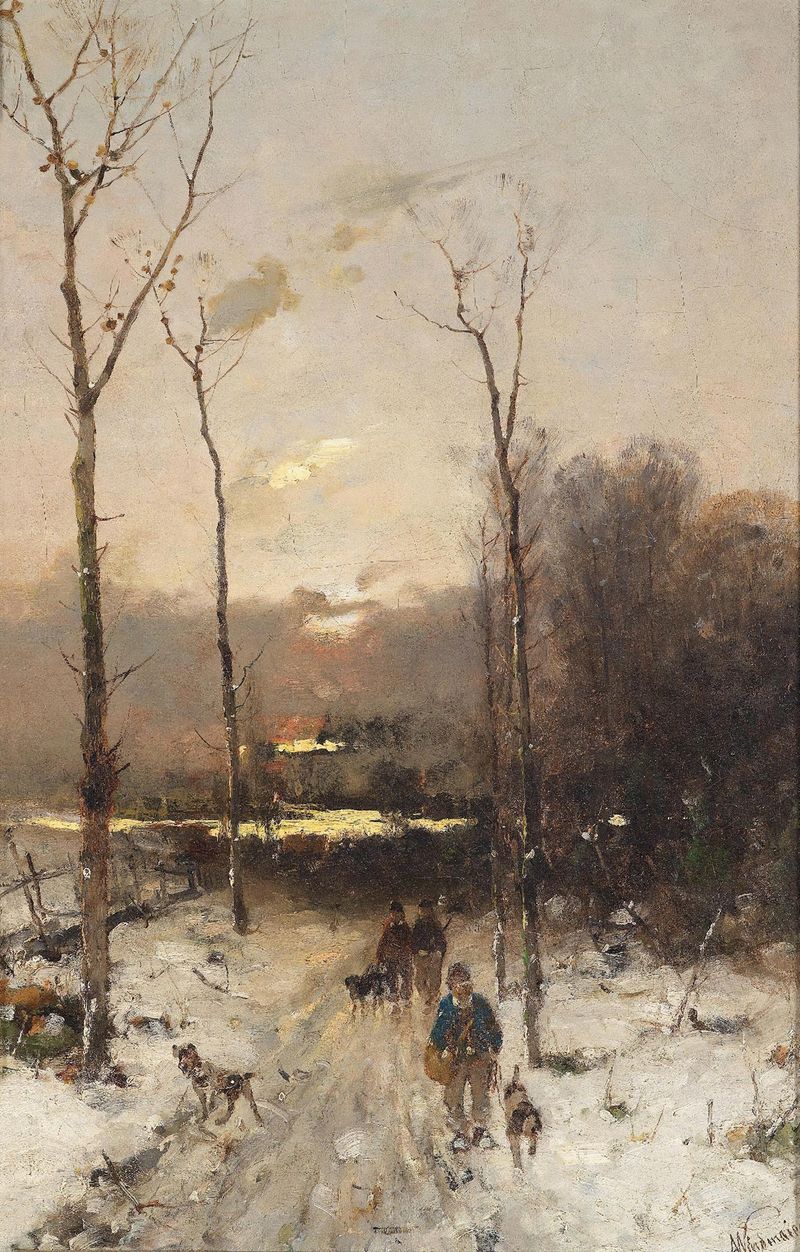
Who listens when art speaks of silence? In Aufziehendes Gewitter, an impending storm looms, echoing the intricate dance between tension and tranquility, revealing deeper truths hidden within nature’s fury. Look to the left at the creeping darkness that blankets the horizon, a stark contrast to the vibrant greens of the fields below. Notice how the artist skillfully employs a palette of deep grays and subtle yellows, creating a dynamic interplay between light and shadow. The billowing clouds, rendered in thick, textured strokes, seem to pulse with energy, inviting the viewer into a moment charged with anticipation.
The composition directs your gaze upward, where the promise of rain mingles with the brightness of the sun still fighting to break through. As the storm brews, a sense of duality emerges; the beauty of nature entwined with a foreboding presence. The lush landscape, teeming with life, contrasts sharply with the ominous sky, symbolizing the balance of hope and despair. This tension suggests a deeper conversation about the fragility of existence and the inevitability of change, urging the viewer to reflect on their own experiences within a world teetering on the brink of chaos. In 1890, Anton Windmaier created this masterpiece during a period of artistic exploration in Germany, where impressionism was beginning to take root.
Living in a time of rapid industrialization, he sought to capture the raw beauty and tumult of the natural world, reflecting both a personal and collective struggle against the encroaching changes of modernity. This painting is a testament to his dedication to portraying the truth found in nature's unyielding power.