
Babson and Ellery Houses — História e Análise
Could beauty survive in a century of chaos? In Babson and Ellery Houses, the viewer is invited to contemplate the serene interplay between architecture and nature, poised on the edge of history's relentless march. Look to the left, where the sturdy facades of the Babson and Ellery houses stand proudly against a backdrop of a tranquil sea. The meticulous brushwork reveals weathered wood and delicate details, while soft, muted colors evoke a sense of nostalgia. The gentle waves lap against the shoreline, their rhythmic motion contrasting with the stillness of the homes.
Notice how the light dances across the water, creating a shimmering pathway that leads the eye toward the horizon, merging land and sky in a harmonious embrace. Beneath the tranquil surface lies a profound tension between permanence and impermanence. The grandeur of the houses, symbols of stability and familial heritage, stands in stark contrast to the ephemeral beauty of the natural world. This duality speaks not only to the passage of time but also to the dreams and aspirations held within those walls, perhaps echoing the resilience of human spirit amidst a backdrop of societal upheaval.
The shadows cast by the setting sun hint at the inevitable decline of both nature and man-made structures, reminding us of the layers of memory that exist within this coastal landscape. In the early 1860s, the artist crafted this work during a time marked by the American Civil War, which brought turmoil and division to the nation. Living in Gloucester, Massachusetts, Lane found inspiration in the rugged beauty of his surroundings while simultaneously reflecting the era's struggles. The painting encapsulates a moment of stillness amidst chaos, serving as a testament to the enduring relationship between humanity and the natural world during a time of great change.
Mais obras de Fitz Henry Lane
Ver tudo →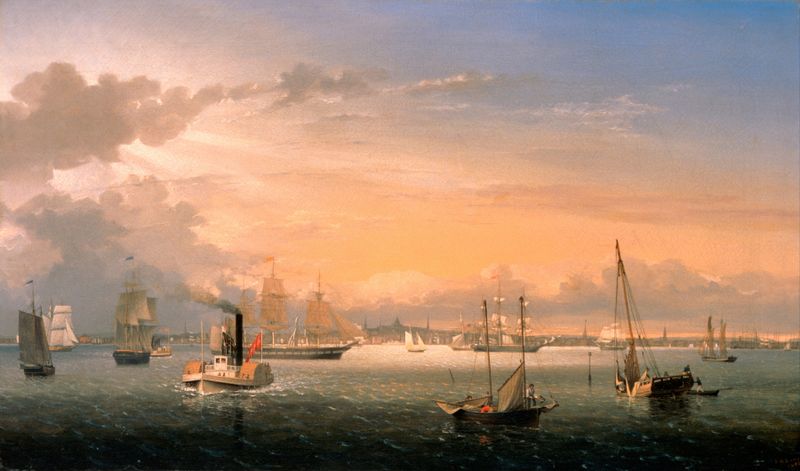
Boston Harbor
Fitz Henry Lane

Becalmed off Halfway Rock
Fitz Henry Lane

Owl’s Head, Penobscot Bay, Maine
Fitz Henry Lane

Stage Fort across Gloucester Harbor
Fitz Henry Lane
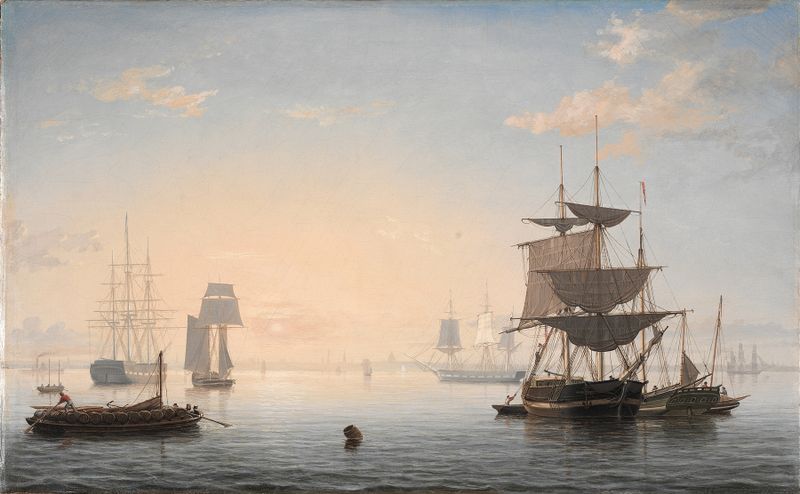
Harbor of Boston, with the City in the Distance
Fitz Henry Lane

The Ships ‘Winged Arrow’ and ‘Southern Cross’ in Boston Harbor
Fitz Henry Lane
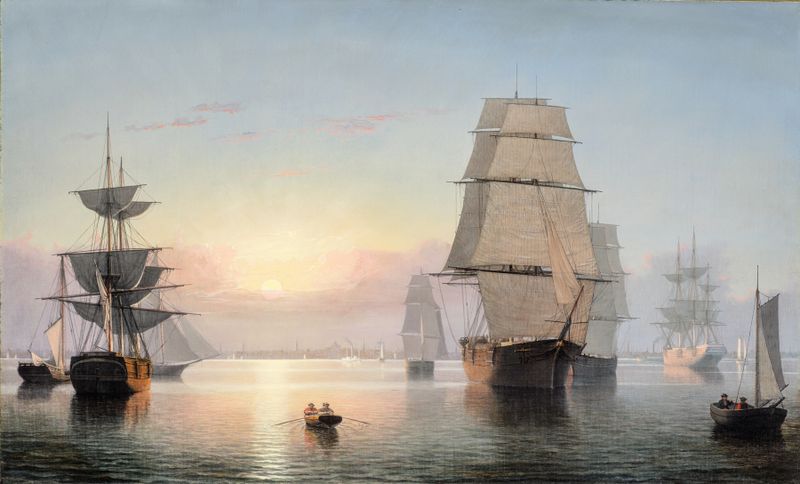
Boston Harbor, Sunset
Fitz Henry Lane

Brig Off the Maine Coast
Fitz Henry Lane
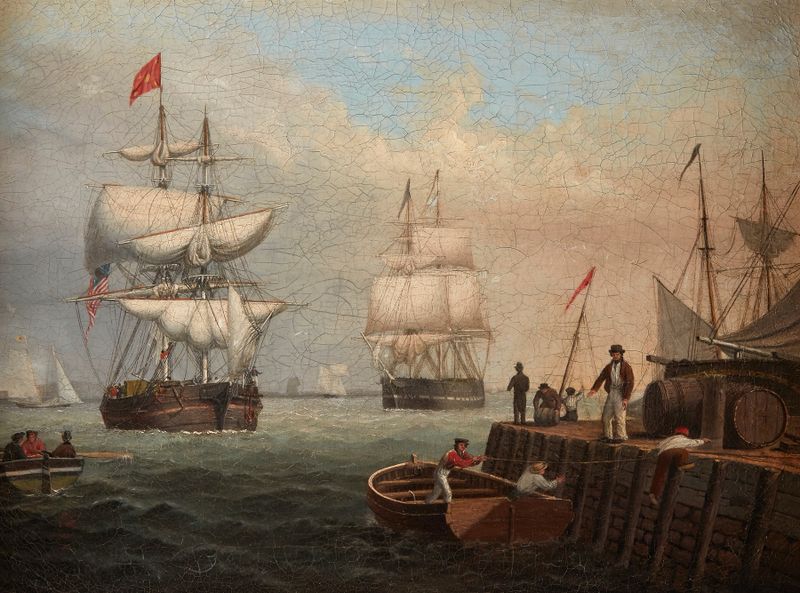
Boston Harbor
Fitz Henry Lane

Brace’s Rock, Brace’s Cove
Fitz Henry Lane
Mais arte de Arquitetura
Ver tudo →
The statue of Liberty
Frédéric Auguste Bartholdi

View of Houses in Delft, Known as ‘The Little Street’
Johannes Vermeer

View of Houses in Delft, Known as ‘The Little Street’
Johannes Vermeer

The Cathedral in Rouen. The portal, Grey Weather
Claude Monet

The yellow house
Vincent van Gogh

The Church in Auvers-sur-Oise, View from the Chevet
Vincent van Gogh