Barges in Dinant — História e Análise
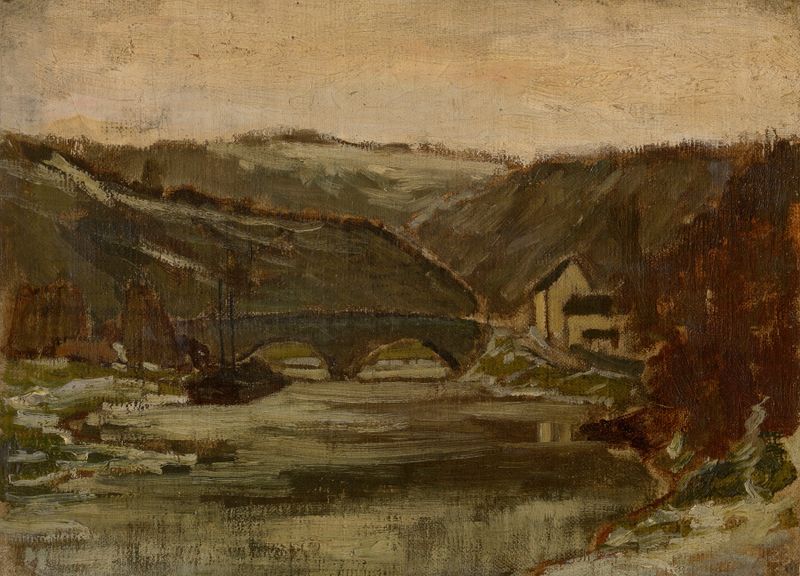
Did the painter know this moment would outlive them? In the fluid strokes of Barges in Dinant, the essence of revolution is captured, whispering tales of change and resilience through the stillness of the water. Focus on the left where the boats gently bob, their shapes soft yet defined against the shimmering surface. Notice how the rich blues and greens intertwine, evoking a sense of tranquility that contrasts with the potential upheaval suggested by the looming cliffs. The composition draws the eye towards the horizon, where the sky meets the land, hinting at the promise of transformation and the passage of time.
The interplay of light and shadow elevates the scene, suggesting a moment suspended between stillness and the pulse of life. Beneath the serene facade lies a tension that speaks to the historical currents of the time. The boats, vessels of commerce and communication, symbolize the movement of ideas and people, while the rocky cliffs stand as sentinels, witnessing the shifting tides of society. The juxtaposition of the peaceful landscape with the notion of revolution invites contemplation on what lies beneath the surface of calm, a reminder that change often brews quietly before it erupts. Félicien Rops painted Barges in Dinant during a period marked by political and social upheaval in Belgium.
Although the exact date remains unknown, Rops was active in the latter half of the 19th century, a time when artists were exploring themes of modernity and societal change. This artwork reflects both his personal experiences and the broader artistic movements that sought to capture the complexities of the human condition amidst the backdrop of a rapidly evolving world.