
Bark Beating to Windward at Kullaberg — História e Análise
Where does light end, and longing begin? In the stillness of Bark Beating to Windward at Kullaberg, a poignant silence envelops the viewer like the soft caress of a gentle breeze. Look to the horizon first, where the fading sunlight kisses the sea, casting glimmers of gold upon the water's surface. The waves, a tapestry of deep blues and greens, cradle a solitary vessel that leans into the wind. Notice how the artist masterfully employs light and shadow, emphasizing the dramatic contrast between the vibrant sky and the tranquil sea, creating a sense of movement and urgency despite the absence of sound.
Each brushstroke reflects Larson's understanding of the interplay between nature and human endeavor, inviting us to ponder the resilience of the sailor. Delve deeper into the vessel's sails, taut and straining against the unseen force of nature—an emblem of determination amidst the vastness of the sea. The small figure aboard, almost lost against the grandeur of his surroundings, highlights the tension between man and the elements, evoking a profound sense of solitude. This delicate balance of courage and vulnerability resonates, reminding us of the quiet struggles we often endure against life's relentless currents. In 1849, Larson painted this work during a time of burgeoning Romanticism in Sweden, where the interplay between nature and the human experience was becoming a focal point in art.
He was deeply influenced by the landscapes of his homeland, capturing the essence of solitude and reflection. This period also marked a growing appreciation for the sublime in nature, as artists sought to reflect the emotional depth of existence amidst the beauty of the world around them.
Mais obras de Marcus Larson
Ver tudo →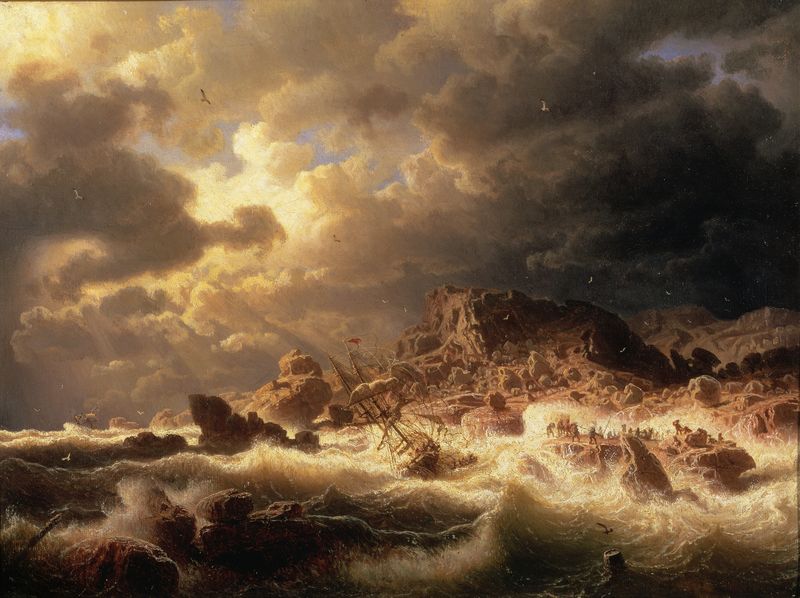
Gale on the Bohuslän Coast
Marcus Larson

Waterfall in Småland
Marcus Larson
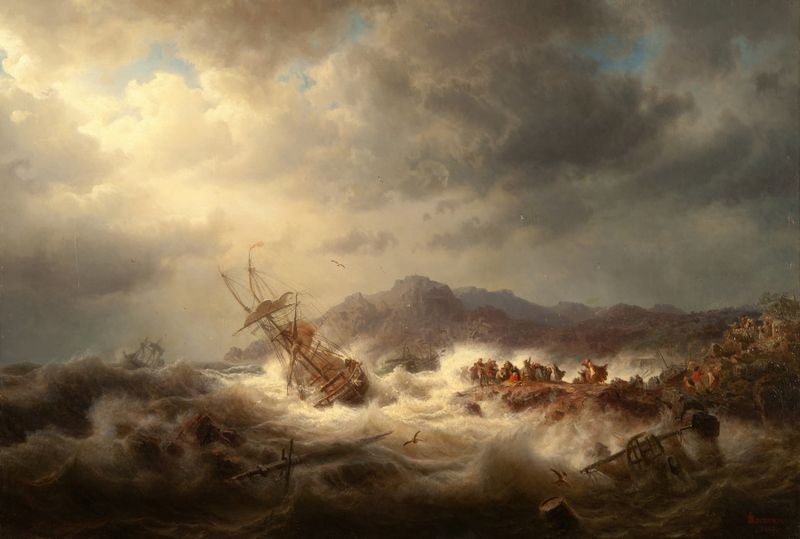
Shipwreck
Marcus Larson
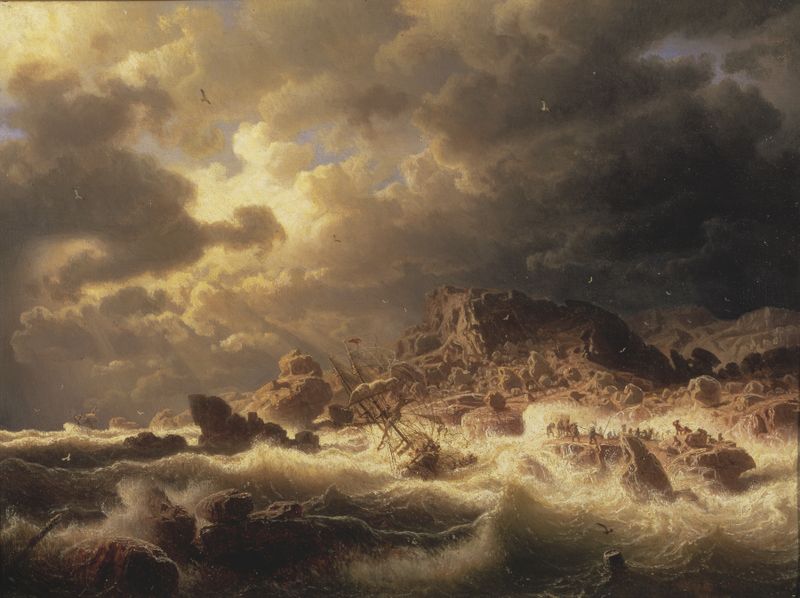
Gale on the Bohuslän Coast
Marcus Larson
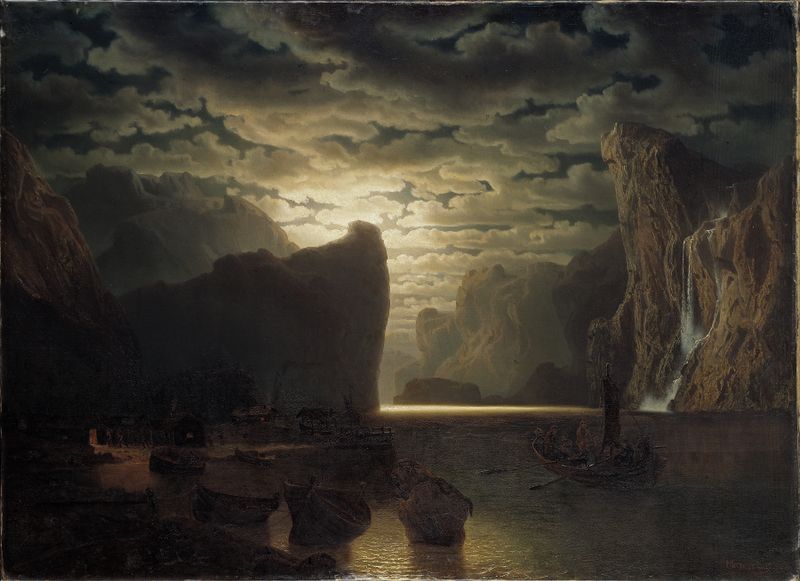
Norwegian Fjord in Moonlight. Motif from the Sogne-Fjord
Marcus Larson

Norwegian Fjord in Moonlight
Marcus Larson

Rocky Landscape with Waterfall
Marcus Larson
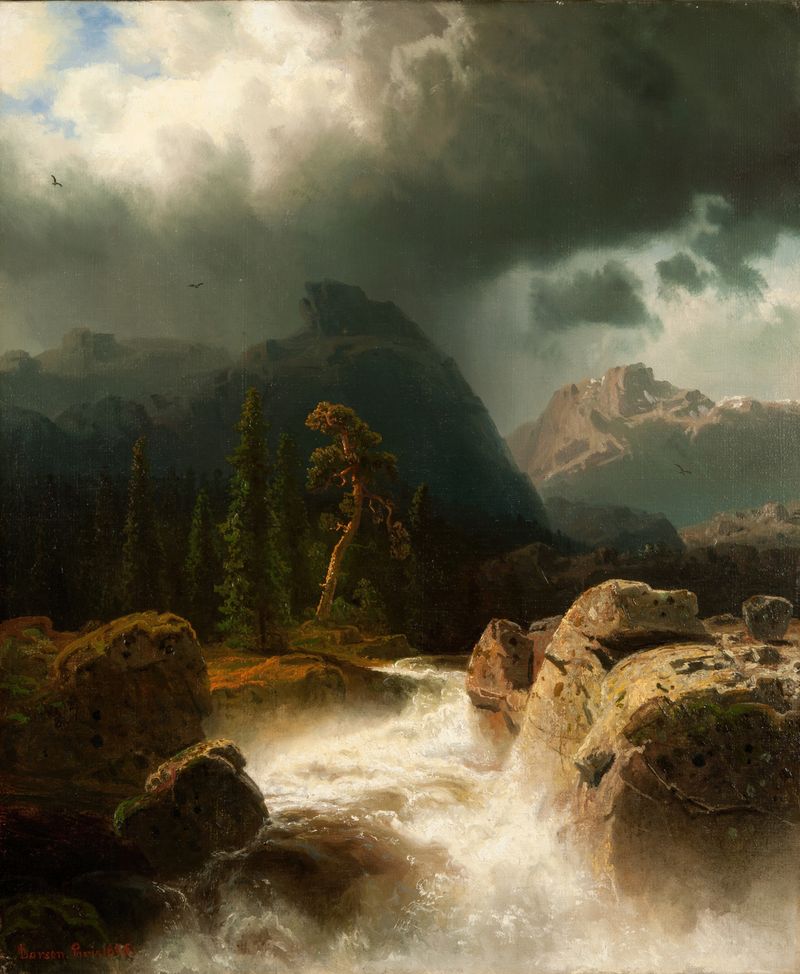
Waterfall
Marcus Larson

Burning Steamer
Marcus Larson

Swedish Lake. Study
Marcus Larson





