
Barks Fleeing Before the Storm — História e Análise
Could a single brushstroke hold eternity? In Barks Fleeing Before the Storm, the tempestuous energy captured on canvas seems to whisper of imminent revolution — both in nature and in the spirit of the time. Look to the left at the turbulent waves, their frothy white caps hurling towards the shore like a warning siren. The boats, small and helpless, are rendered with muted tones, their sails strained against the impending chaos. Notice how the darkened sky looms overhead, thick with shades of gray and blue, balancing the radiant streaks of light that break through.
This interplay of color and texture draws the viewer's eye, evoking a visceral sense of tension and urgency. In the scene, the contrasting colors embody the struggle between man and nature, amplifying a deeper conversation about vulnerability in the face of overwhelming power. The boats symbolize humanity’s persistent pursuit against fate, while the waves convey the relentless force of the natural world. Each brushstroke seems to reflect the era's anxieties, hinting at the societal changes brewing in the background, much like the storm itself. Jules Dupré painted this work between 1870 and 1875, during a period marked by rapid industrialization and shifting artistic paradigms in Europe.
Living in France, he was influenced by the Romantic movement, which celebrated nature's grandeur and terror, as well as the growing realism in art. This piece stands as a testament to both the artist's mastery of landscape and the turmoil of his time, echoing the emotional landscape of a changing world.
Mais obras de Jules Dupré
Ver tudo →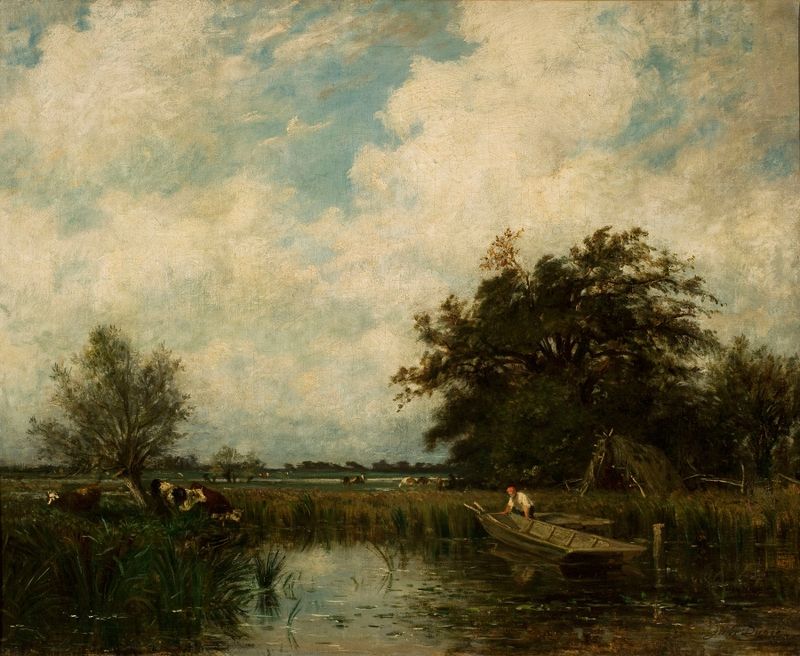
Landscape with a pond
Jules Dupré

The Cottage by the Roadside, Stormy Sky
Jules Dupré
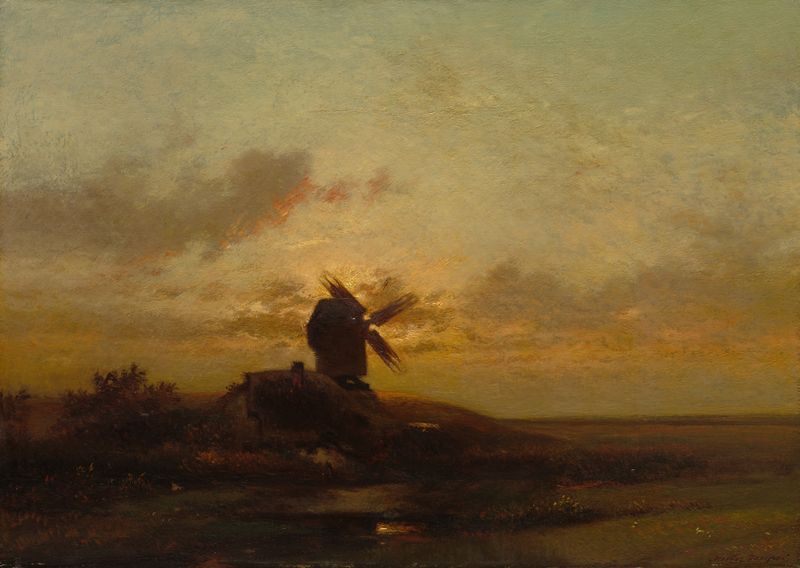
The Windmill
Jules Dupré

The Estuary Farm
Jules Dupré

Fontainebleau Oaks
Jules Dupré

Village Scene, Sunset
Jules Dupré

Barks Fleeing Before the Storm
Jules Dupré

Cows Crossing a Ford
Jules Dupré

The Old Oak
Jules Dupré

Weidelandschaft im Limousin
Jules Dupré





