Bartons Bush, Trentham — História e Análise
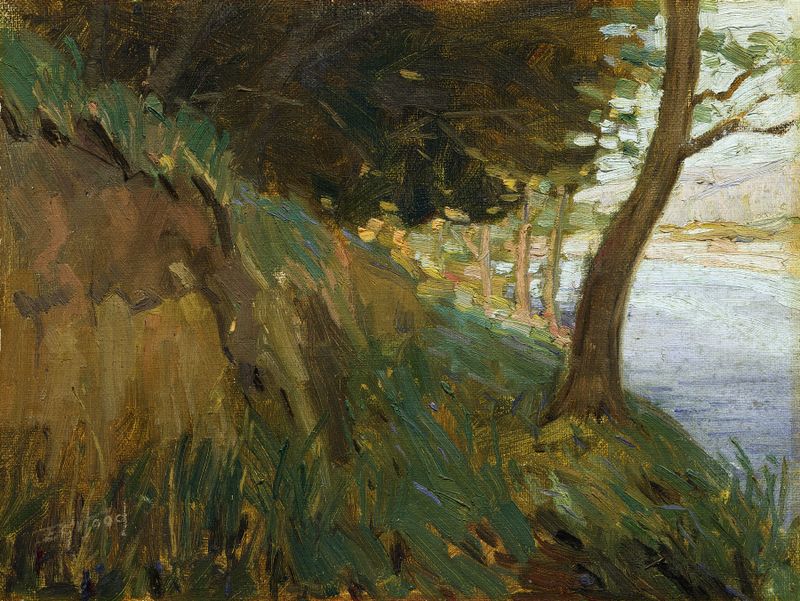
In the stillness of nature, divinity unveils itself in the quiet moments between brushstrokes. Look to the left at the intricate play of greens that envelop the trees, each stroke breathing life into the foliage. Notice how the dappled sunlight filters through the branches, creating a tapestry of light and shadow that beckons the viewer deeper into the scene. The composition leads your gaze along the gentle curves of the path, inviting exploration, while a soft palette of earth tones grounds the piece, evoking a sense of serenity and connection to the landscape. Hidden within the tranquility lies a profound symbiosis between man and nature.
The harmonious blending of colors suggests not just a visual experience but an emotional one, illuminating the spiritual essence inherent in the natural world. The meticulous attention to detail, from the rippling reflections in a nearby stream to the whispers of wind captured in the leaves, speaks to the balance between chaos and calm, offering a moment of divine contemplation. Ernest George Hood painted this work in 1917, during a tumultuous time marked by the Great War. Residing in England, he found solace in the English countryside, reflecting a yearning for peace amidst chaos.
This painting stands as a testament to his belief in the transformative power of nature, capturing a fleeting moment that, while specific in time and place, resonates with timeless truths about our existence and connection to the divine.