
Bateaux de pêche devant Trouville — História e Análise
When did color learn to lie? Innocence dances across the canvas, whispering tales of forgotten shores and fleeting moments. Look to the left at the gentle curve of the horizon, where the soft blues of the sea embrace the delicate pinks and yellows of the sky. The boats, painted with quick, confident strokes, bob lightly in the shallow waters, their weathered hulls reflecting the sun's warm embrace. Notice how the light falls upon the sails—a vibrant interplay of whites and soft creams that seem to flutter with the breath of the wind, inviting the viewer into a world where tranquility rules. Boudin captures not just a scene, but a feeling—an emotional tether between nature and humanity.
The contrast between the bustling boats and the calm expanse of water evokes a sense of harmony, yet an undercurrent of nostalgia lingers. The innocence of a day spent by the shore is palpable, yet so is the fleeting nature of such joy—an echo of summer soon to pass. In the late 19th century, while painting Bateaux de pêche devant Trouville, Boudin was establishing his voice in the French Impressionist movement. Living in Normandy, he found inspiration in the coastal landscapes, reflecting the burgeoning interest in light and color.
During this period, Boudin was celebrated for his ability to capture atmospheric effects, positioning him as a precursor to the likes of Monet, even as his own work faced the challenges of a rapidly modernizing world.
Mais obras de Eugène Boudin
Ver tudo →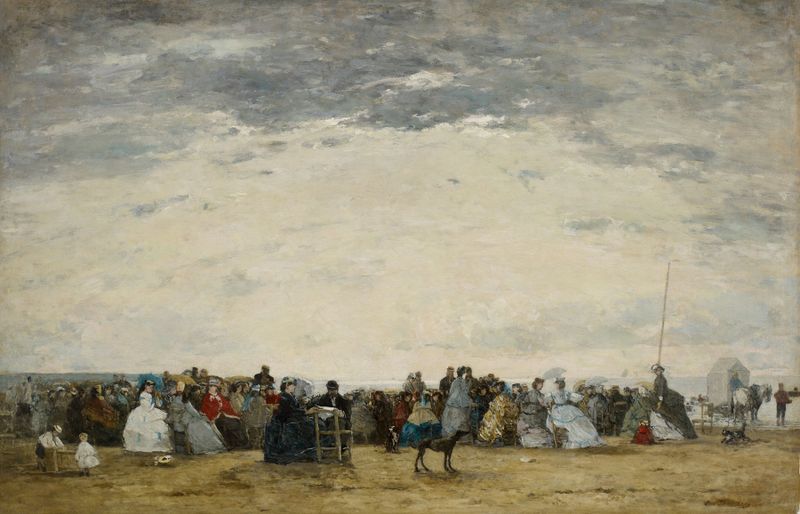
Vacationers on the Beach at Trouville
Eugène Boudin

Washerwoman near Trouville
Eugène Boudin
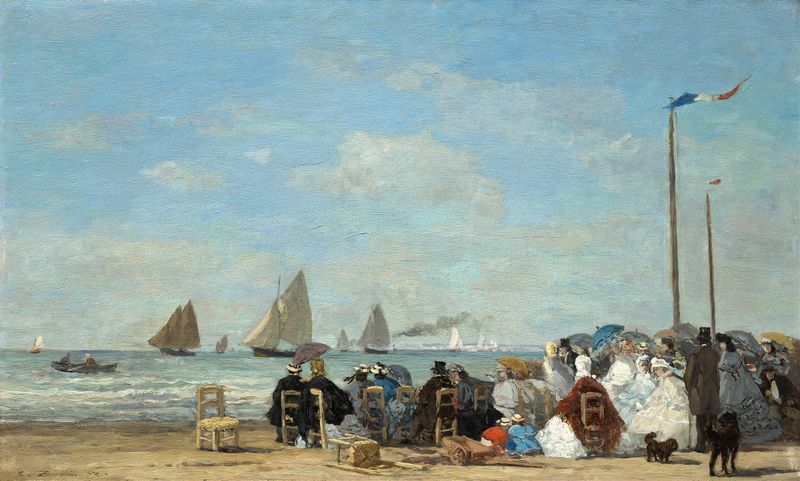
Beach Scene at Trouville
Eugène Boudin

Port aux environs d’Honfleur
Eugène Boudin

Le Faou, un coin du village
Eugène Boudin
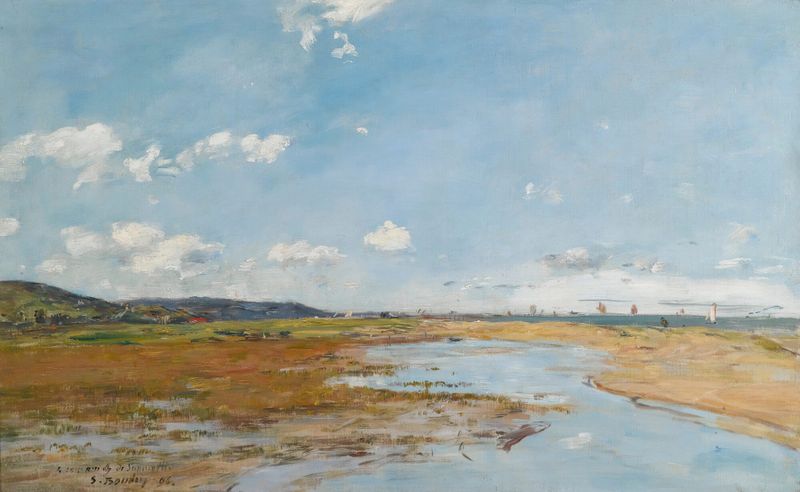
Deauville. Le Rivage
Eugène Boudin
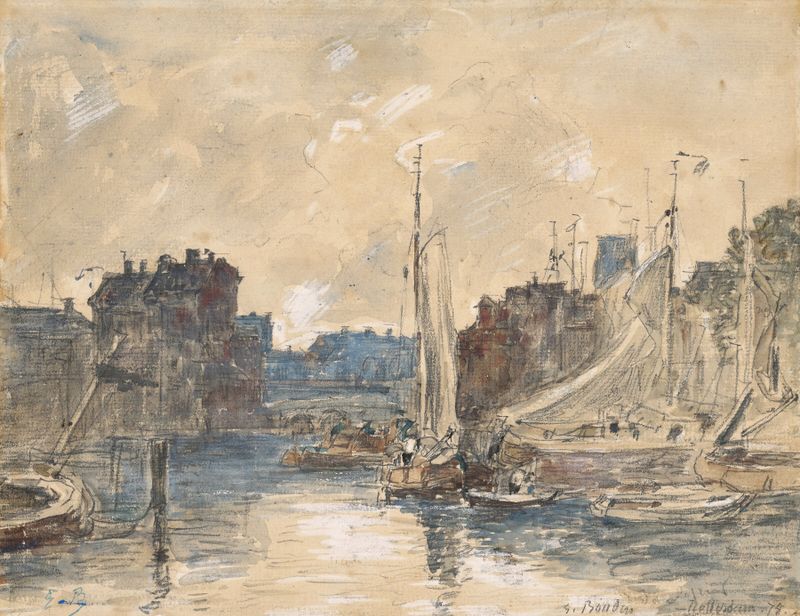
Port de Rotterdam
Eugène Boudin

View of Bordeaux, from the Quai des Chartrons
Eugène Boudin

Trouville, Scène De Plage
Eugène Boudin

Trouville, Le Port
Eugène Boudin





