Bauerngehöft an einer Waldstraße — História e Análise
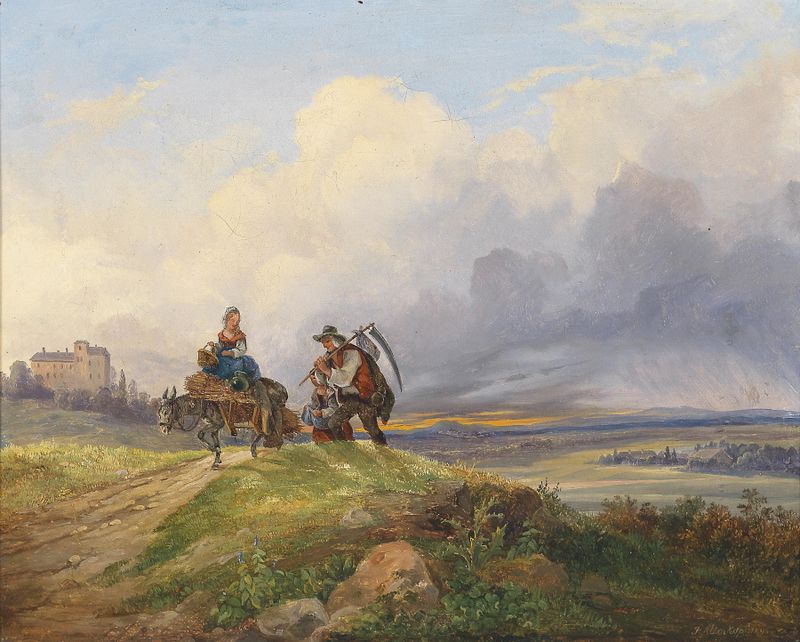
When did color learn to lie? In a world tinted by innocence, the hues of nature invite us to ponder the truths we often overlook. Look to the left at the verdant trees, their lush greens intermingling with the warm tones of a sun-kissed farmhouse nestled along a tranquil forest path. The artist employs a meticulous technique, layering oil paint to create an organic texture that feels almost alive. Each stroke contributes to a soft harmony, where the quaint architecture stands proudly yet humbly against the backdrop of a serene landscape, the light dancing off the surface to evoke feelings of warmth and nostalgia. Beneath this idyllic surface lies a contrast between the serene setting and the quietly bustling life suggested within the farmhouse.
The path leads to the unknown, hinting at stories of daily toil and the interdependence of man and nature. The gentle play of light on the homestead juxtaposes the shadowy woods, creating a tension between comfort and the wilderness — a metaphor for the fragility of rural innocence in a world constantly on the brink of change. In 1850, Altenkopf painted this work during a period of significant transition in Europe, marked by industrialization and urban migration. Immersed in the beauty of the German countryside, he sought to capture the timeless simplicity of agrarian life amid the encroaching modernity.
This piece reflects not only his appreciation for the landscape but also a yearning to preserve the innocence and authenticity of rural existence in a rapidly evolving world.