
Bauernhof unter Bäumen — História e Análise
What secret hides in the quiet of the canvas? Beneath the calm surface of Bauernhof unter Bäumen, a profound fragility resonates, inviting contemplation of the world it encapsulates. Look to the left at the lush greenery that frames the modest farmhouse, its contours softened by an embrace of branches overhead. Notice how the dappled light filters through the leaves, casting gentle shadows on the thatched roof, which speaks to a simpler, more harmonious existence. The palette of earthy tones—deep greens, warm browns, and whispers of golden sunlight—conveys both warmth and a hint of melancholy, capturing a moment suspended in time. Within this pastoral scene, there’s a duality at play: the solidity of the farmhouse stands as a symbol of resilience against the encroaching uncertainties of modernity, while the surrounding trees, swaying delicately, suggest an inherent vulnerability.
Each brushstroke conveys not merely the physicality of the landscape but also an emotional landscape of nostalgia and longing, evoking a fleeting sense of belonging intertwined with the inevitable passage of time. In 1934, Rudolf Höckner painted this work during a period marked by significant political and social upheaval in Germany. As the country grappled with the aftermath of World War I and the rise of National Socialism, artists like Höckner sought refuge in the pastoral idealism of rural life, reflecting a yearning for stability and connection amidst chaos. This work captures not only a serene moment in nature but also the underlying tensions of an artist responding to a rapidly changing world.
Mais obras de Rudolf Höckner
Ver tudo →
Am Stintmarkt in Lüneburg
Rudolf Höckner
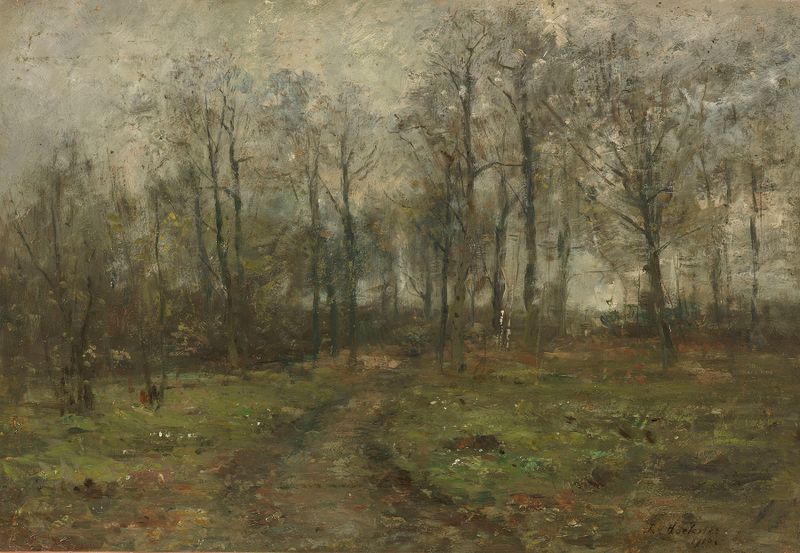
Weg im Gehölz
Rudolf Höckner

Marschlandschaft mit Weidenallee und Reiter
Rudolf Höckner

Winterlandschaft mit Gehöft
Rudolf Höckner

Ansicht von Wedel
Rudolf Höckner

Bauerngehöft mit Teich
Rudolf Höckner
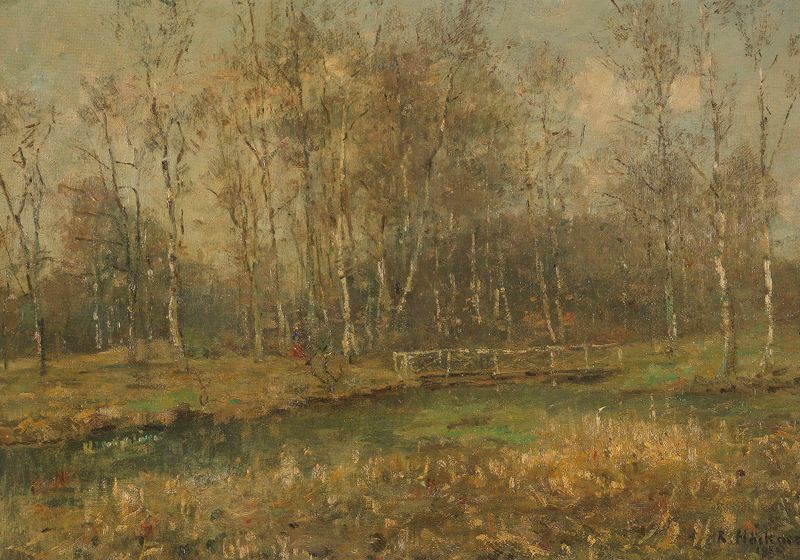
Vorfrühling im Park
Rudolf Höckner

Landschaft mit kleinen Gestalten
Rudolf Höckner
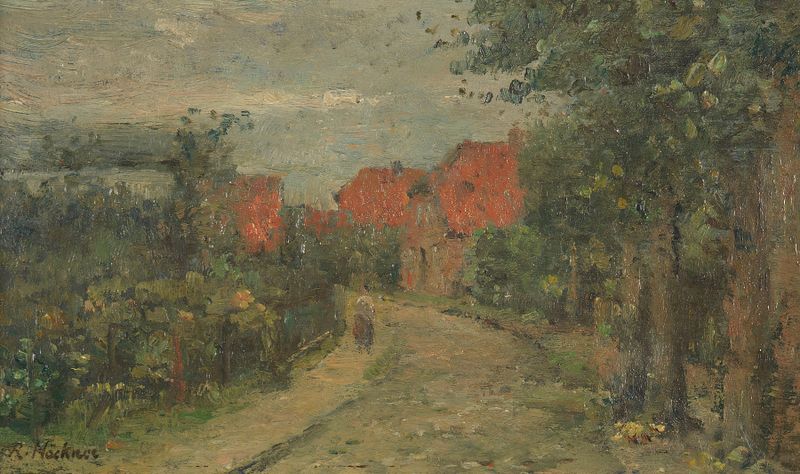
Dorfstraße
Rudolf Höckner

Der letzte Schnee
Rudolf Höckner





