
Baumlandschaft — História e Análise
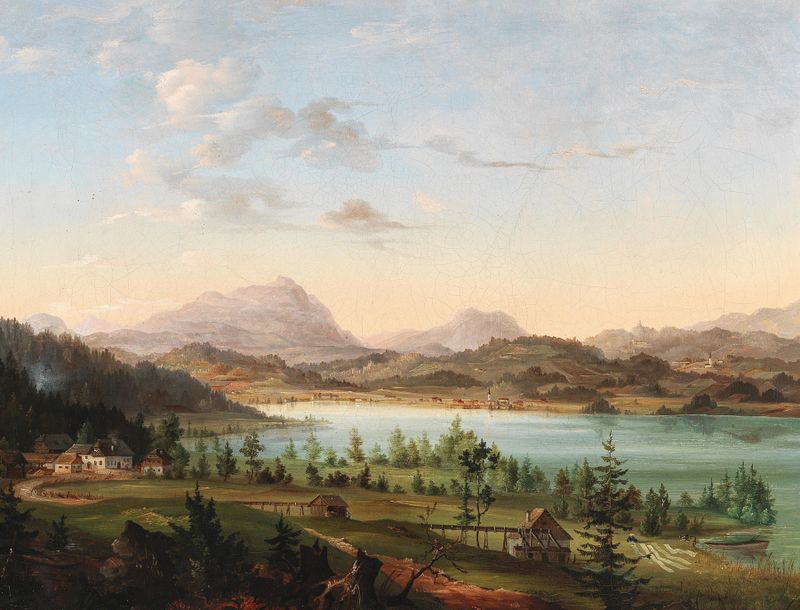
When did color learn to lie? In a world awash with hues that can evoke joy or despair, one must question the truth behind the pigments that adorn our perceptions. Focus on the sweeping greens that dominate the canvas, inviting your eye to explore the depths of the landscape. Notice how the trees, stoic and unwavering, create a rhythmic pattern across the horizon, while dappled sunlight dances through their leaves, revealing bursts of gold and shadow. The interplay of light and dark not only highlights the natural beauty but also hints at the hidden turmoil beneath this serene facade. Within the tranquil setting lies a tension between the idyllic and the tumultuous.
The vivid greens can evoke a sense of life and growth, yet they also mask the potential for chaos that lies within nature's embrace. The juxtaposition of the calm landscape against the rich, vibrant colors suggests a revolution brewing beneath the surface—a reminder of how beauty can often accompany unrest. Josef Willroider created Baumlandschaft during a time of artistic evolution, around the late 19th century in Austria. This period was marked by a shift towards Impressionism, where artists began to explore the emotional resonance of color and light.
Willroider's work embodies this transition, revealing both the splendor and complexity of the natural world while reflecting the broader movements that were redefining art in his time.
Mais obras de Josef Willroider
Ver tudo →
An der Isar
Josef Willroider
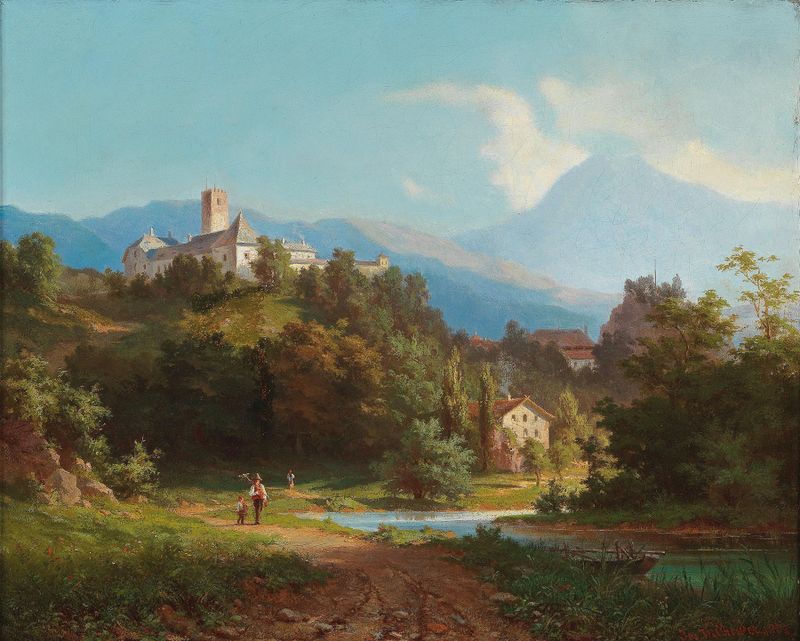
Ansicht einer Burg
Josef Willroider

Bavarian River Landscape with Women Gathering Wood
Josef Willroider

By the Wayside Cross
Josef Willroider
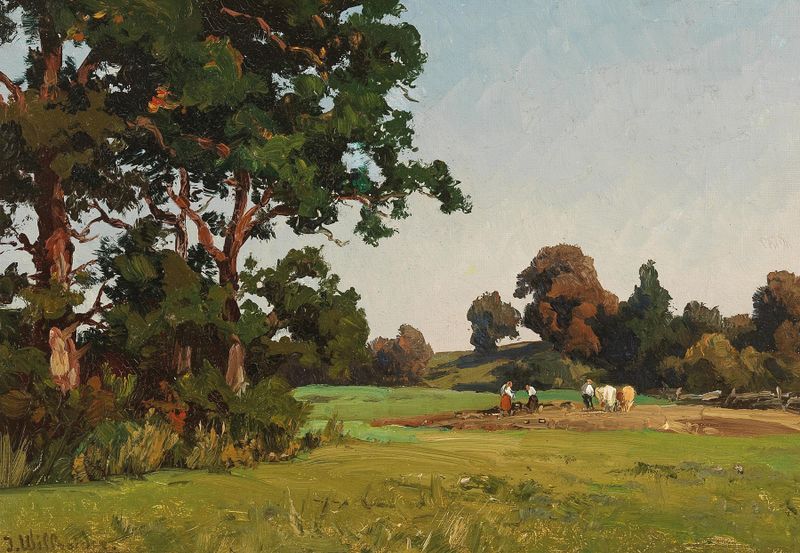
Am Feld
Josef Willroider
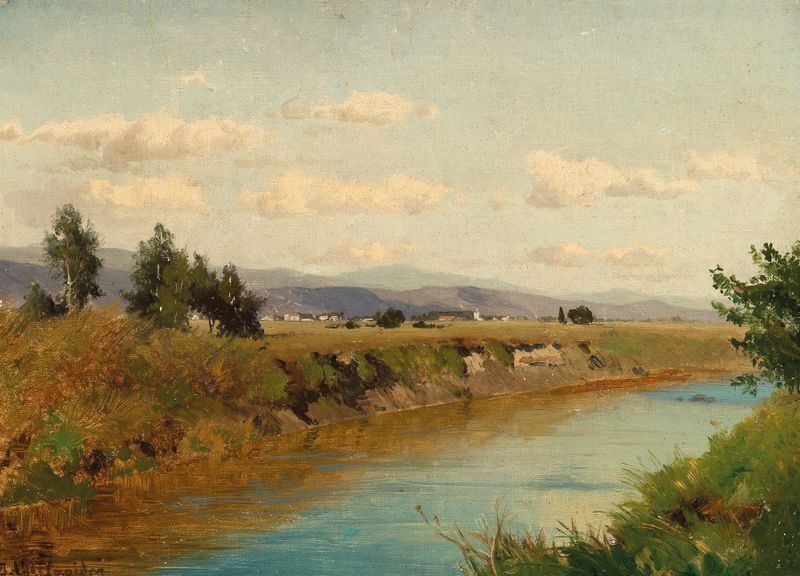
A Summer Landscape with Stream
Josef Willroider
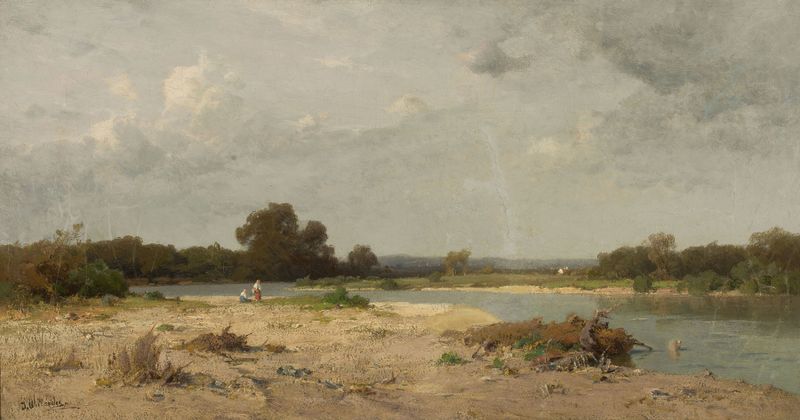
Waterside landscape
Josef Willroider

Landschaft mit abziehendem Gewitter
Josef Willroider

Blick auf Villach
Josef Willroider
A View of Lake Ossiach
Josef Willroider





