Beach Scene, Tangier — História e Análise
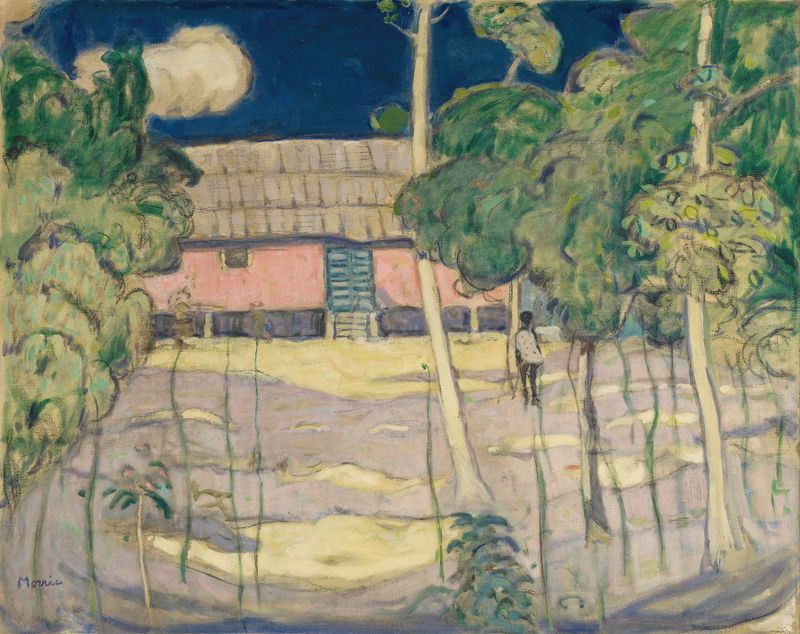
Where does light end, and longing begin? In the embrace of a sun-drenched beach, a moment unfolds that whispers of peace and yearning, capturing the essence of life at its most serene. Look to the left at the sun's golden rays spilling across the canvas, illuminating the gentle waves and the figures gathered along the shore. The palette, dominated by warm yellows and soft blues, creates an inviting atmosphere that beckons one to linger. Notice the delicate brushwork that defines the sandy beach, where each stroke embodies movement and vibrancy, inviting the viewer to imagine the coolness of the sea against the warm sand. Within this tranquil scene lies a tension between solitude and connection.
The figures, although together, seem lost in their own reverie, each absorbed in personal thoughts while the rhythmic sound of the ocean surrounds them. The juxtaposition of the expansive horizon against the grounded figures reflects a universal longing for escape and introspection, suggesting that even in shared spaces, one can feel profoundly alone. Created between 1906 and 1916, this work emerged during a pivotal time in Morrice’s career, as he sought to merge Impressionist techniques with his own vision. Living in Paris and traveling to Tangier, he found inspiration in the light and culture of North Africa, which contrasted sharply with the European art scene of the time.
His exploration of color and form during these years contributed to the development of modernist approaches, capturing fleeting moments of beauty that resonate even today.