
Berck, Chariot et pêcheuses sur la plage — História e Análise
Did the painter know this moment would outlive them? In a fleeting capture of life by the sea, the essence of melancholy lingers, inviting contemplation on the transience of joy and labor. Look to the left at the chariot, its bright colors in stark contrast to the muted tones of the sea and sky. The figures of the fisherwomen, their postures caught in mid-action, draw the eye as they blend with the rhythmic waves of the shoreline. Boudin’s deft brushwork creates a texture that evokes the salty air, while the soft light enveloping the scene adds a dreamlike quality, suggesting an afternoon that might last forever yet is destined to fade. The juxtaposition of the vibrant chariot against the laboring figures speaks of the fleeting nature of prosperity and the cycles of life.
Each detail, from the subtle expressions on the women's faces to the gentle sway of the sea, communicates a shared history of toil and hope. This painting encapsulates the bittersweet reality of seaside existence, where moments of joy are interwoven with the weight of daily struggles. Eugène Boudin created Berck, Chariot et pêcheuses sur la plage between 1875 and 1878 in France, where he was increasingly recognized for his plein air technique. During this period, the Impressionist movement was gaining momentum, challenging traditional artistic conventions and pushing the boundaries of light and color.
Boudin, often seen as a precursor to the movement, found inspiration in the coastal life of Normandy, reflecting both the beauty and the transient nature of human activity along the shore.
Mais obras de Eugène Boudin
Ver tudo →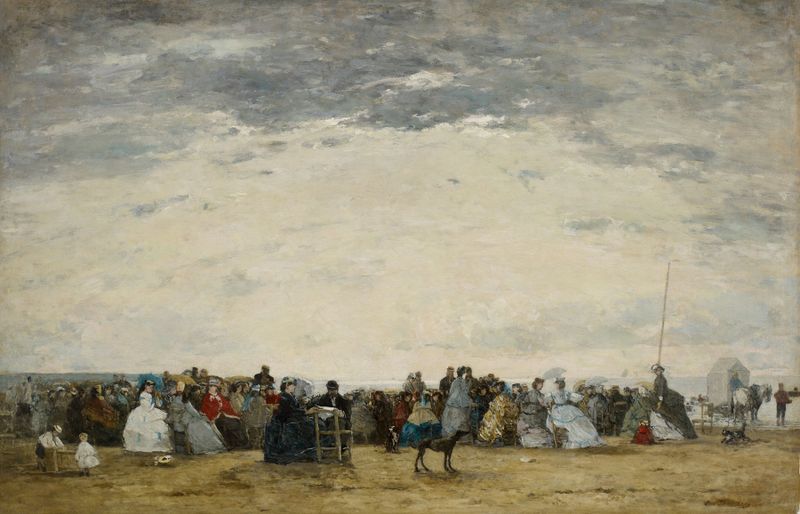
Vacationers on the Beach at Trouville
Eugène Boudin

Washerwoman near Trouville
Eugène Boudin
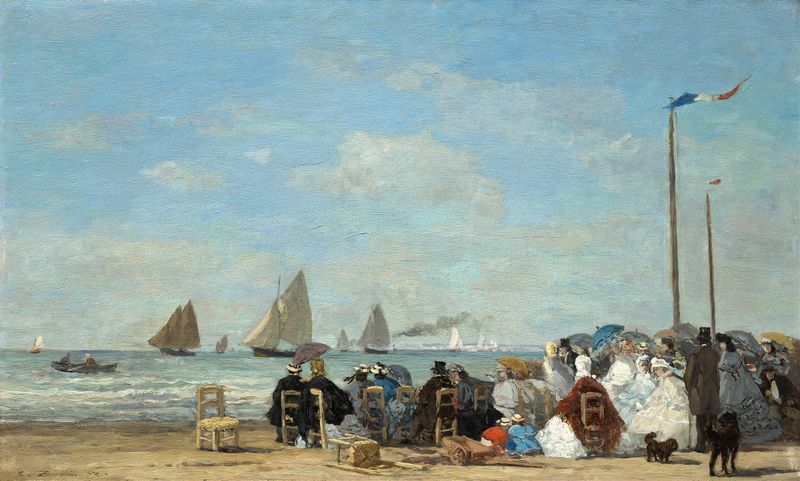
Beach Scene at Trouville
Eugène Boudin

Port aux environs d’Honfleur
Eugène Boudin

Le Faou, un coin du village
Eugène Boudin
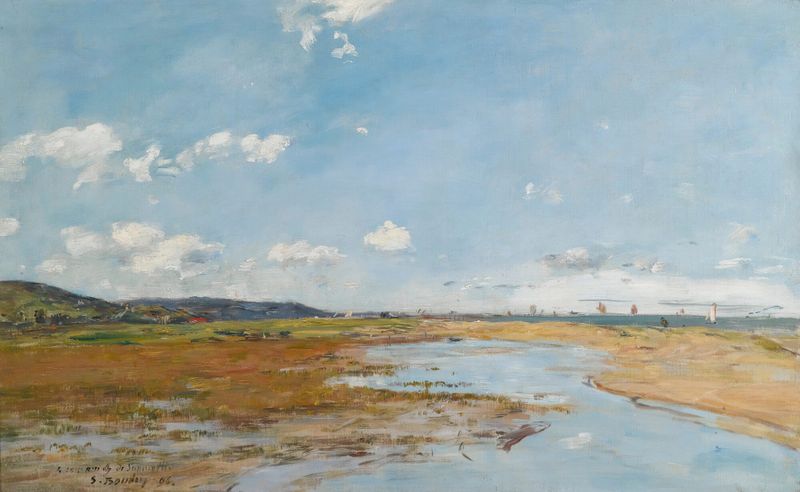
Deauville. Le Rivage
Eugène Boudin
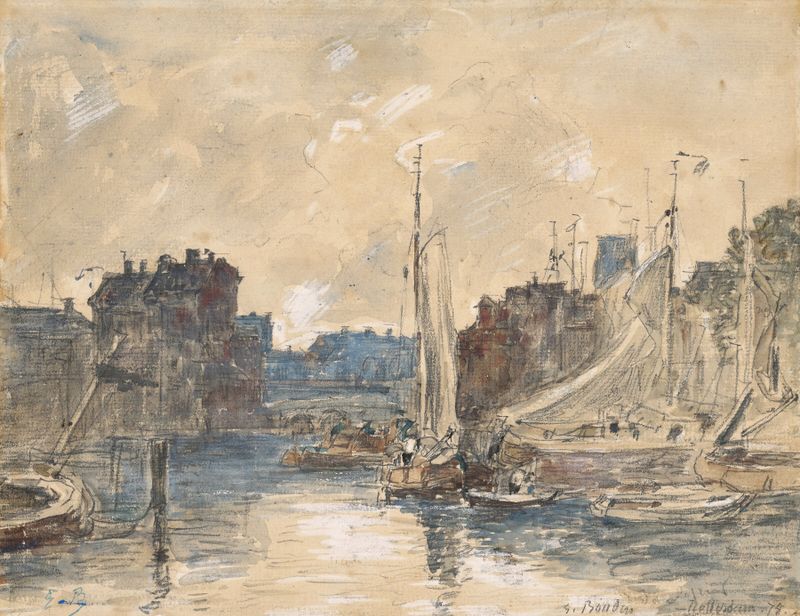
Port de Rotterdam
Eugène Boudin

View of Bordeaux, from the Quai des Chartrons
Eugène Boudin

Trouville, Scène De Plage
Eugène Boudin

Trouville, Le Port
Eugène Boudin





