Breakwater at Nieuwpoort — História e Análise
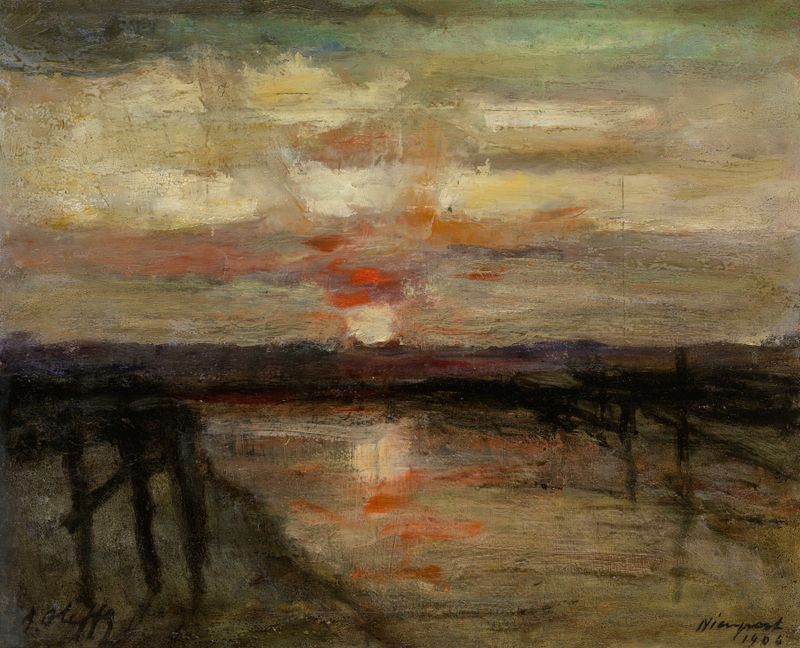
When did color learn to lie? In Breakwater at Nieuwpoort, vibrant hues deceive the eye, whispering secrets of divinity hidden beneath the surface. The canvas resonates with a haunting beauty, capturing a moment where nature and human intervention converge in a delicate dance. To truly appreciate this work, look to the left where the sun’s golden rays stretch across the water, casting a shimmering glow that makes the waves appear alive. Notice how the artist employs a bold palette, rich in cobalt blues and radiant yellows, to leverage light’s interplay with the sea.
Each brushstroke conveys movement, from the crashing waves against the breakwater to the serene sky above, creating a striking contrast that evokes both calm and chaos. Beneath the surface, hidden meanings emerge—the clash between solitude and connection, the transience of moments versus the permanence of the landscape. The breakwater, a man-made structure, symbolizes humanity's attempt to tame nature, yet the wild waves remind us of the relentless power and beauty of the divine. There is a tension between the solid permanence of the breakwater and the fluidity of the ocean, inviting the viewer to reflect on their relationship with both. In 1901, Oleffe painted this piece while exploring the coastal town of Nieuwpoort, Belgium.
He was part of a movement that sought to capture the essence of light and atmosphere using vivid colors, resonating with the burgeoning impressionist style of the time. This period in his life was marked by a growing fascination with the interplay of nature and human existence, themes that would define much of his work.