Costal scene north of Aarsdale — História e Análise
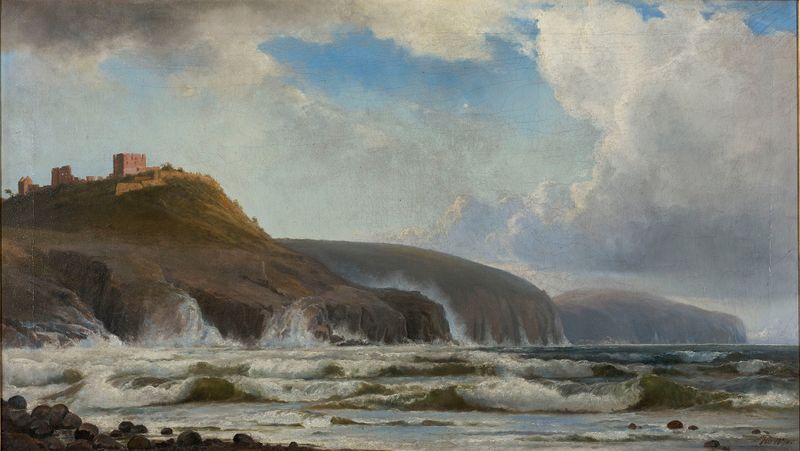
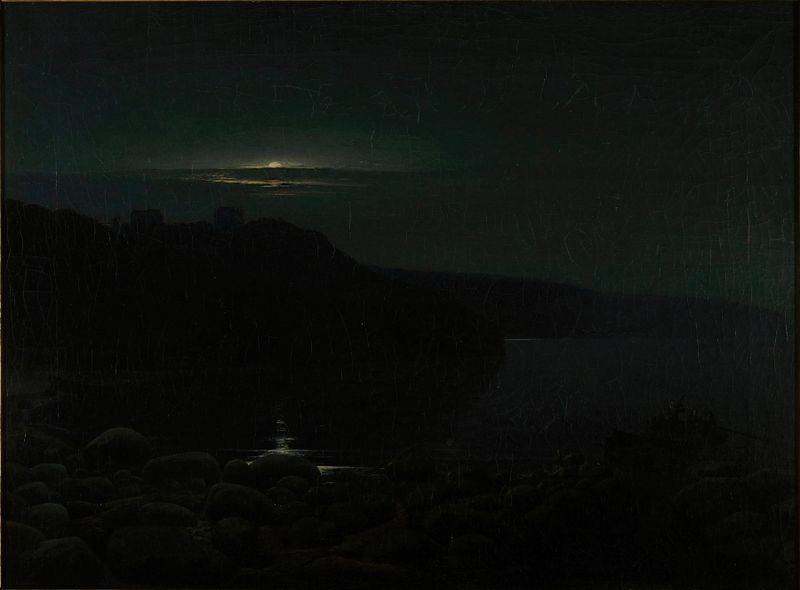
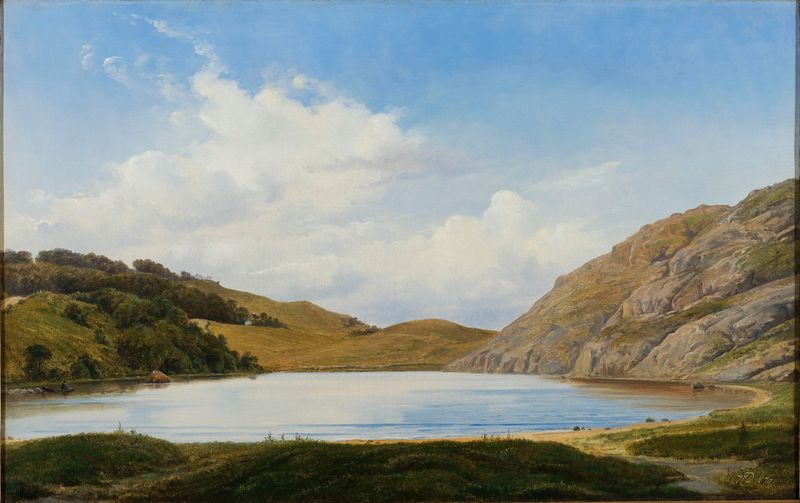
In the quiet interplay of colors and shapes, destiny unveils itself, whispering the stories of nature's timeless rhythms. Focus on the vibrant greens and blues that dominate the canvas, capturing the essence of a coastal landscape. The waves roll gently onto the shore, painted with deft strokes that suggest movement and life. Notice how the light dances on the water’s surface, illuminating the scene and creating a shimmering path that draws the eye toward the horizon.
The rugged cliffs stand sentinel in the background, their earthy tones providing a warm contrast to the cool, fluid sea. Amid the tranquil beauty lies an emotional tension, a dance between the ferocity of nature and the serenity it offers. The shoreline, both inviting and foreboding, holds a duality — it is a place of refuge and a reminder of life's unpredictable currents. Small details, like the scattering of pebbles and the wisps of grass bending in the wind, evoke the feeling of an eternal moment, where time flows as freely as the tides. In 1869, Holger Drachmann painted this coastal scene while living in Denmark, a period marked by a burgeoning interest in naturalism within the art world.
He was deeply influenced by the landscape around him, reflecting both personal experiences and the broader Romantic movement. Drachmann's work captures not just the physical world, but also the emotional landscape of human existence, revealing the connections that bind us to nature and to each other.