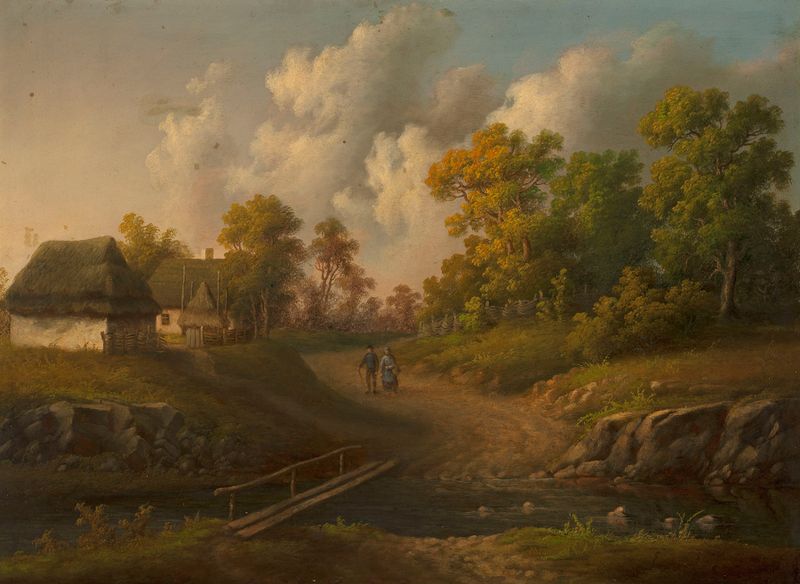
Countryside landscape — História e Análise
Can beauty exist without sorrow? In the gentle embrace of nature, innocence thrives, yet it is often shadowed by the weight of unspoken pain. Look to the left at the soft rolling hills, the delicate greens of summer intertwined with hints of gold, presenting an idyllic serenity. Notice how the light bathes the landscape, casting a warm glow that invites you into the scene while simultaneously hinting at the fleeting nature of such beauty. The horizon meets the sky in a tender embrace, where wispy clouds meander, their fluid shapes contrasting with the solidity of ancient trees, each stroke meticulously crafted to evoke the rich texture of the earth. The interplay between light and shadow reveals deeper emotional currents—innocence juxtaposed with the inevitable passage of time.
The vibrancy of the colors speaks to youthful exuberance, yet the somewhat muted tones in the foreground whisper of life’s transience. Each element, from the distant farmhouse to the solitary figure walking along the path, tells a story of solitude and contemplation, reminding viewers that joy is often interwoven with longing. In 1880, Edward Drdacki painted this piece during a time of personal reflection, as he navigated the shifting currents of the art world. Emerging from the confines of academic tradition, he sought to capture the essence of the natural world in a way that resonated with emotional authenticity.
His commitment to portraying rural landscapes marked a significant moment in his career, as he laid the groundwork for a transformative approach to plein air painting.