
Dordrecht, Moulin sur les bords de la Meuse — História e Análise
Did the painter know this moment would outlive them? In the tranquil embrace of nature, where the river meets the sky, innocence thrives in the gentle brushstrokes of a fleeting scene. Focus on the soft hues cascading across the canvas, particularly where the sunlit clouds flirt with the water's surface. The artist uses a harmonious palette of blues and greens, inviting the viewer’s eye toward the serene banks of the Meuse. Notice how the wind carries the reeds to the left, leading your gaze toward the quaint mill nestled among trees, its reflection shimmering delicately.
Each stroke breathes life into the landscape, creating a sense of peacefulness that beckons you to linger, lost in the moment. Yet beneath this idyllic surface lies a contrast—a tension between labor and leisure. The mill, a symbol of industriousness, stands still amidst the flowing river, a reminder that the relentless passage of time continues even in this serene instant. The gentle ripples on the water mirror the tranquility of life, while the presence of human activity hints at a world just beyond the frame, where innocence may be fleeting. In 1875, while creating this piece, the painter found himself deeply entrenched in the evolving Impressionist movement, advocating for the beauty of light and nature.
Boudin, painting along the banks of the Meuse, was influenced by his surroundings and changing societal landscapes. This work reflects not only his personal journey but also the broader shift in artistic expression, emphasizing the ephemeral beauty of everyday life in a world on the brink of modernity.
Mais obras de Eugène Boudin
Ver tudo →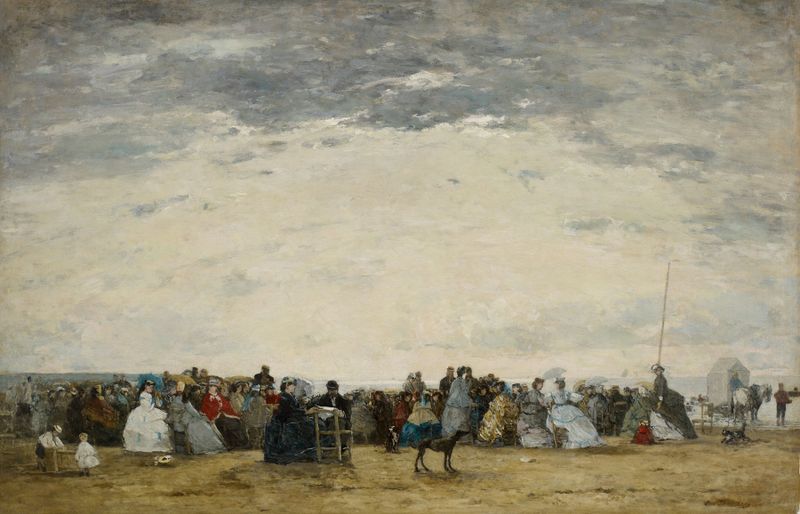
Vacationers on the Beach at Trouville
Eugène Boudin

Washerwoman near Trouville
Eugène Boudin
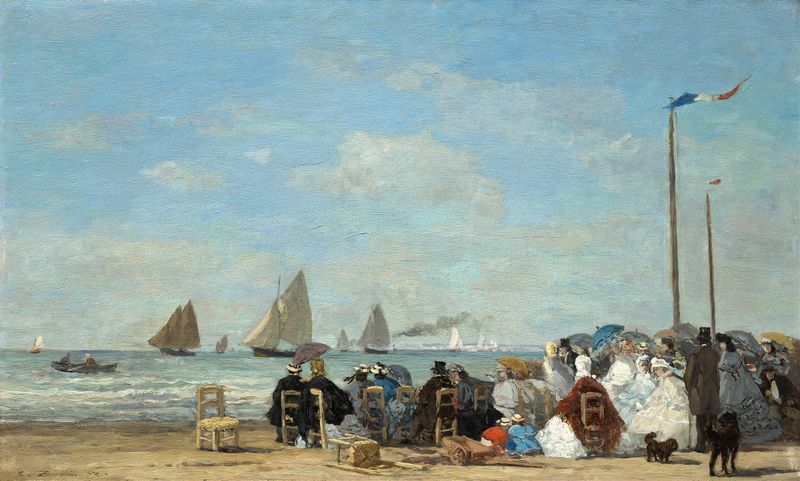
Beach Scene at Trouville
Eugène Boudin

Port aux environs d’Honfleur
Eugène Boudin

Le Faou, un coin du village
Eugène Boudin
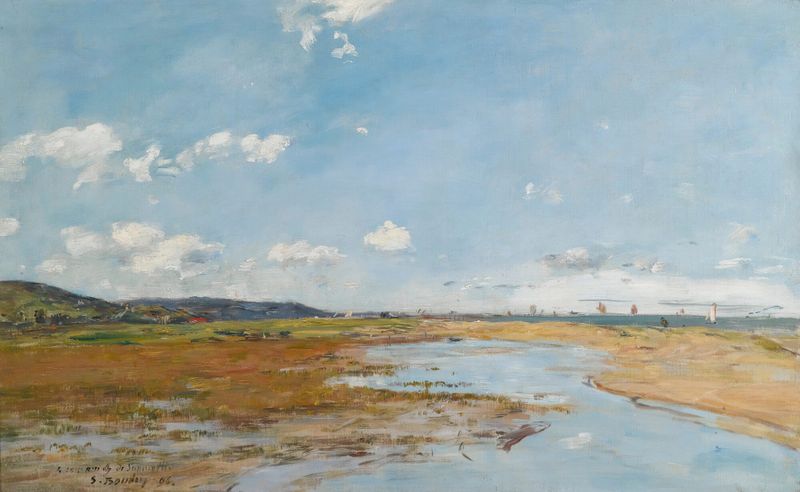
Deauville. Le Rivage
Eugène Boudin
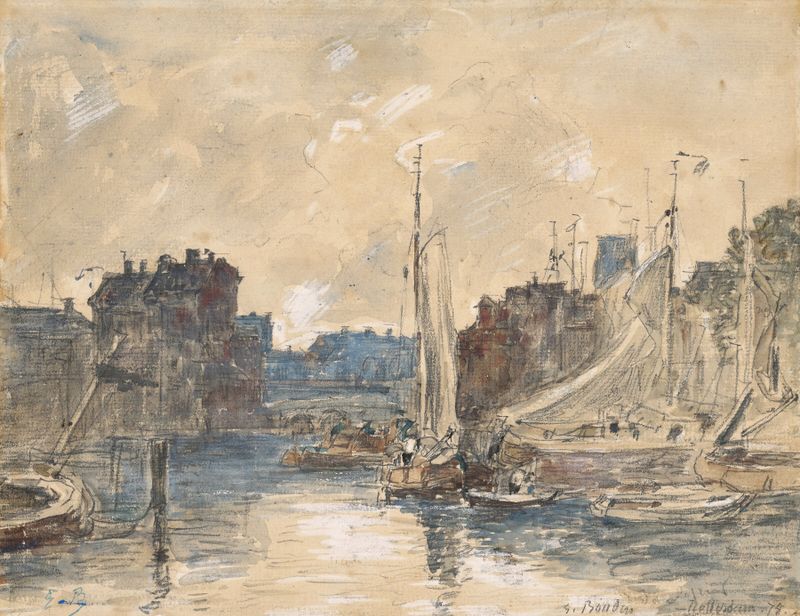
Port de Rotterdam
Eugène Boudin

View of Bordeaux, from the Quai des Chartrons
Eugène Boudin

Trouville, Scène De Plage
Eugène Boudin

Trouville, Le Port
Eugène Boudin





