El Tovar, Grand Canyon, Arizona — História e Análise
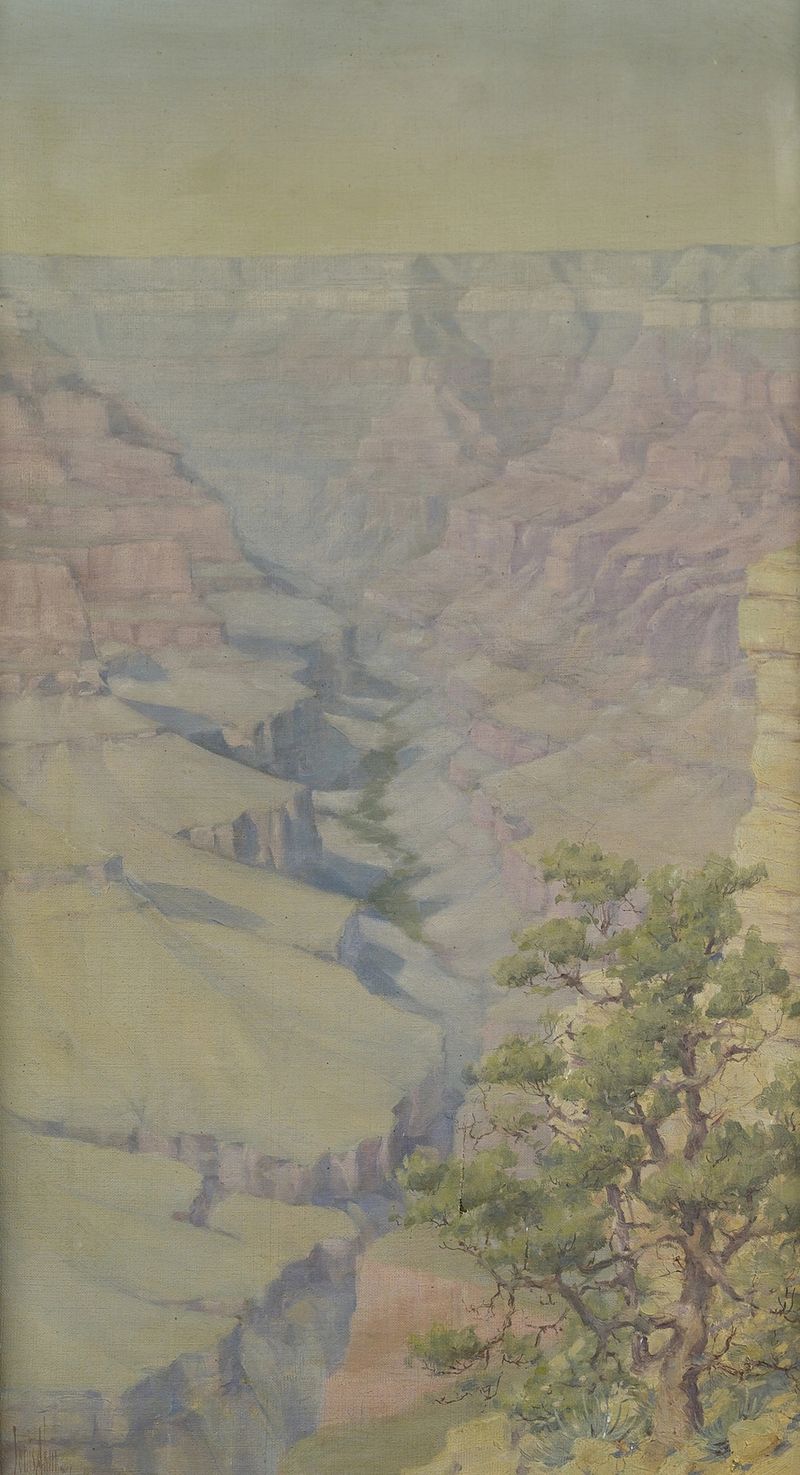
What if silence could speak through light? In El Tovar, Grand Canyon, Arizona, the interplay of shadow and illumination whispers of the beauty and fragility of nature. Look to the center, where the sun's golden rays cascade over the rugged cliffs, illuminating the intricate textures of the rock face. The artist employs vibrant tones of ochre and burnt sienna juxtaposed against deep blues and greens, creating a striking contrast that draws the eye. Notice how the delicate brushstrokes capture the essence of the canyon’s vastness, inviting the viewer to explore the hidden depths and complexities of the landscape. Beneath the surface of this breathtaking scene lies a tension between permanence and transience.
The grandeur of the canyon suggests an eternal monument, yet the fleeting light reveals the ephemeral nature of time, reminding us that even the mightiest structures are subject to erosion and change. The soft, fading hues in the foreground echo the fragility of the moment, urging contemplation of both the beauty of our surroundings and the inevitability of their transformation. In 1906, while exploring the American West, the artist was deeply influenced by the transcendental qualities of nature. During this period, Akin's work was aligning with the broader movements in art that celebrated the American landscape.
His focus on light and color reflected an era of growing appreciation for the natural world, as artists sought to capture the spirit of a land still teeming with untouched beauty.