
Etude sur la mer à St Malo contre soleil — História e Análise
Could beauty survive in a century of chaos? In the tender embrace of twilight, where the sun kisses the sea, Etude sur la mer à St Malo contre soleil reveals a moment of ecstasy that transcends time and turmoil. Look to the horizon, where vibrant hues of orange and gold merge seamlessly with the deep blues of the sea. The brushstrokes, bold yet fluid, capture the dynamic movement of waves, swirling with life and energy. Notice how the light dances across the canvas, illuminating the crests of the waves while casting shadows that hint at the complexities beneath the surface.
Each stroke tells a story, inviting the viewer to delve deeper into the emotions woven into the scene. Beyond its serene beauty lies a tension between chaos and tranquility. The darkening sky, filled with wispy clouds, suggests an impending storm, a metaphor for the turbulent world outside the frame. Yet, the radiance of the sun fighting to break through represents hope—a promise that beauty persists, even against the odds.
The contrast between light and dark is palpable, evoking a sense of yearning and contemplation. Gustave Cariot painted this piece in 1918, a year marked by the aftermath of World War I. Living in France during this tumultuous time, he sought solace in the landscapes around him. The art world was evolving, with movements like Impressionism paving the way for new expressions.
Cariot's work reflects both a personal quest for peace and a broader commentary on the resilience of beauty amidst chaos.
Mais obras de Gustave Cariot
Ver tudo →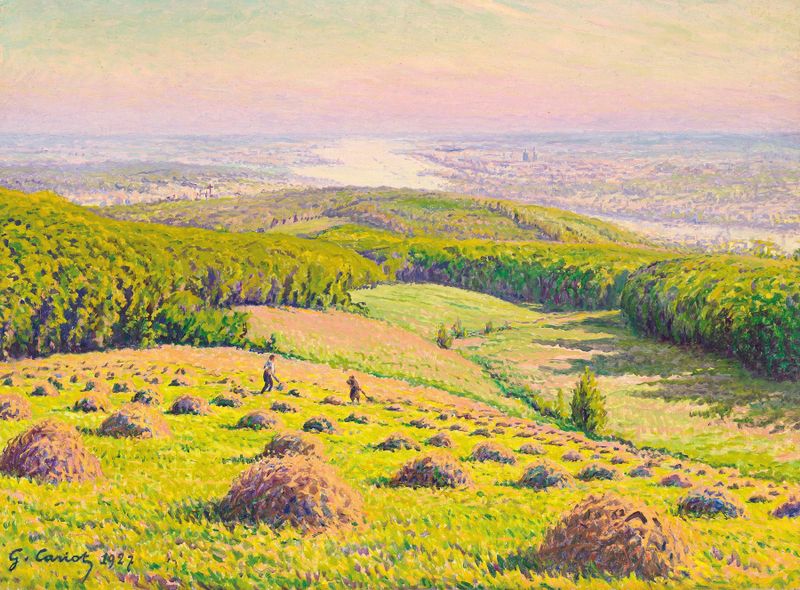
La vallée
Gustave Cariot

Le Jardin
Gustave Cariot

Les meules
Gustave Cariot
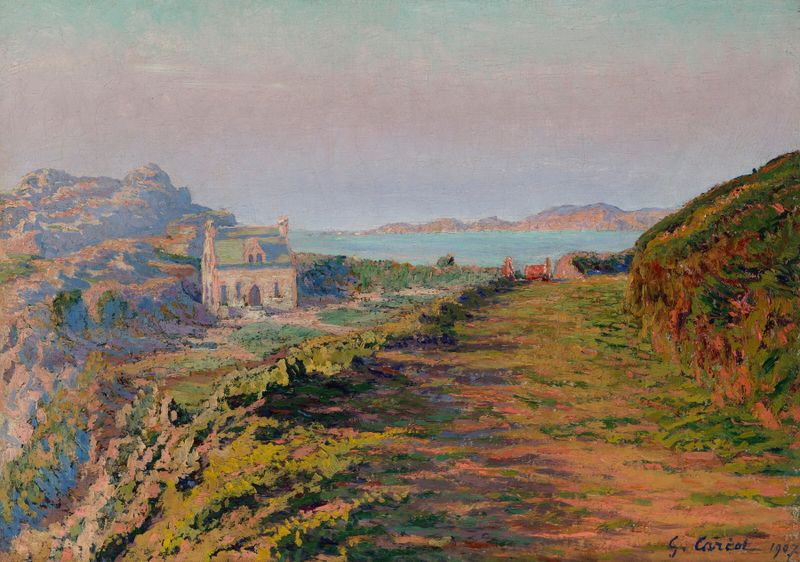
Maison Pen ar C’hastel à la pointe du Château, Perros-Guirrec
Gustave Cariot
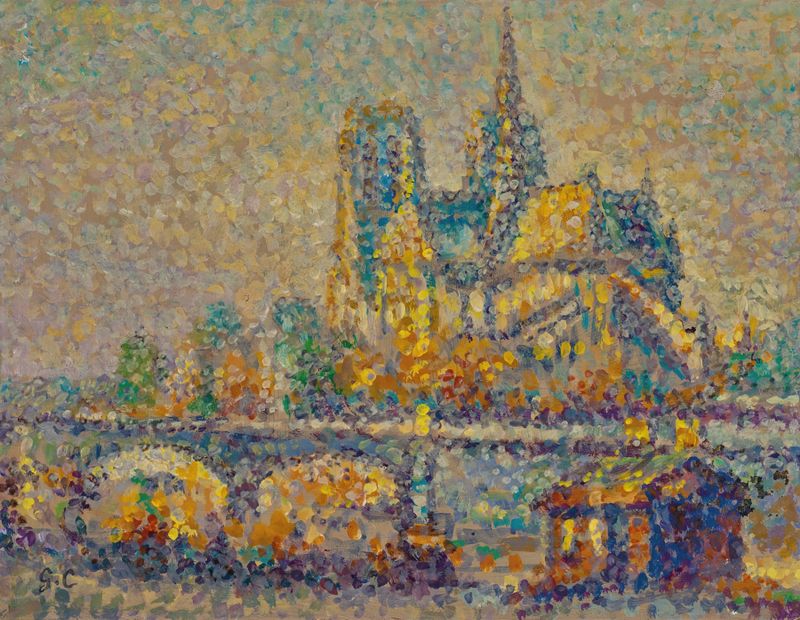
Notre-Dame de Paris
Gustave Cariot
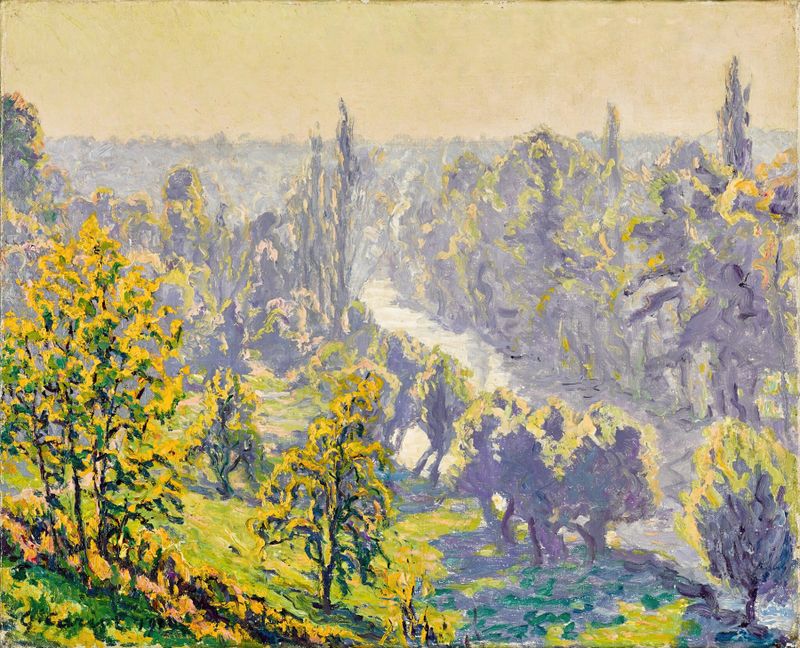
Périgny, automne, matinée sur l’Yerres
Gustave Cariot
Périgny, pont sur l’Yerres
Gustave Cariot
Le Pont-Neuf, eté, 20 heures
Gustave Cariot

Moulin de Périgny
Gustave Cariot

Le chemin à Mandres
Gustave Cariot





