Eva met slang en appel en liggende leeuw — História e Análise
In its silence, it captures the essence of existence, revealing our truest selves in every brushstroke. Look to the right at the intricate depiction of Eva, her posture imbued with both strength and vulnerability. Notice how the soft, muted tones of her robe contrast with the vibrant yellows of the apple, drawing our gaze to the moment of choice. The artist's meticulous attention to detail in the lion lying at her feet speaks volumes; its presence is both protective and threatening, embodying the duality of innocence and danger.
The subtle interplay of light and shadow across the scene enhances the depth, inviting viewers to ponder the moral weight of the narrative. In this composition, the apple symbolizes temptation and knowledge, while the lion represents untamed nature and primal instincts. The tension between Eva’s composed demeanor and the chaotic energy of the lion stirs a dialogue about the human condition, illustrating the struggle between temptation and morality. Each element, from the delicate flowers to the positioning of the figures, whispers stories of a world grappling with existential choices, echoing themes that resonate across centuries. Created in 1523, this work emerged during a time of significant transition in the art world, where Northern Renaissance artists sought to blend humanist ideals with religious narratives.
Beham, often associated with the Dürer circle, was exploring the boundaries of engraving and painting, pushing forward a visual language that reflected emerging Protestant thought and the complexities of individual experience.
Mais obras de Hans Sebald Beham
Ver tudo →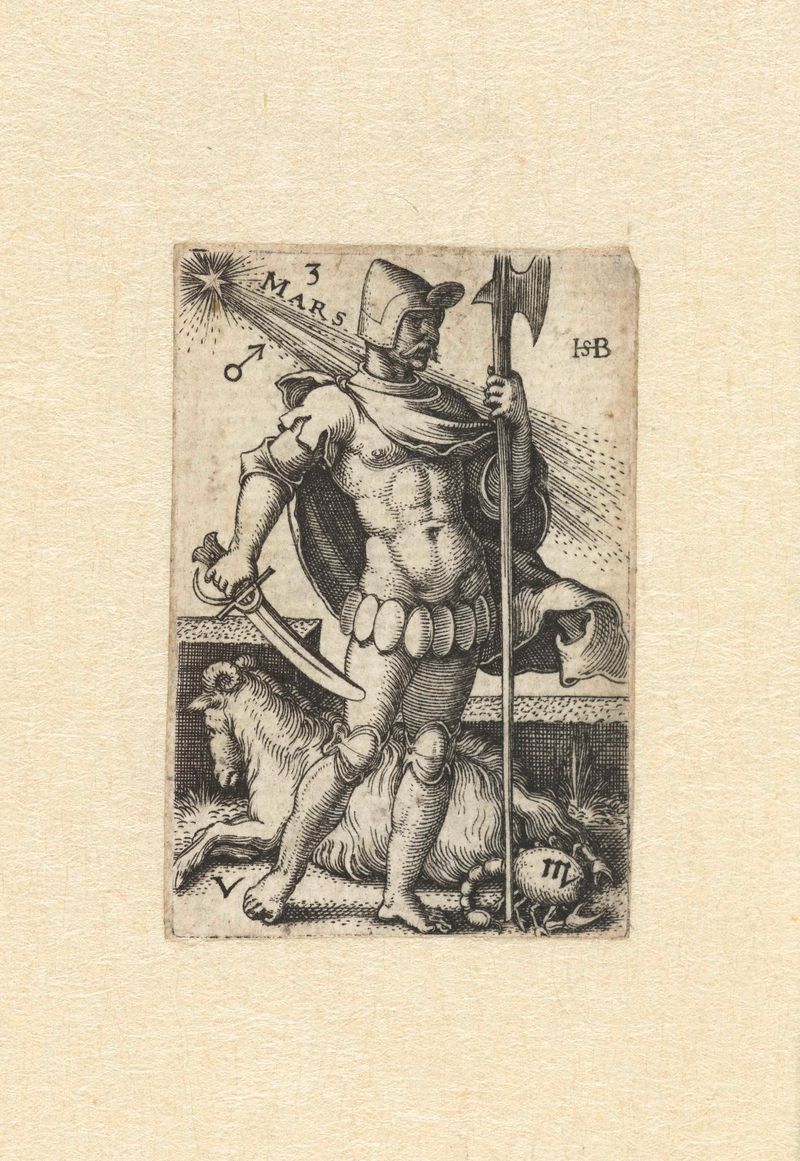
Mars met sterrenbeelden Ram en Schorpioen
Hans Sebald Beham

Achilles in gevecht met Hector
Hans Sebald Beham
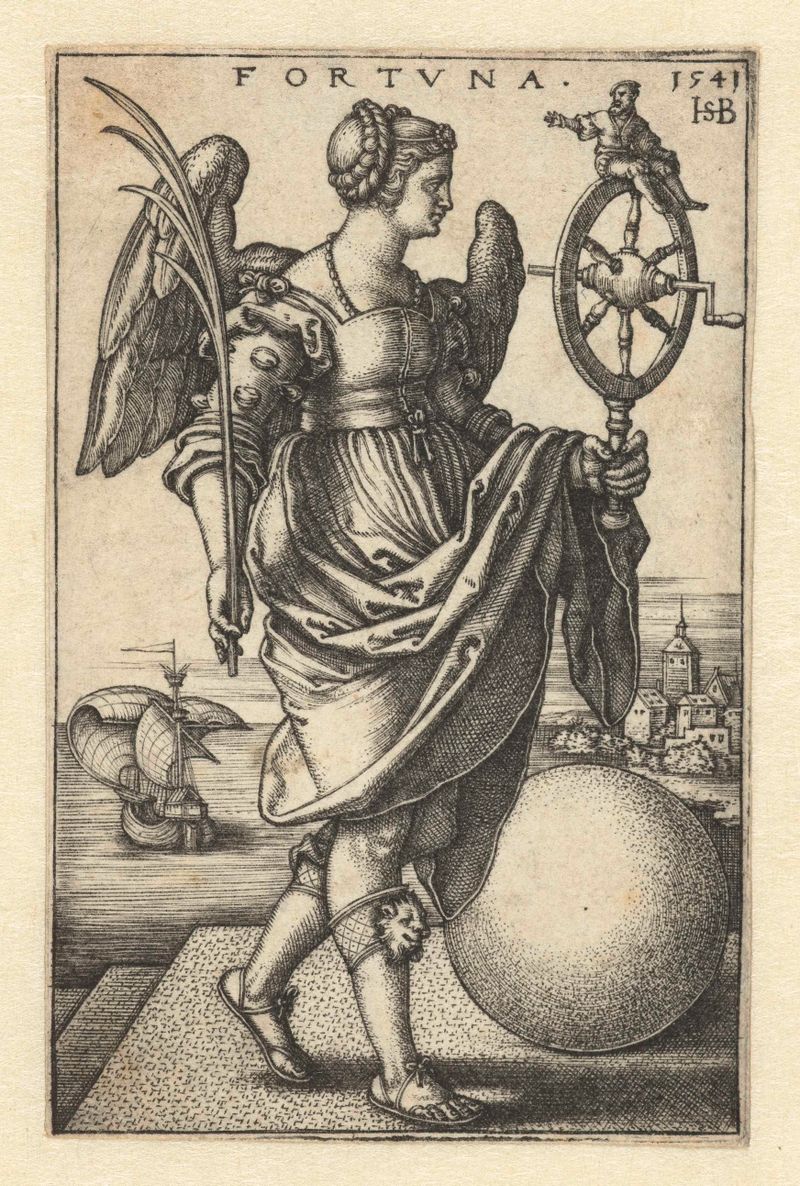
Fortuna
Hans Sebald Beham

Hercules worstelt met Antaeus
Hans Sebald Beham

Twee muzikanten met schalmey en doedelzak
Hans Sebald Beham

Voorzichtigheid (Prudentia)
Hans Sebald Beham

Hercules in gevecht met de Trojanen
Hans Sebald Beham
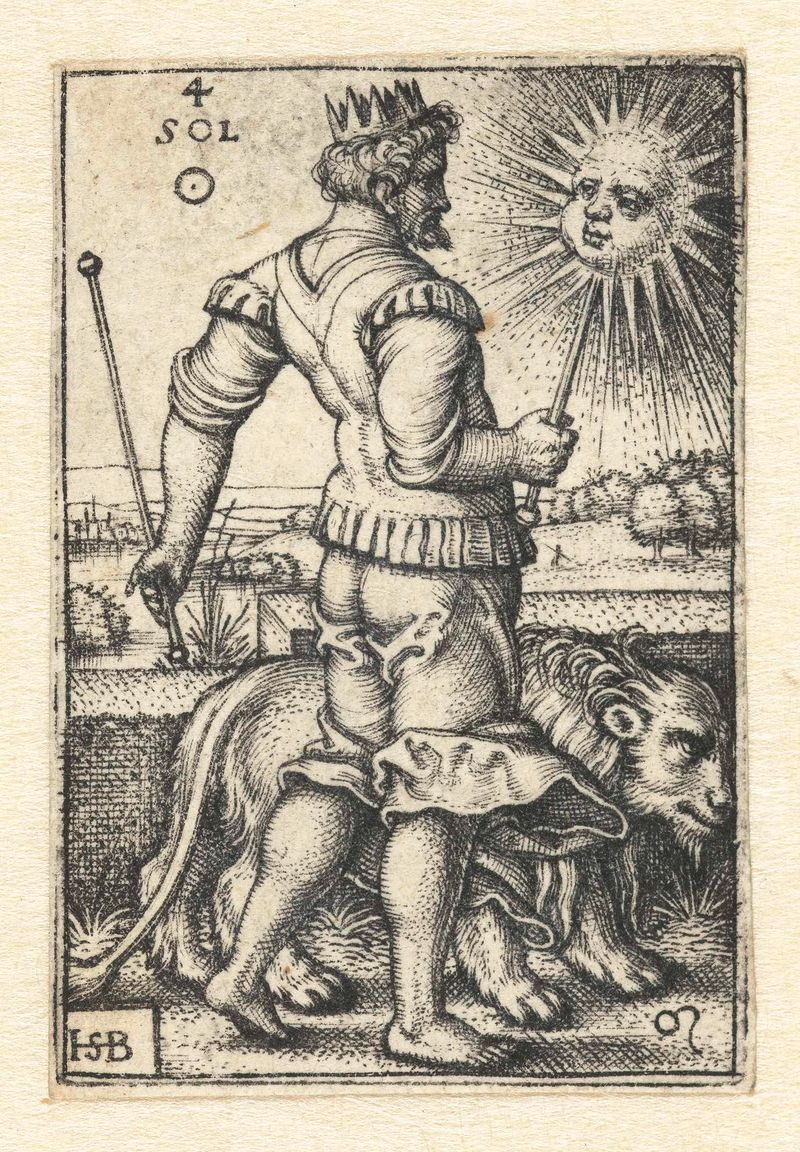
Apollo (Sol) met sterrenbeeld Leeuw
Hans Sebald Beham
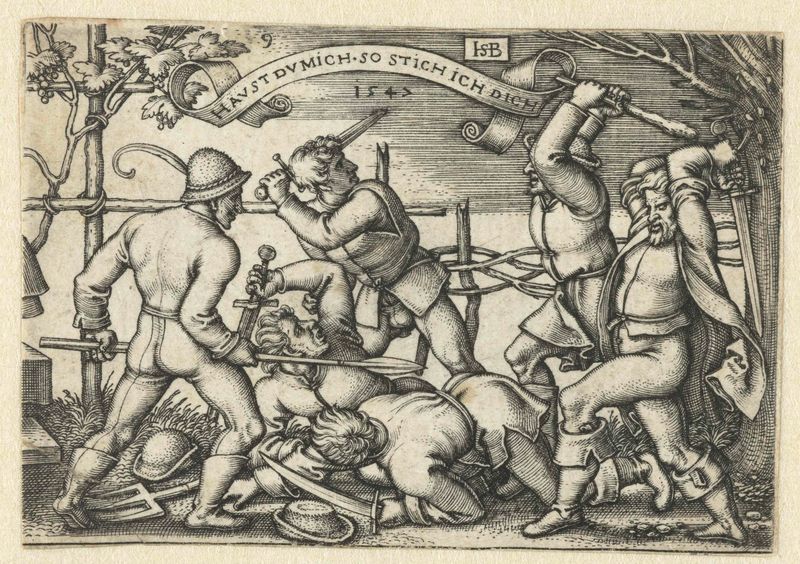
Vechtende boeren met zwaarden
Hans Sebald Beham
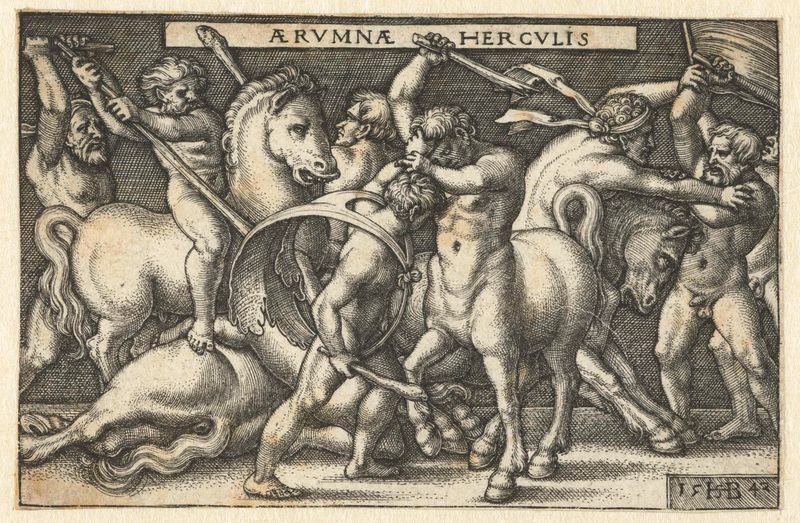
Hercules in gevecht met centaurs
Hans Sebald Beham