Evening — História e Análise
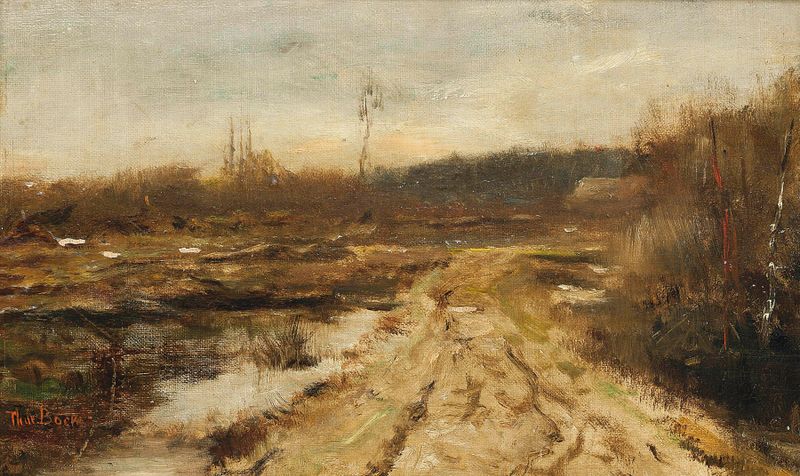
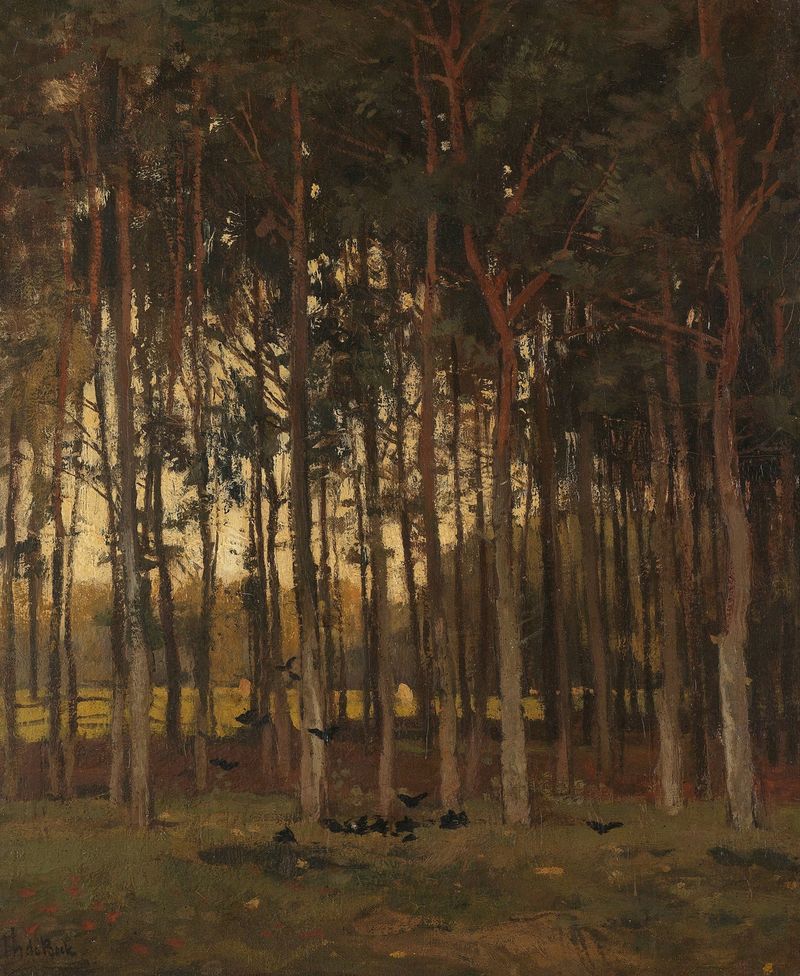
In the quiet of dusk, everyday forms melt away, revealing the ethereal transitions of light and shadow. The viewer is invited to witness the delicate transformation that occurs at the day's end, where colors blend into a serene harmony, and reality slips into something more profound. Look to the left at the soft, muted tones that envelop the trees, their silhouettes gently swaying on the canvas. Notice how the painter captures the ephemeral quality of twilight with a palette of deep blues and warm oranges, creating a tension between day and night.
The strokes are fluid and expressive, guiding the eye across the composition, allowing the viewer to feel the stillness in the air as it begins to thrum with possibility. Beneath the serene beauty, there lies a profound sense of transformation—a transition not just of light, but of time itself. The contrast between the vibrant colors of the sky and the more subdued earth tones suggests an inevitable change, evoking a bittersweet nostalgia. This duality speaks to the human experience, where moments of beauty often carry with them the weight of what is lost. In 1898, the artist created this piece during a time of exploration and innovation in the art world.
Living in the Netherlands, he was influenced by the natural landscape around him and the Impressionist movement, which emphasized the fleeting effects of light. This period marked a shift in his career as he began to embrace emotional resonance in his landscapes, truly transforming his artistic vision.