Forest’s Interior — História e Análise
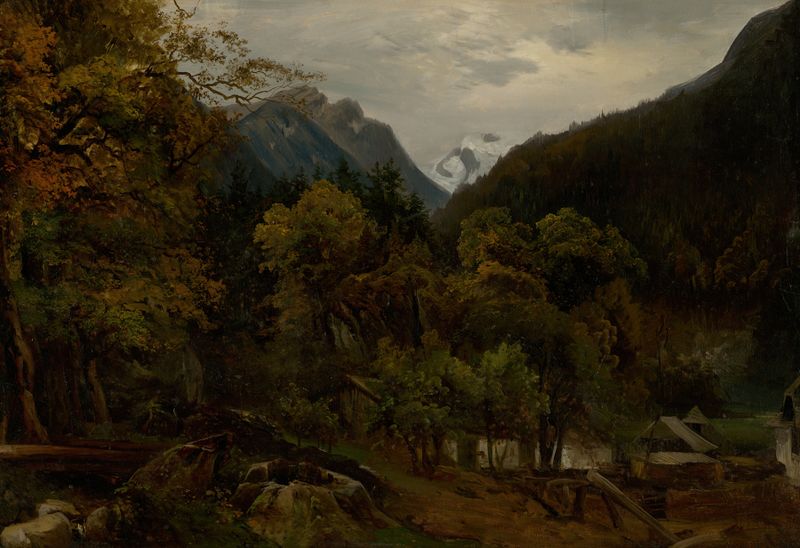
Where does light end, and longing begin? In the depths of nature's embrace, the interplay of light and shadow beckons us to explore the depths of our own yearning and faith. Focus on the vibrant greens that dominate the canvas, drawing your eye toward the dappled sunlight filtering through the dense treetops. Notice how the delicate brushstrokes create a tapestry of leaves, each rendered with a sense of individuality and life. The gentle gradation of light that spills onto the forest floor invites you to wander deeper into the scene, hinting at secrets hidden just beyond the visible.
The juxtaposition of the bright, illuminated areas against the darker underbrush amplifies the sense of mystery, urging you to question what lies unseen. There is a profound dichotomy at play within this landscape; the light symbolizes hope, while the shadows evoke a sense of solitude and introspection. The interplay suggests a journey through the unknown, where faith becomes a guiding force amidst uncertainty. Each element—the towering trees, the soft earth, and the ethereal glow—intertwines to form an intricate emotional landscape, inviting a dialogue between nature and the viewer's inner world. During the years 1845 to 1860, Brodszky painted Forest’s Interior in Europe, a period marked by Romanticism's rise, emphasizing emotion and the sublime.
Amidst a shifting artistic landscape, he sought to capture the essence of nature's beauty and complexity, reflecting a growing appreciation for the natural world as a source of inspiration and spiritual reflection.