Gazing at a Waterfall — História e Análise
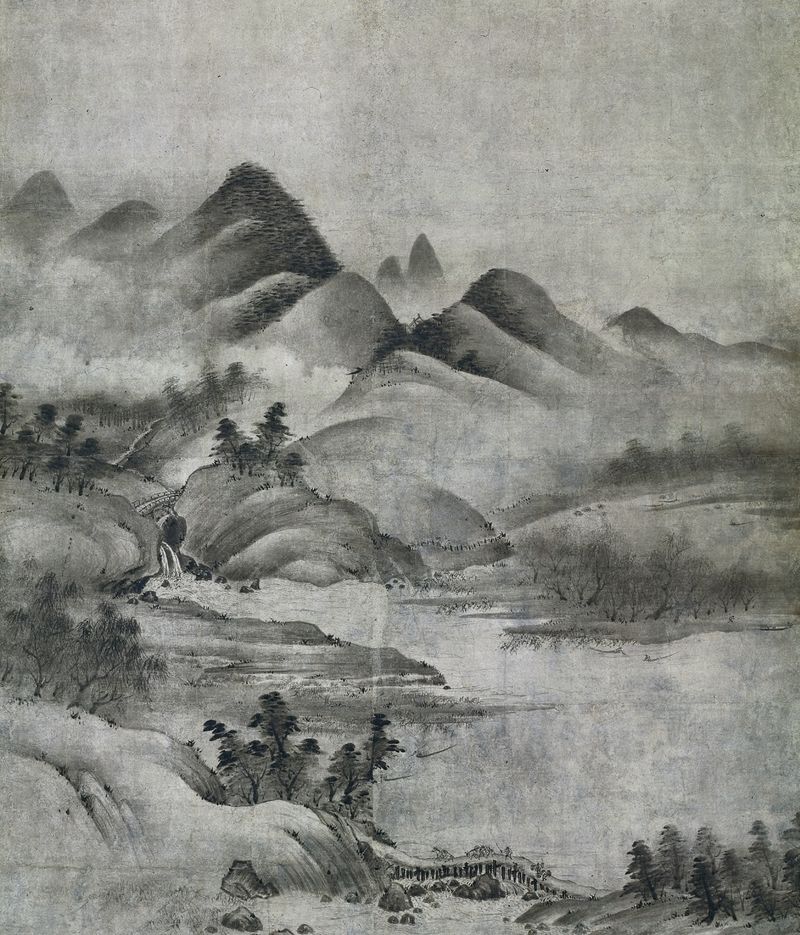
The illusion of serenity often conceals the void lurking beneath the surface, an emptiness masked by nature's splendor. Look to the center, where a cascading waterfall spills with an enchanting force, its silken texture rendered through delicate brushstrokes that invite your gaze. The soft hues of blue and green, interspersed with hints of gold, create a shimmering effect, drawing the eye toward the depths of the water as it dances over rocks. Notice the painstaking detail in the foliage surrounding the falls, each leaf a testament to the artist's skill, while the subtle gradations of color evoke a sense of tranquility. Yet, beneath this tranquil façade lies a tension within the composition.
The chaotic movement of the water contrasts sharply with the stillness of the surrounding landscape, suggesting a discord between beauty and turmoil. The void is palpable—an absence that resonates in the viewer, inviting reflection on the fleeting nature of peace. This painting embodies not just a moment but a feeling of longing, as though the waterfall harbors secrets that remain forever out of reach. In the early 1500s, Sōami was deeply immersed in the evolving traditions of Japanese ink painting.
Working in Kyoto during this period, he contributed to the development of the Muromachi period’s distinctive style, blending realism with an ethereal quality. His exploration of nature and the human experience in Gazing at a Waterfall reflects the broader shifts in art and culture of his time, where beauty served to illuminate the complexities of existence.