
Gehöft in Mauer — História e Análise
What if beauty was never meant to be finished? This question lingers in the air as one gazes upon the tranquil yet poignant landscape captured in Gehöft in Mauer. Look to the left, where soft hues of green and ochre weave together to form a lush meadow, punctuated by the gentle presence of a rustic farmhouse. The brushstrokes are both deliberate and unrefined, creating a sense of immediacy as sunlight filters through the trees, casting dappled shadows that play against the earth. Notice how the sky, painted in an array of muted blues, holds a weight that contrasts with the vibrancy of the land, evoking a bittersweet sense of nostalgia. A deeper examination reveals layers of emotional tension within the simplicity of the scene.
The farmhouse, steadfast and welcoming, seems to whisper stories of a past life, while the encroaching shadows hint at the inevitable passage of time. The artist’s choice of earthy tones evokes a profound connection to memory, suggesting that beauty is often found in what is fleeting. The juxtaposition of light and dark reflects the duality of hope and despair, resonating with the viewer on an intimate level. Oskar Laske painted Gehöft in Mauer in 1941, during a tumultuous period in European history marked by war and uncertainty.
Living in Germany, he experienced the weight of political turmoil that shaped the artistic landscape of his time. This piece exemplifies his ability to find beauty and solace in the everyday, serving as a poignant reminder of resilience amidst chaos.
Mais obras de Oskar Laske
Ver tudo →
Faschingsumzug am Stock im Eisen Platz
Oskar Laske

Schönbrunn (Winter)
Oskar Laske
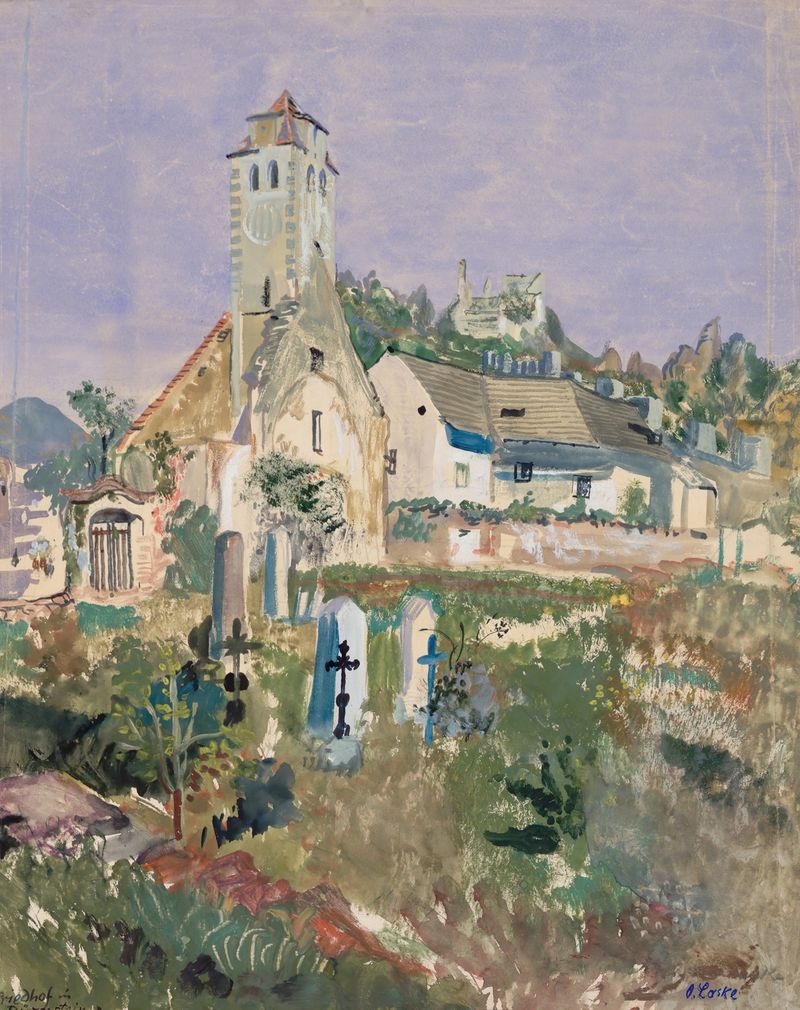
Friedhof in Dürnstein
Oskar Laske

Pratermotiv an der alten Donau
Oskar Laske

Frühjahrsnebel in Niederösterreich
Oskar Laske

Begräbnis des Wiener Bürgermeisters Dr. Karl Lueger
Oskar Laske

Maria Theresien-Denkmal mit Blick gegen das Burgtor
Oskar Laske
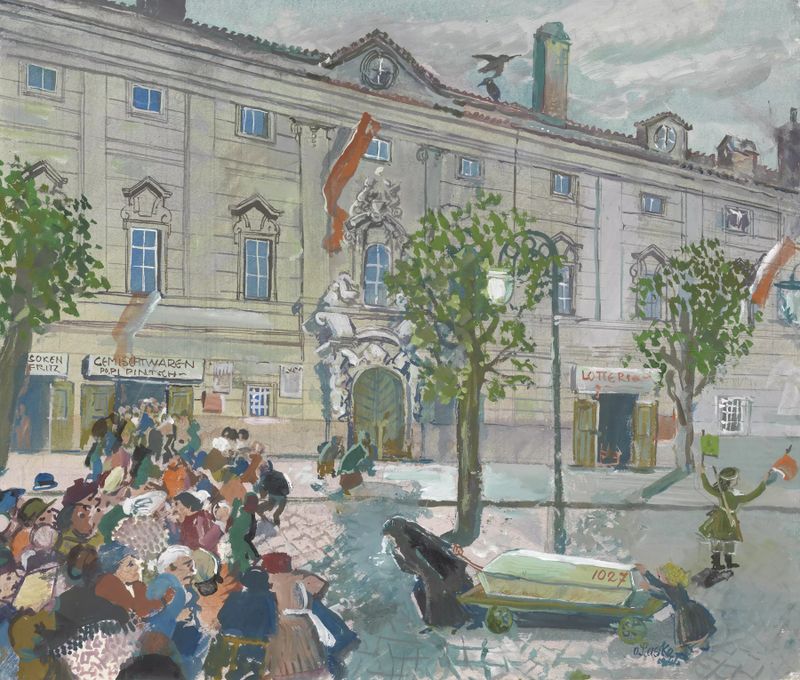
Wiener Straßenbild vom Mai 1945
Oskar Laske

Winterlandschaft in Pressbaum
Oskar Laske

Ansicht von Positano
Oskar Laske





