Gezicht op een Nederlandse nederzetting in Indonesië, J. G. van der Does — História e Análise
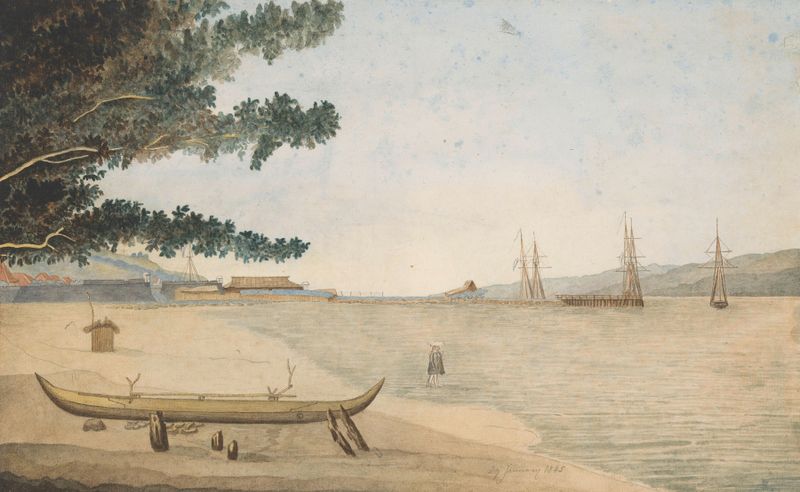
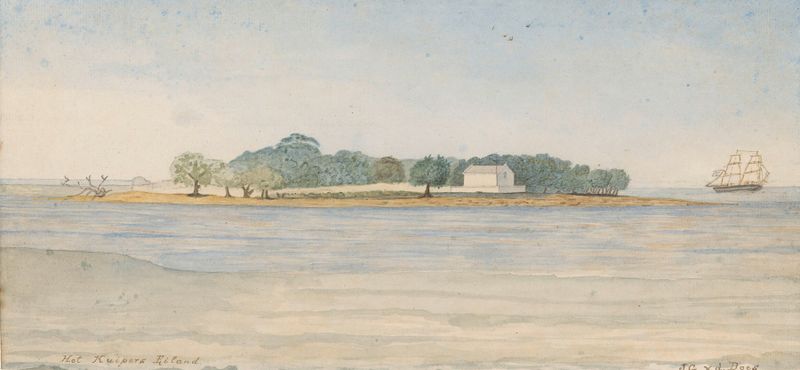
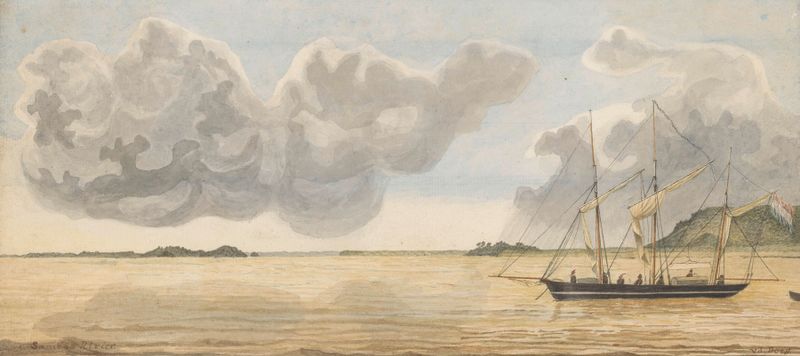
Where does light end, and longing begin? It’s a question that reverberates through the landscapes of the heart, and this painting resonates deeply with that inquiry. Look to the horizon, where the sun spills golden hues across the tranquil waters, illuminating a settlement nestled among lush, verdant greenery. The gentle brushstrokes evoke the intricate details of both architecture and nature, creating a harmonious blend of the man-made and the wild. Notice how the soft pastels of the sky melt into the rich greens of the foliage, offering a sense of serenity that invites quiet contemplation.
The artist captures not just a scene but a moment suspended in time, where innocence and discovery intertwine. Delve deeper into the layers of meaning embedded in this piece. Observe the figures, small and almost ghostly against the landscape, hinting at the transient nature of colonial encounters. Their presence elicits a spectrum of emotions—hope, longing, and perhaps a sense of displacement.
This juxtaposition of human scale against the expansive natural world highlights the fragility of man’s endeavors amidst the vastness of existence. The painting, then, becomes a meditation on the fleeting nature of innocence in a rapidly changing world. Created between 1843 and 1845, this work emerged during a period of significant colonial expansion in Indonesia. J.
G. van der Does, an artist deeply influenced by the Romantic movement, captured the delicate balance between nature and burgeoning settlements. At this time, the art world was increasingly reflecting the complexities of colonialism, and his painting stands as a poignant reminder of both beauty and the bittersweet reality of human ambition.