
Gezicht op het Château d’Antonius te Antoine — História e Análise
In the play of light and color, the unspoken narratives unfold quietly, waiting for the viewer’s gaze to discover them. Look to the left at the gentle strokes of green that breathe life into the lush surroundings, framing the imposing structure with a tender embrace. The deep blues and muted earth tones create a harmonious balance, inviting you to explore the architectural details of the Château. Notice how the sunlight kisses the façade, casting soft shadows that hint at the passage of time; each hue seems to pulse with the memory of those who walked these grounds. The interplay between light and shadow reveals both warmth and isolation, suggesting a history layered within the walls of the château.
The gentle ripples in the water reflect not just the building but also the emotions tied to it—longing, nostalgia, and perhaps regret. In the distance, the fading horizon hints at a world beyond, evoking a contrast between the stability of stone and the fluidity of nature. During this period, Neyts was immersed in the Baroque artistic movement, characterized by its dramatic use of color and light. Between 1633 and 1687, he created this piece while situated in the Netherlands, a time when urban landscapes were evolving and capturing the daily lives and environments of their inhabitants.
The period was marked by a burgeoning interest in realism, and Neyts’ work reflects that desire to celebrate both the physical and emotional landscapes around him.
Mais obras de Gillis Neyts
Ver tudo →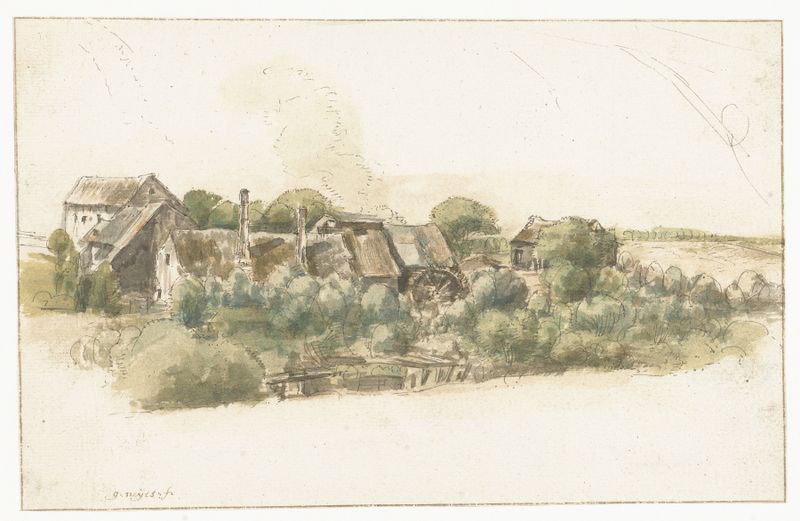


Mais arte de Arquitetura
Ver tudo →
The statue of Liberty
Frédéric Auguste Bartholdi

View of Houses in Delft, Known as ‘The Little Street’
Johannes Vermeer

View of Houses in Delft, Known as ‘The Little Street’
Johannes Vermeer

The Cathedral in Rouen. The portal, Grey Weather
Claude Monet

The yellow house
Vincent van Gogh

The Church in Auvers-sur-Oise, View from the Chevet
Vincent van Gogh