Grand Canyon — História e Análise
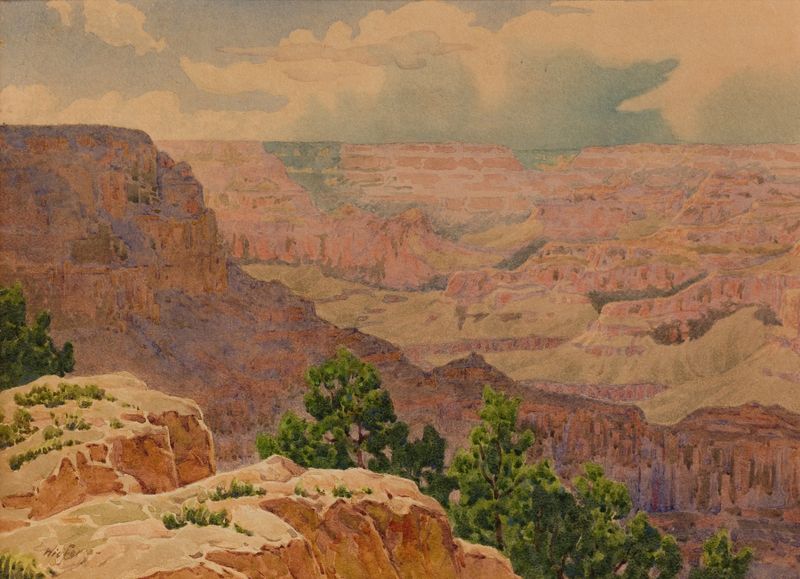
Could a single brushstroke hold eternity? In Grand Canyon, the artist captures not just a landscape but a profound nostalgia for the sublime beauty of nature, inviting the viewer to linger in its expansive embrace. Look to the center of the canvas, where the layered rock formations rise majestically, their hues of rust and ochre contrasting against the cool blues of the sky. The meticulous attention to detail in the textures draws you in, while the soft, diffused light creates an ethereal quality that highlights the canyon's grandeur. Notice how the light dances on the jagged cliffs, casting delicate shadows that playfully suggest the passage of time, transforming the scene into an almost otherworldly experience. Hidden within this breathtaking vista are echoes of the artist's reflections on the transient nature of life.
The juxtaposition of vibrant colors and deep shadows speaks to the emotional tension of existence—beauty intertwined with the inevitable march towards decay. The serene sky above contrasts sharply with the chaotic geometry of the canyon, symbolizing the duality of peace and turmoil that often resides in the human spirit. This work is a moment frozen in time, yet it whispers of the endless cycle of wonder and loss. In 1924, Gunnar Mauritz Widforss was living in the United States, having moved from Sweden to capture the majestic landscapes of his adopted home.
This period marked a growing appreciation for the American wilderness, reflecting broader cultural movements that sought to connect with nature as a source of inspiration. His work, marked by a dedication to realism and a romantic vision, mirrored the artistic currents of the time, contributing to the evolving narrative of landscape painting in America.