
Hedelandskab med en dagvogn — História e Análise
Is this a mirror — or a memory? The dichotomy between our perception and the remnants of the past can be hauntingly beautiful. Look closely at the tranquil landscape before you. The foreground is a carefully crafted blend of earthy greens and browns, where the delicate brushstrokes form a striking contrast against the vibrant hues of the sky. Notice how the sunlight dances across the undulating hills, scattering warmth and lending life to the scene.
In the distance, the solitary day cart rests quietly, almost forgotten, its muted colors reflecting the weight of time. In the interplay between light and shadow, a profound tension emerges. The cart, rustic and weathered, symbolizes not just utility but the passage of time, evoking thoughts of journeys taken and those yet to come. The serene landscape serves as a reminder of nature’s indifference, enveloping human experience within its expansive embrace.
Here, reflections ripple through the colors, blurring the lines between reality and memory, inviting the viewer to ponder their own stories within this space. During the years between 1912 and 1913, the artist was deeply engaged in exploring the subtle nuances of Danish landscapes, aiming to capture their essence with an impressionistic touch. As a leading figure in the Skagen School, he sought to represent the shifting light and moods of his surroundings. This period was marked by a growing interest in harmonizing nature with human life, as Denmark itself underwent significant social and cultural changes that shaped its artistic identity.
Mais obras de Hans Smidth
Ver tudo →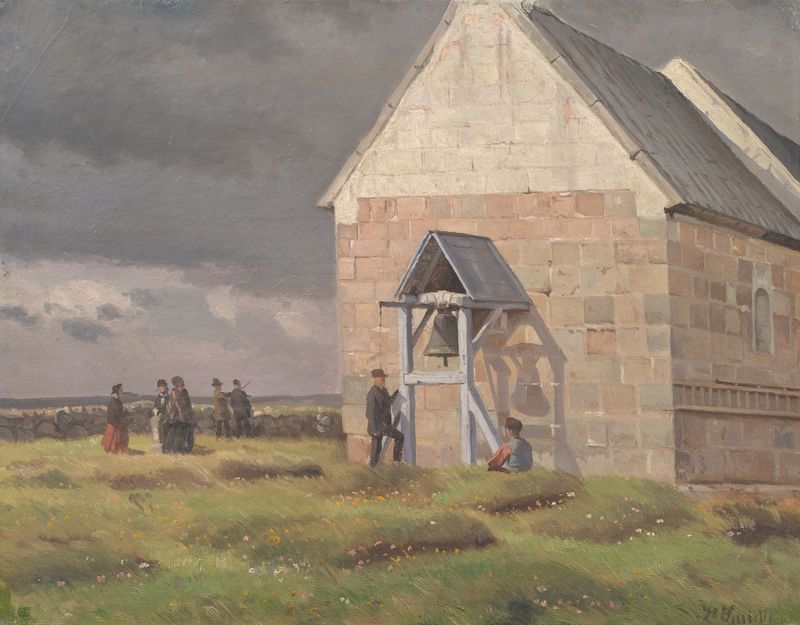
A Storm Brewing behind Nørre Vium Church, Jutland
Hans Smidth
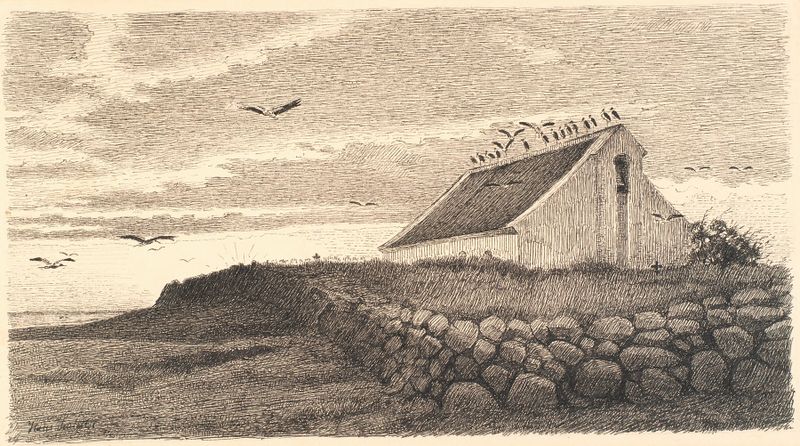
Motiv fra Karup. Storkene samler sig til rejsen. Solnedgangstid
Hans Smidth
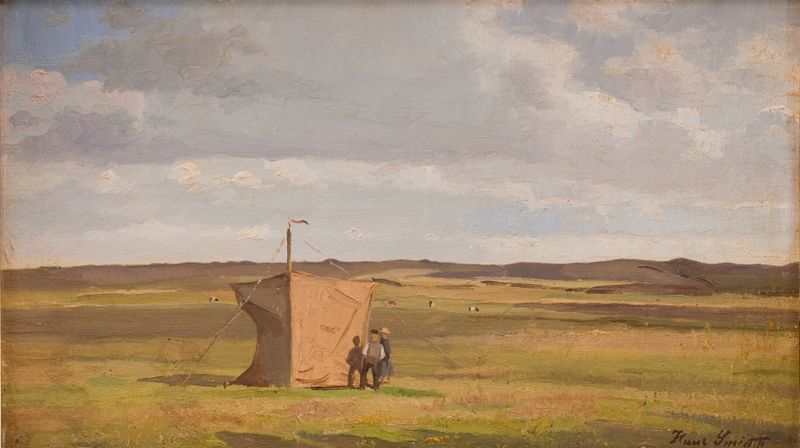
The Artist’s Shelter on the Moors in Jutland
Hans Smidth
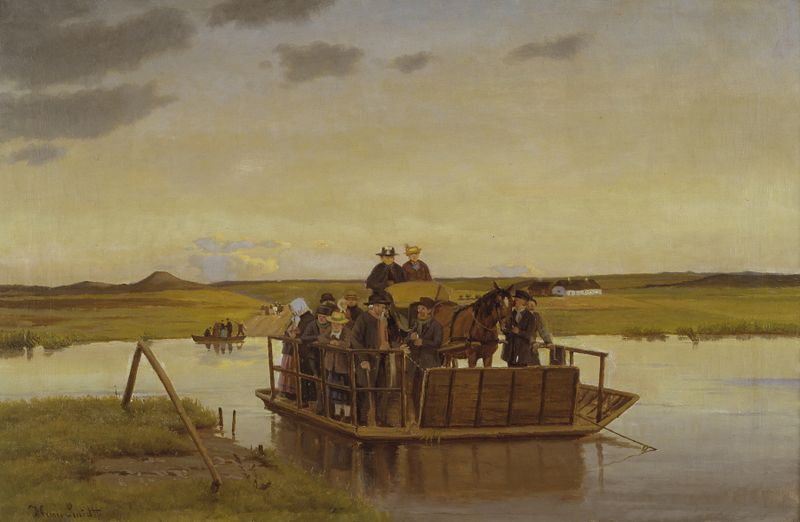
En færge over Gudenåen
Hans Smidth
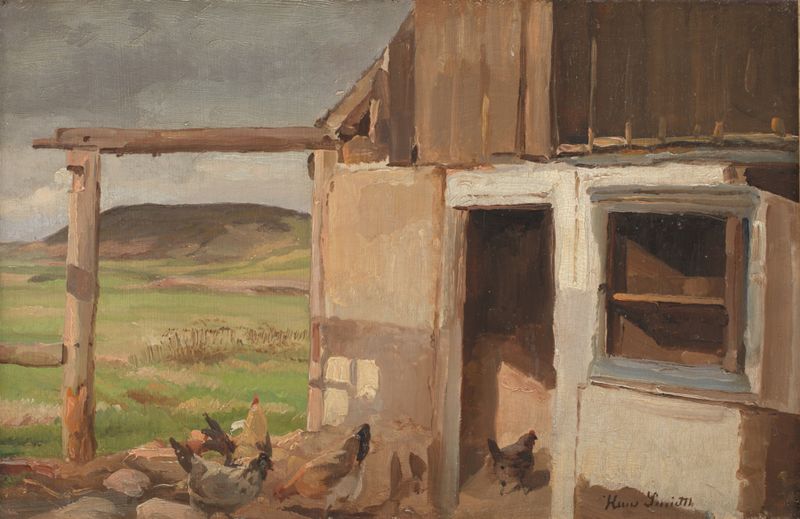
Hus med hønsegård
Hans Smidth
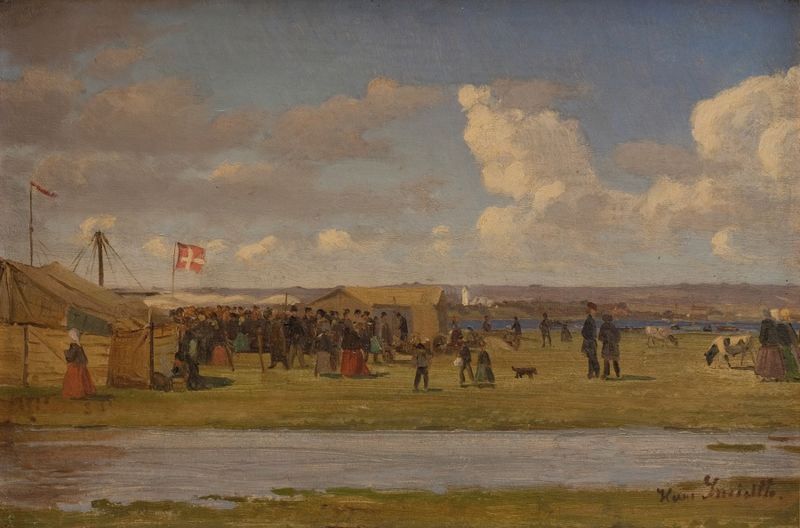
Fur marked
Hans Smidth
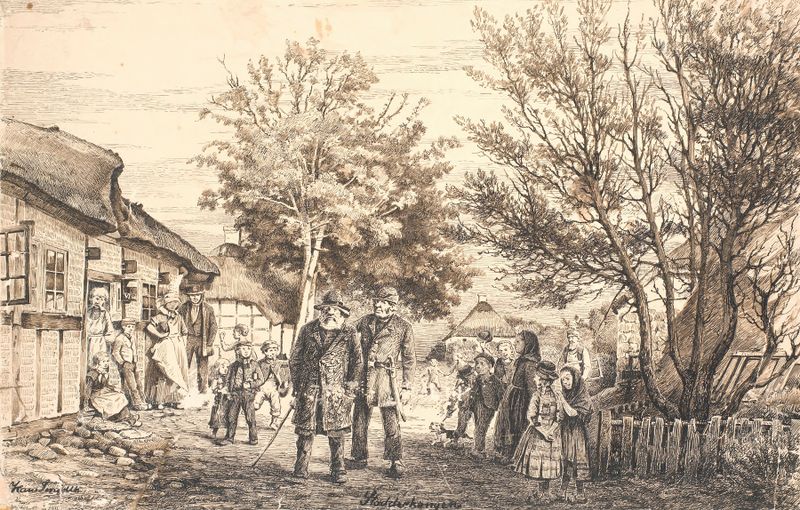
Stodderkongen
Hans Smidth
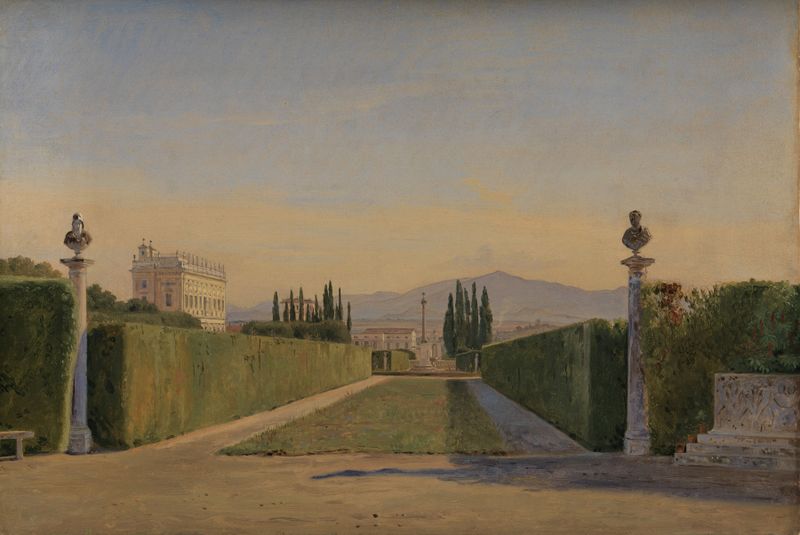
View of the Sea from a Pier
Hans Smidth





