
Helgoland — História e Análise
In the haunting expanse of Helgoland, fear lurks in the shadows of memory, channeling the essence of both beauty and dread. Look to the horizon where the tumultuous sea meets the brooding sky, a swirling mass of gray and azure. A solitary figure stands on the rocky outcrop, dwarfed by nature's unruly splendor. The brushwork, dynamic yet deliberate, captures the churning waves and the jagged cliffs; each stroke exudes a sense of urgency, a reminder of nature's formidable power.
Notice how the light filters through the clouds, casting an eerie glow over the scene, suggesting an impending storm—an emblem of both foreboding and awe. Beneath the surface, the interplay between solitude and the vastness of the ocean evokes a profound emotional tension. The isolated figure embodies vulnerability against the relentless forces of nature, while the undulating waves suggest a struggle between man and the elements. This juxtaposition resonates with the fear of insignificance, a reflection on human fragility when faced with the sublime.
Additionally, the muted color palette, dominated by somber tones, reinforces the painting's melancholic undertones, suggesting a deeper contemplation of mortality and existence. Robert Russ painted Helgoland in 1877 during a period when Romanticism was shifting to Impressionism. This transition framed his artistic exploration, as he sought to capture not only the aesthetic beauty of landscapes but also the emotional core of a scene. Living in Germany, Russ engaged with a society fascinated by nature while grappling with the fragility of human life in the face of its vastness.
Mais obras de Robert Russ
Ver tudo →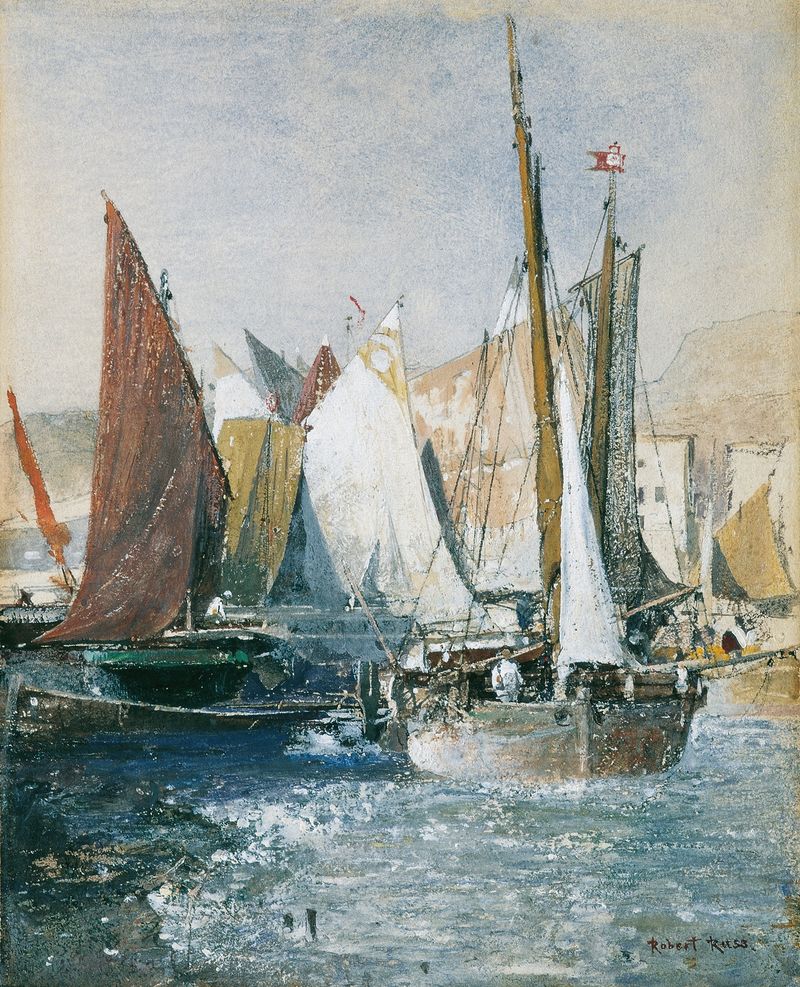
Segelboote
Robert Russ
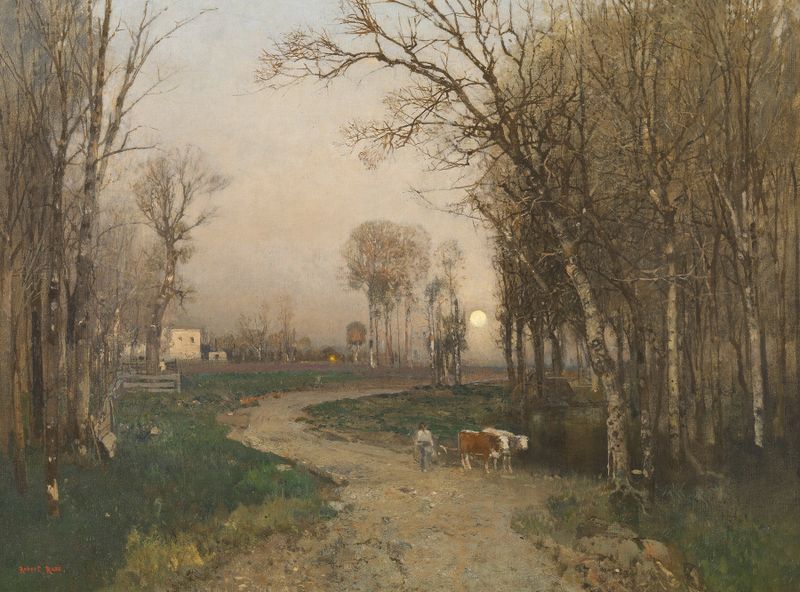
Penzinger Au
Robert Russ

Aus Dürnstein
Robert Russ

Lake Garda, Arco
Robert Russ

Partie aus dem Val Lagarina
Robert Russ

The Harbour of Riva on Lake Garda
Robert Russ

Punta San Vigilio, Lago di Garda
Robert Russ
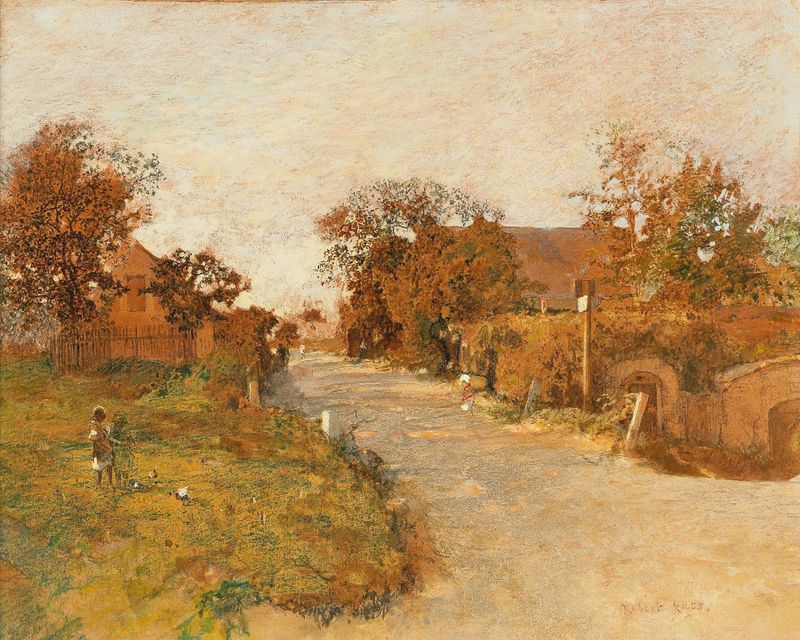
Tierstudie – Motiv aus Feldsberg
Robert Russ

Hof der Fürstenburg in Burgeis
Robert Russ
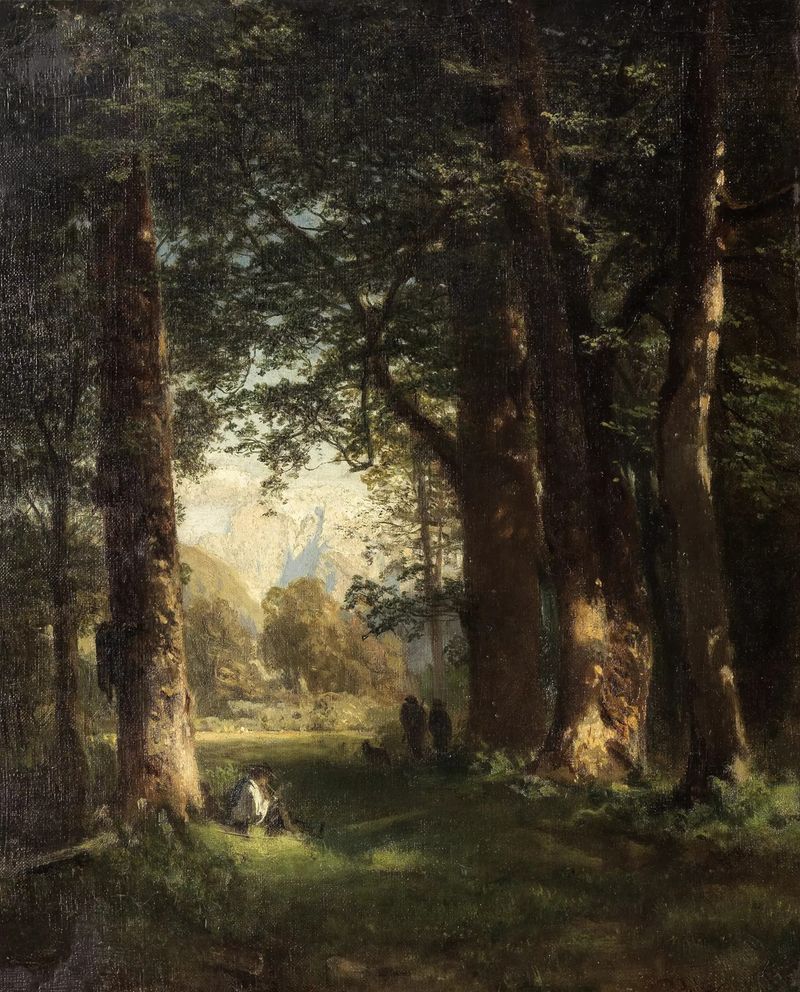
Waldlandschaft mit Figurenstaffage und Blick auf ein Gebirge
Robert Russ





