High Tor, Matlock, Derbyshire — História e Análise
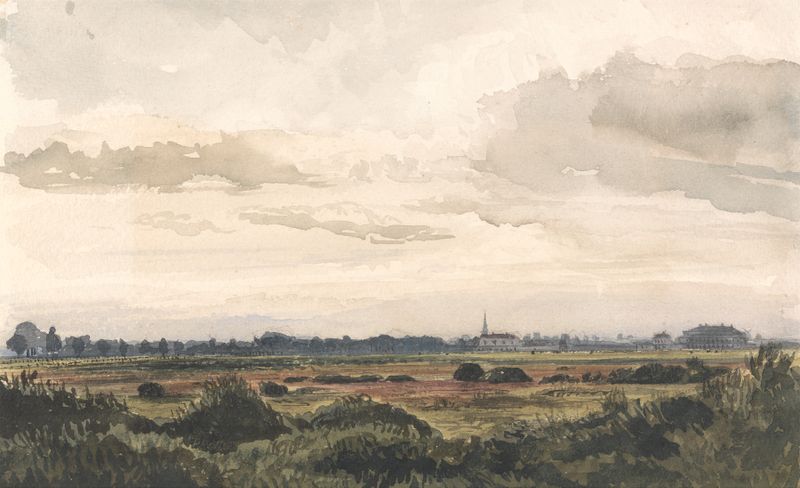
In the heart of nature, landscapes whisper the stories of loss and renewal, revealing depths we often overlook. First, look towards the towering cliffs that dominate the composition, where the rugged texture of the rock face catches the soft glow of the sun. Notice how Baker skillfully employs a palette of greens and browns, contrasting the vibrancy of life with the solemnity of the towering cliffs. The sky, draped in swirling clouds, adds a sense of fleeting time, hinting at the impermanence of both the landscape and the viewer's presence within it. As you examine the foreground, subtle wildflowers emerge, delicately painted with the promise of life amidst the solid stone.
The interplay of light and shadow draws our gaze upward, reflecting the tension between hope and despair. Each element of nature seems to echo the artist's own feelings of loss, as the grandeur of the landscape stands in stark contrast to the fragility of existence. In 1840, Thomas Baker painted this piece while living in Derbyshire, immersed in the picturesque English countryside that so inspired many of his contemporaries. This period marked a shift in the art world with the rise of Romanticism, where personal emotion began to intertwine more deeply with landscape painting.
With the echoes of industrialization looming, Baker sought to capture a moment of quiet beauty, preserving nature's legacy even in the face of inevitable change.