Katwijk aan Zee (South Holland) — História e Análise
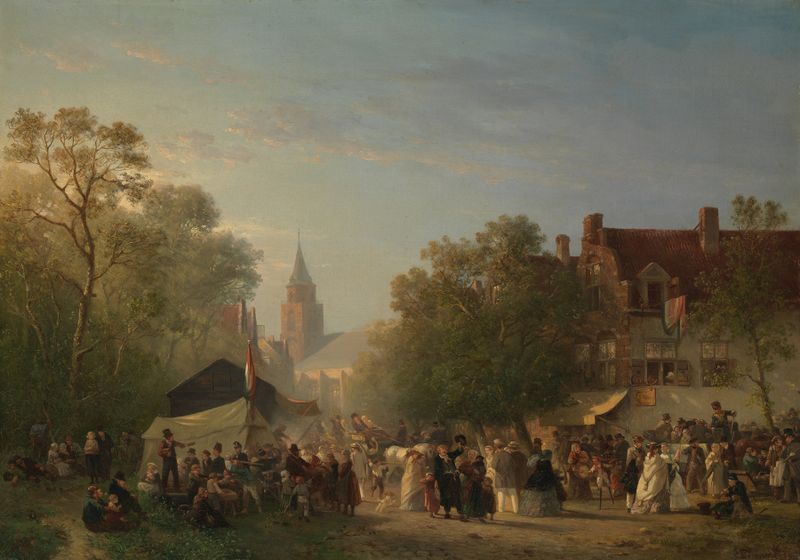
Could beauty survive in a century of chaos? In the tranquil embrace of Katwijk aan Zee, melancholy whispers through the waves, evoking a sense of peace amidst life's tumultuous currents. Focus on the horizon, where soft pastels dance across the sky, illuminating the sea with golden hues of dawn. The delicate brushwork captures the gentle lapping of waves, while the subtle interplay of light and shadow draws your gaze to the distant figures walking along the shore. Notice how the sandy beach, rendered in warm earth tones, invites you to step into the scene, offering a fleeting moment of solace. Hidden beneath the serene surface, contrasts emerge in the juxtaposition of human presence against the vastness of nature.
The figures, small and solitary, reflect the insignificance of individual struggles against the eternal rhythm of the ocean, while the clouds above hint at a brewing storm, suggesting that chaos is always lurking nearby. This tension between tranquility and turmoil speaks to the fragility of beauty in an ever-changing world. In 1847, during a period marked by social upheaval and artistic evolution in Europe, Samuel Verveer found inspiration along the Dutch coast. The Romantic movement was in full bloom, embracing nature's splendor and human emotion.
It was in this context that he created Katwijk aan Zee, capturing both the idyllic and the sorrowful, as he sought to reconcile the chaos of his time with the enduring allure of the natural world.