Krajina — História e Análise
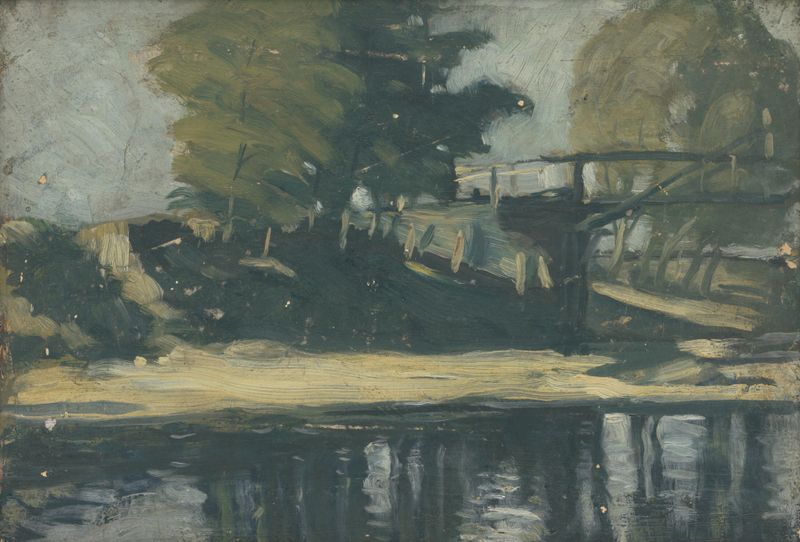
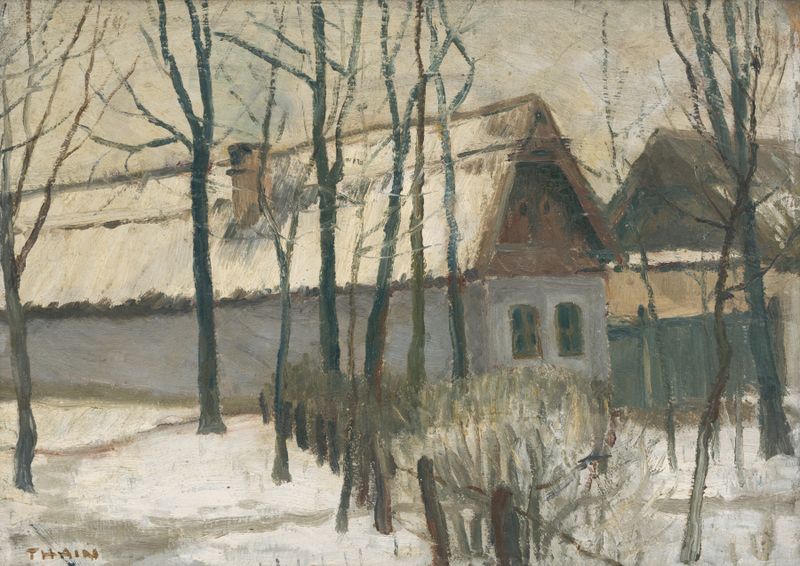
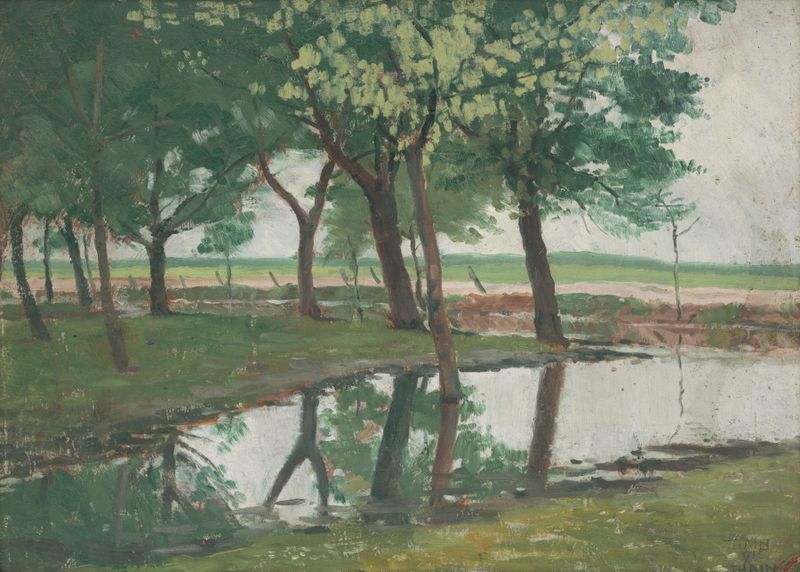
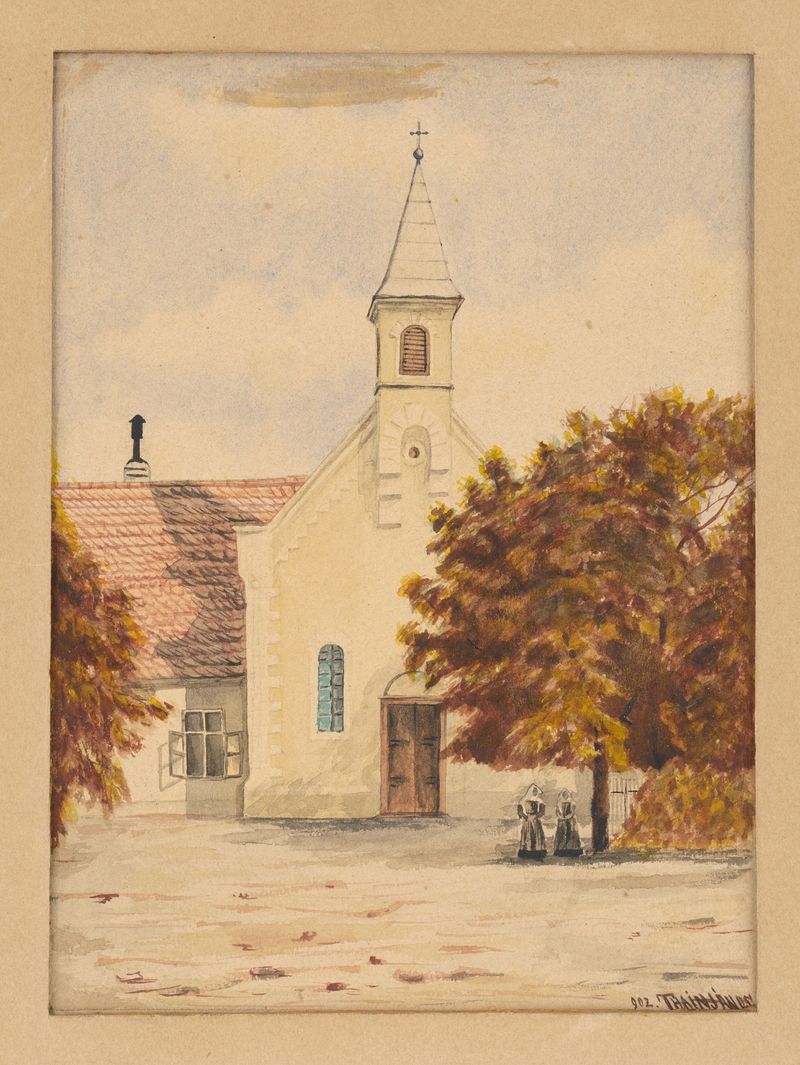
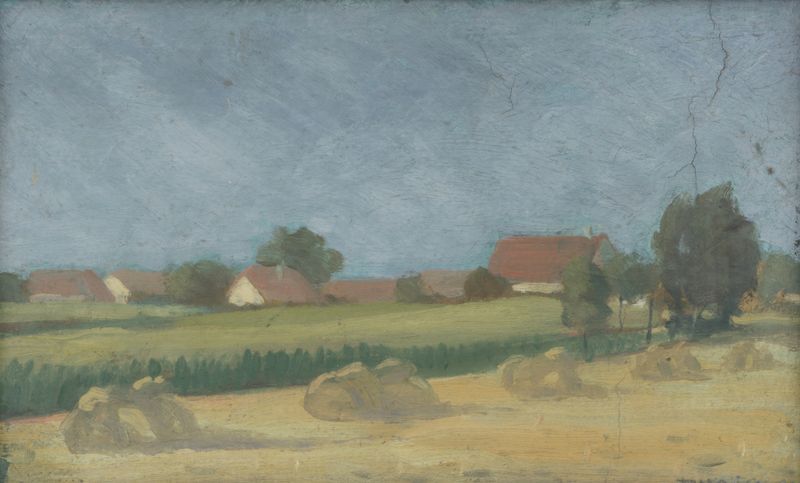
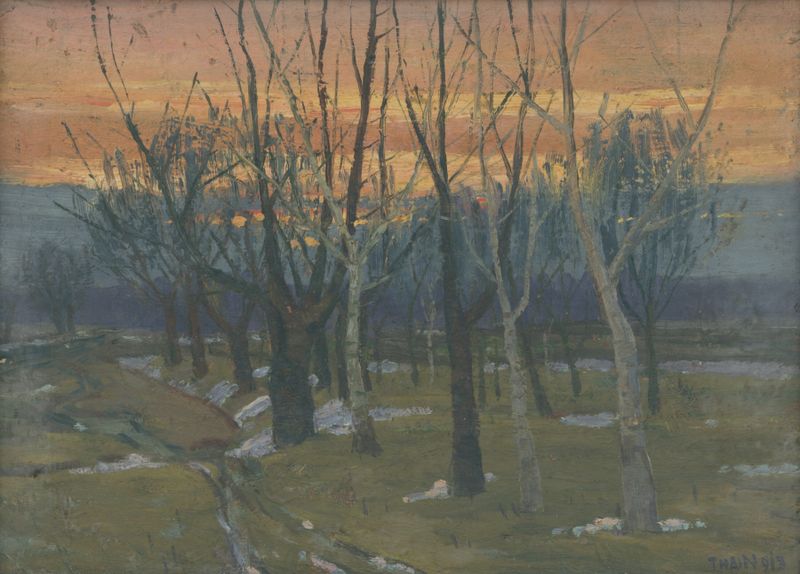
In moments of profound loss, the quietest expressions often resonate the loudest, inviting us to reflect on our own experiences of absence. Look to the center of the canvas, where the landscape unfolds in muted hues of grey and olive, a stark representation of desolation. The horizon is low, leaving the sky an overwhelming expanse, almost oppressive in its pallor. Subtle strokes create depth in the mountains, while a lone tree stands against the emptiness—a testament to survival amidst despair.
The color palette is a gentle reminder of the somber narrative beneath the surface, evoking a sense of longing and melancholy. Notice how the brushwork varies across the piece—smooth in some areas, rough and fragmented in others. This juxtaposition speaks to the duality of hope and grief; the tree’s resilience contrasts with the barren land that surrounds it, illustrating the emotional weight of loss. The sparse detailing invites contemplation, drawing the viewer deeper into the haunting stillness.
Each element is intentional, encouraging reflection on the quiet pain of absence while simultaneously embodying the strength found in survival. Created in 1916, during a tumultuous period marked by World War I, Ján Thain painted this work amidst personal and collective strife. Living in Austria-Hungary, he experienced the disillusionment of a generation caught in the throes of war. The themes of desolation and endurance in Krajina reflect not only his own emotional landscape but also the broader sense of loss pervading Europe at the time, capturing a moment where nature and humanity intersect in profound sorrow.