Krajobraz — História e Análise
The illumination of a fleeting moment captured on canvas can evoke the essence of existence itself. In Krajobraz, the interplay of light and shadow reveals a landscape alive with whispers of nostalgia and promise. Look to the center at the horizon where the sun dips below the undulating hills, casting a warm, golden hue across the canvas. The swirling clouds above, tinged with soft pastels, create a dynamic contrast against the tranquil earth below.
Notice how the artist uses dappled brushstrokes to form the grassy knolls, each stroke conveying a sense of movement, as if the landscape breathes. The color palette shifts from vibrant greens to muted earth tones, guiding the viewer’s gaze through the serene yet dynamic terrain. In the foreground, small wildflowers peek through the grass, hinting at the fragility of beauty amid the vastness of nature. This juxtaposition of delicate blooms against a robust landscape evokes the tension between permanence and transience, reminding us that every moment is both fleeting and eternal.
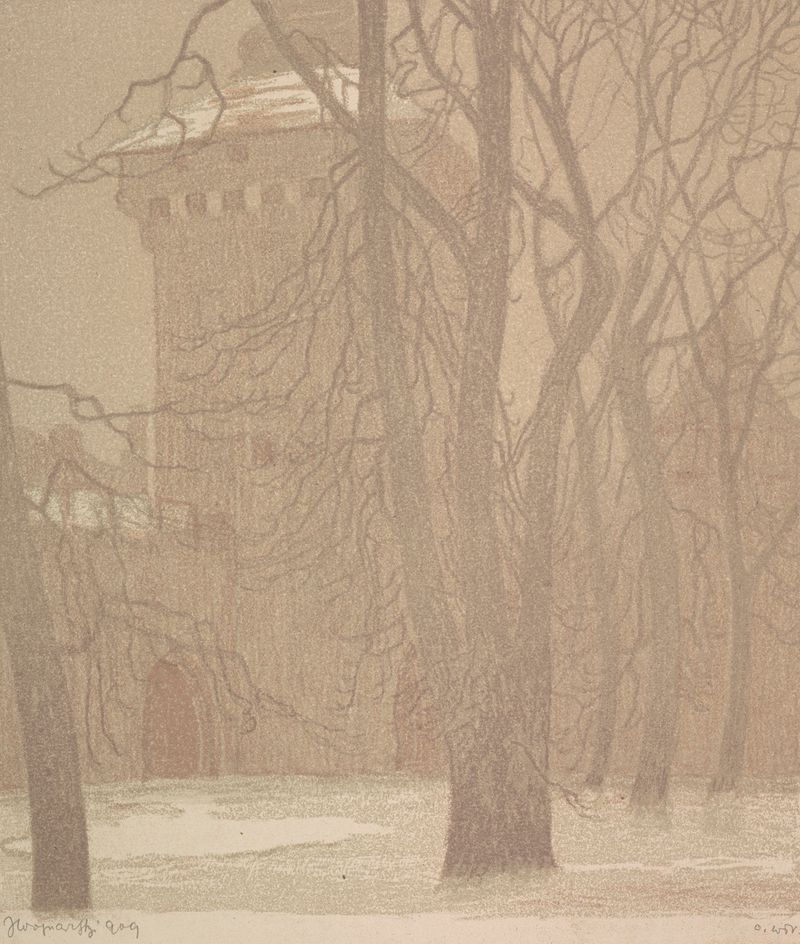
The soft glow of light envelops the scene, suggesting a moment of reflection where time stands still, inviting viewers to lose themselves in the simplicity of nature’s grandeur. Jan Wojnarski painted Krajobraz in 1909, during a period of artistic experimentation in Poland. Emerging from the shadows of the 19th-century Romanticism, he sought to capture the essence of Polish landscapes through a modern lens. At this time, Wojnarski was influenced by both impressionism and the burgeoning expressionist movements, reflecting a desire to convey more than mere representation but an emotional resonance with the viewer.