Kremenets — História e Análise
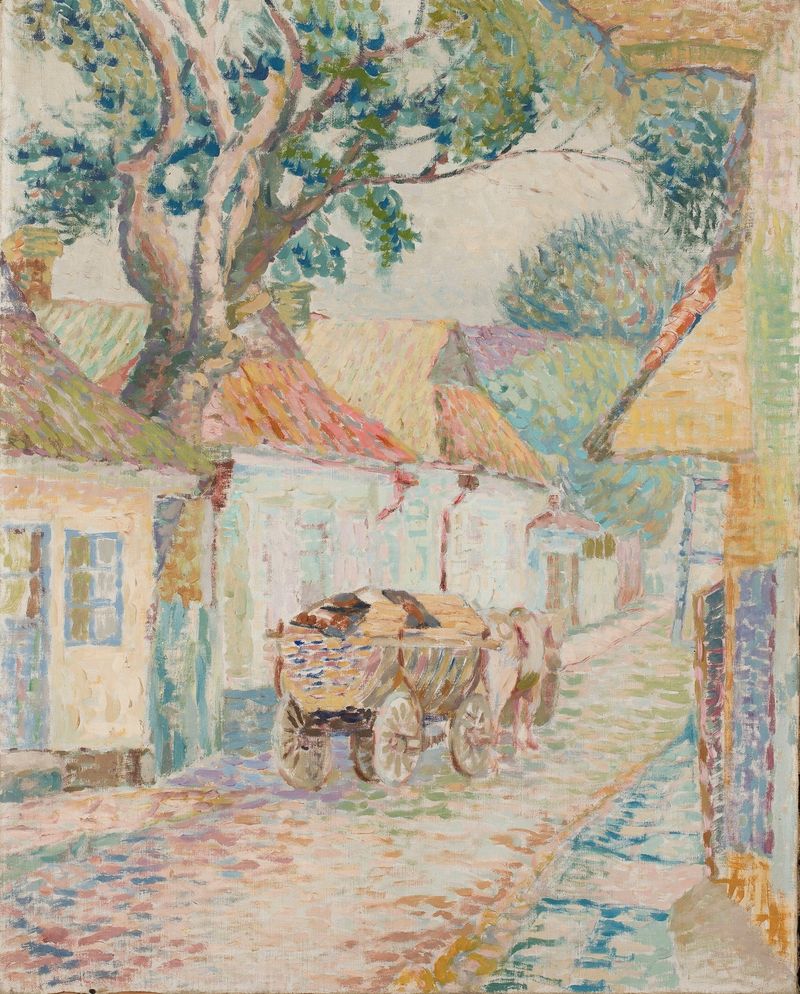
Can paint confess what words never could? In Kremenets, the artist captures the essence of creation, weaving a narrative that transcends the limitations of language. Look to the center of the composition, where earthy hues of ochre and brown converge to form a striking landscape. The brushstrokes are bold yet fluid, suggesting both strength and serenity. Notice how the light emerges, illuminating the contours of hills and valleys, creating a sense of depth that invites the viewer to venture into this painted world.
The sky, a mosaic of muted blues and grays, hints at an impending change, balancing the vibrancy of the foreground with a subtle intensity. Within this scene lies a tension between the tranquility of nature and the unsettling presence of human intervention. Small, almost imperceptible figures dot the landscape, suggesting isolation and introspection against the broader expanse. The placement of these figures contrasts the natural beauty surrounding them, evoking a profound sense of longing and the fragility of existence.
This duality enriches the narrative, transforming the landscape into a mirror reflecting both the creator's journey and the viewer's own inner world. In 1937, Charzyński painted this work during a period of significant change in Poland, a time when the nation was navigating the complexities of identity and modernity. Working in Kremenets, he sought to distill the spirit of his homeland into visual form, inspired by the tumultuous socio-political landscape and the burgeoning Polish art scene. This painting not only embodies his artistic vision but also serves as a historical testament to a moment when art became a means of both reflection and resilience.