
La falaise de Penarth — História e Análise
When did color learn to lie? In the delicate interplay of hues, innocence is both embraced and challenged, revealing truths hidden beneath the surface. Look to the left, where the soft blues and greens of the landscape converge with the whites and grays of the cliffs. The brushstrokes are fluid and airy, allowing the viewer to feel the gentle breeze that seems to carry the scent of the sea. Notice how the light dances on the water’s surface, reflecting a myriad of colors that beckon one to explore deeper into the scene.
The composition leads the eye toward the horizon, where the sky meets the land, creating a sense of infinite possibility. Yet, beneath this serene exterior lies a tension. The cliffs, imposing and rugged, remind us of nature's indifference to human fragility, while the vibrant colors invite a sense of warmth and hope. The figures in the foreground appear small, almost insignificant against the backdrop of the grand cliffs, their innocence highlighted by the idyllic setting.
This juxtaposition speaks to the dual nature of beauty, revealing both its allure and its potential to deceive. In 1897, the artist captured this scene during a period of personal reflection and transition. Living in France but rooted in the traditions of Impressionism, he was navigating the evolving landscape of art, where new movements were challenging established norms. The world was undergoing rapid change, and through his work, he sought to express the simplicity and purity of nature, even as the complexities of life continued to shift around him.
Mais obras de Alfred Sisley
Ver tudo →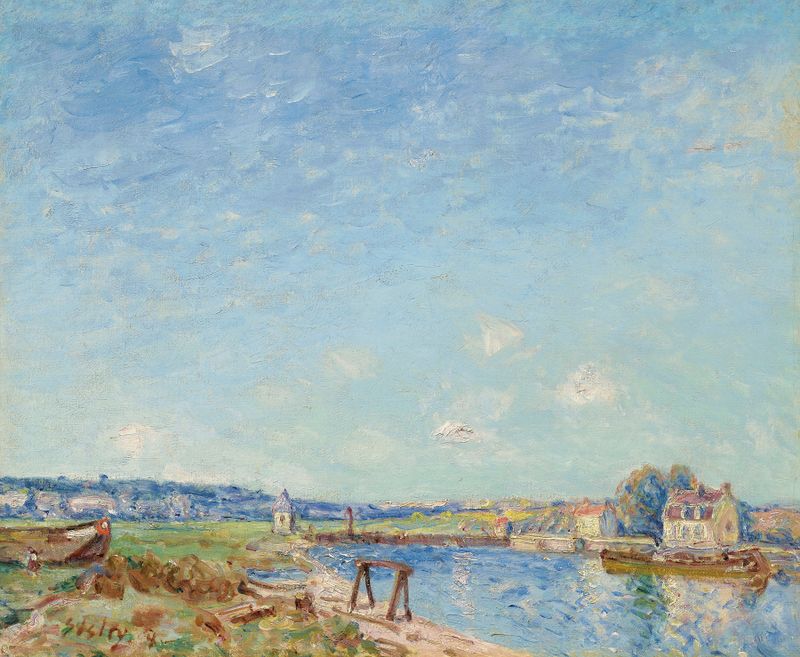
Le Loing à Saint-Mammès
Alfred Sisley
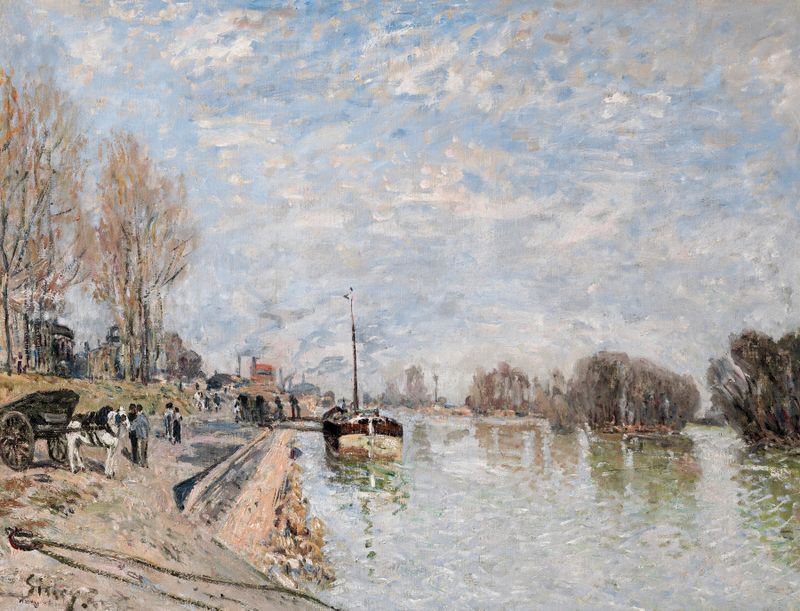
La Seine à Suresnes
Alfred Sisley
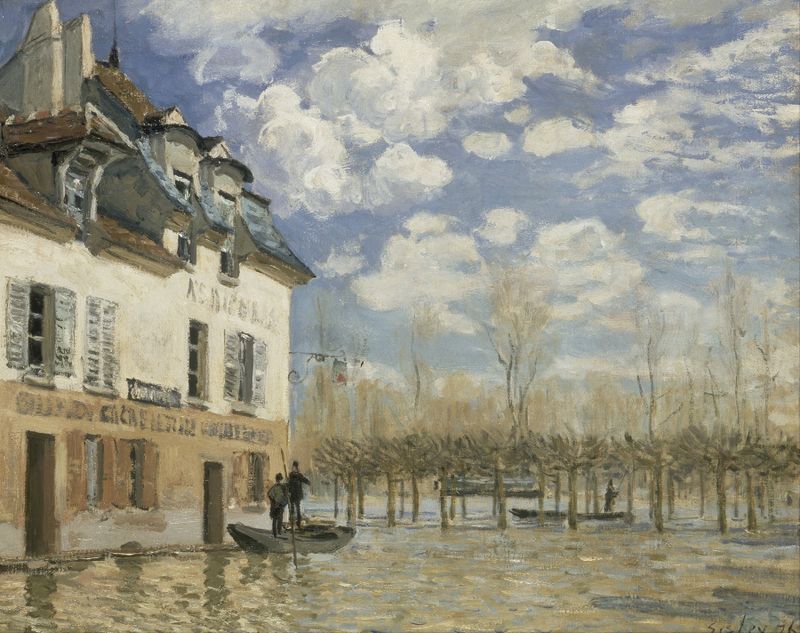
Boat in the Flood at Port Marly
Alfred Sisley
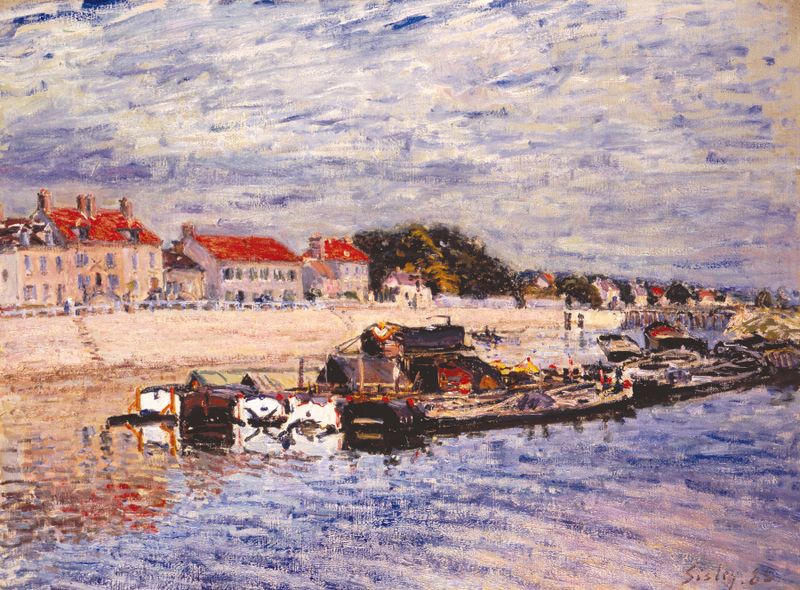
Barges on the Loing at Saint-Mammès
Alfred Sisley

L’allée des peupliers au bord du Loing
Alfred Sisley

Molesey Weir, Hampton Court
Alfred Sisley
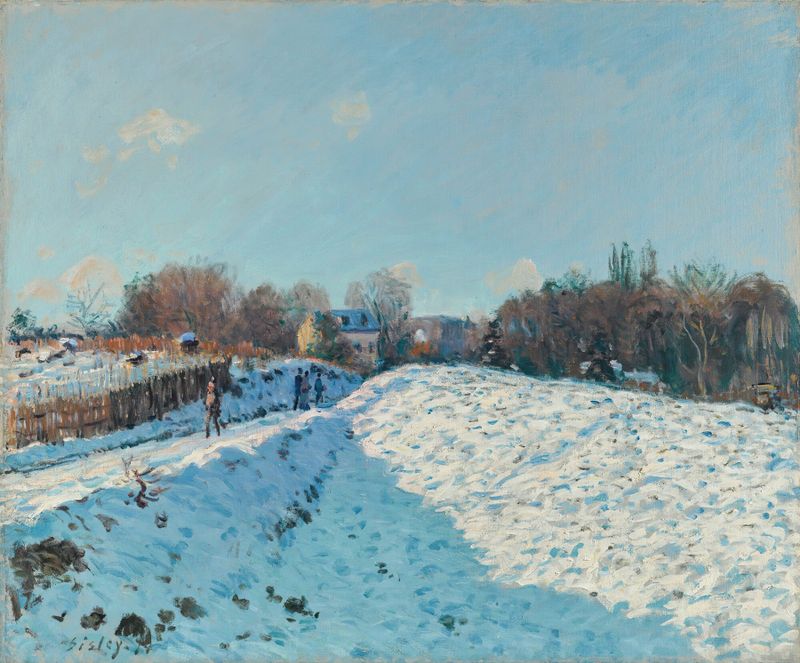
Effet De Neige À Louveciennes
Alfred Sisley
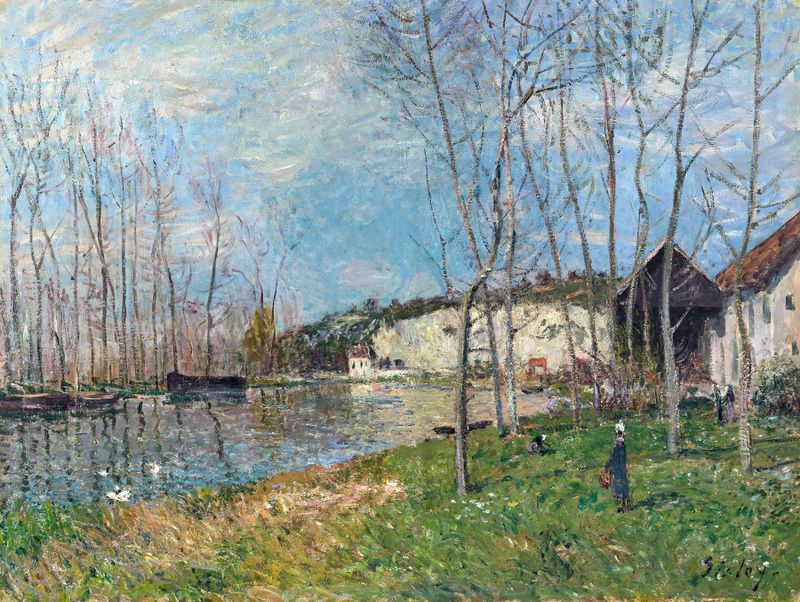
Printemps au bord du Loing
Alfred Sisley
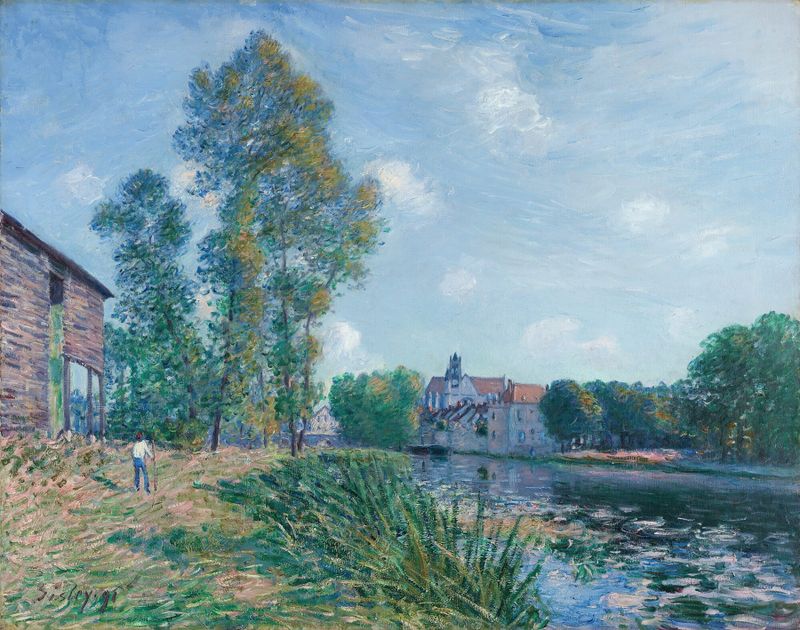
Le Loing À Moret, En Été
Alfred Sisley
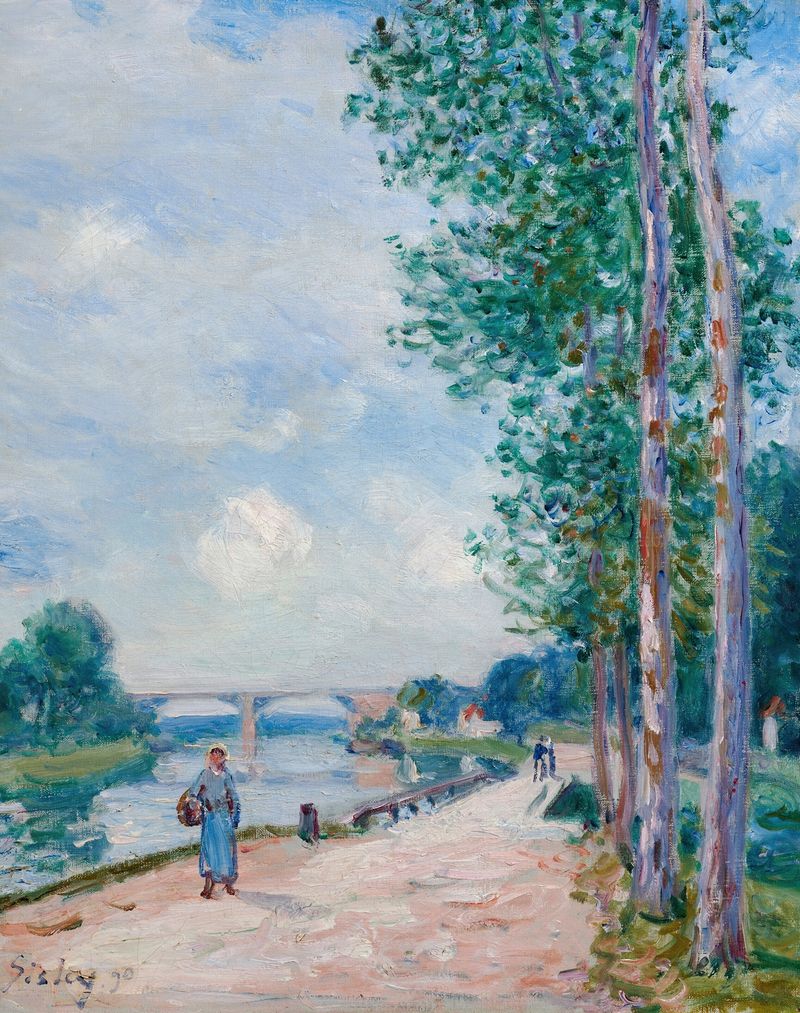
Les bords du Loing près de Moret
Alfred Sisley





