
La Machine de Marly et le barrage, Bougival — História e Análise
This poignant reflection echoes through the tranquil yet transitory scene captured in this artwork, as it holds a mirror to the fleeting nature of existence amidst the steadfastness of machinery and nature. Look to the left at the elegant structure of La Machine de Marly, its sturdy silhouette stark against the soft, muted colors of the surrounding landscape. Sisley’s brushwork gently swathes the canvas in delicate greens and blues, contrasting the mechanical with the organic. Notice how the light dances on the surface of the water, suggesting both reflection and movement, an interplay between the stillness of the moment and the relentless passage of time. The painting encapsulates a dialogue between human ingenuity and nature's indifference.
The machine, once a symbol of progress, stands as a relic of a past era, surrounded by the lush greenery that thrives despite it. This juxtaposition hints at the inevitable erosion of man-made constructs by the forces of time. The soft ripples in the water serve as a reminder of the impermanence of all things, inviting contemplation on what endures and what is lost. Alfred Sisley created this piece in 1875 while living in France, amidst the rise of Impressionism, a movement that sought to break away from tradition.
At this time, Sisley was grappling with personal challenges yet found solace in portraying the beauty of landscapes. His focus on natural scenes and the effects of light reflects a broader shift in art, as artists began to embrace contemporary subjects over historical themes.
Mais obras de Alfred Sisley
Ver tudo →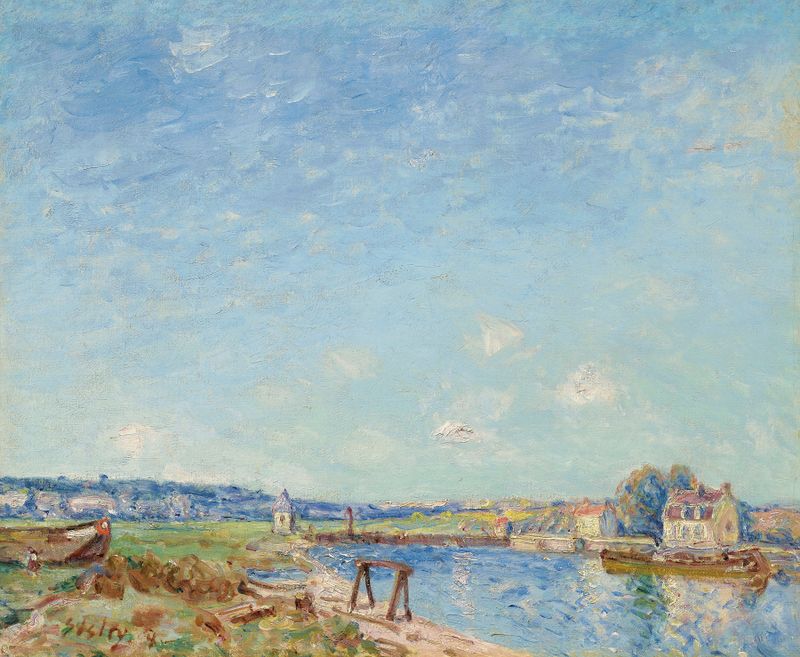
Le Loing à Saint-Mammès
Alfred Sisley
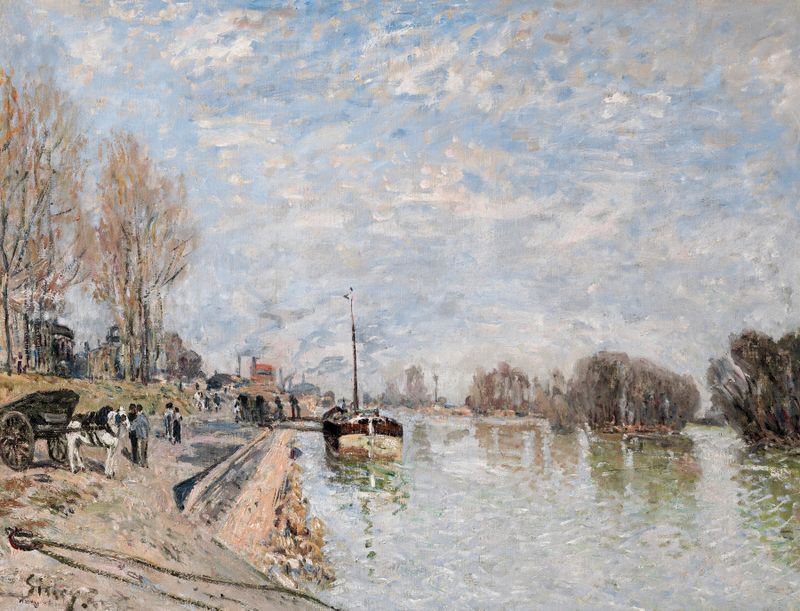
La Seine à Suresnes
Alfred Sisley
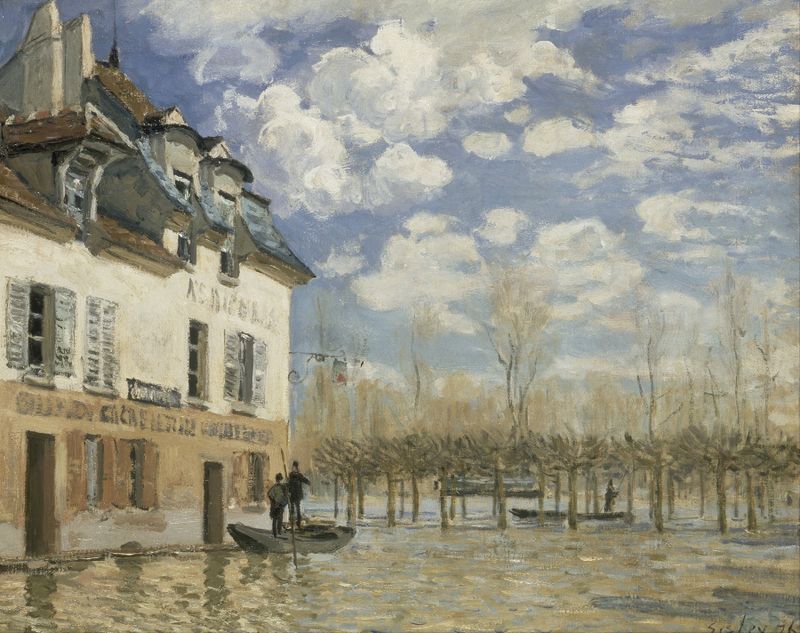
Boat in the Flood at Port Marly
Alfred Sisley
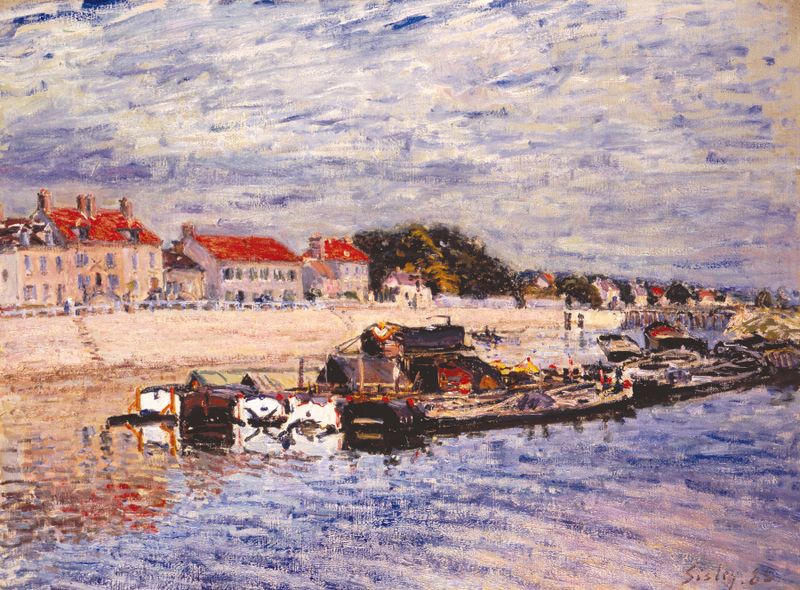
Barges on the Loing at Saint-Mammès
Alfred Sisley

L’allée des peupliers au bord du Loing
Alfred Sisley

Molesey Weir, Hampton Court
Alfred Sisley
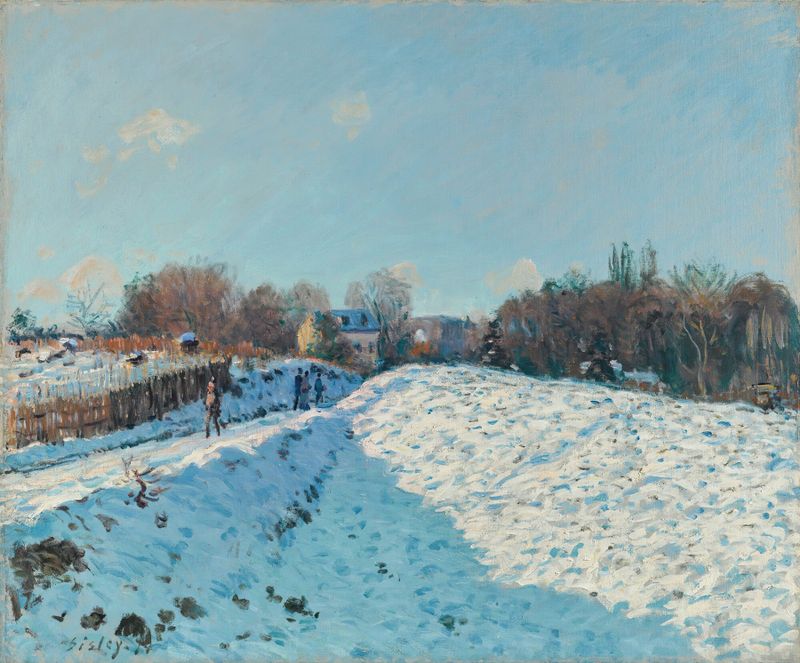
Effet De Neige À Louveciennes
Alfred Sisley
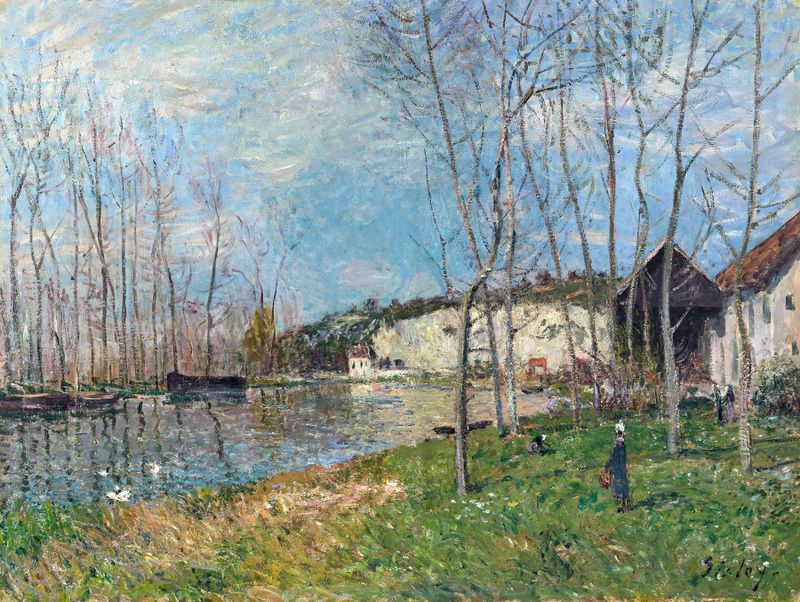
Printemps au bord du Loing
Alfred Sisley
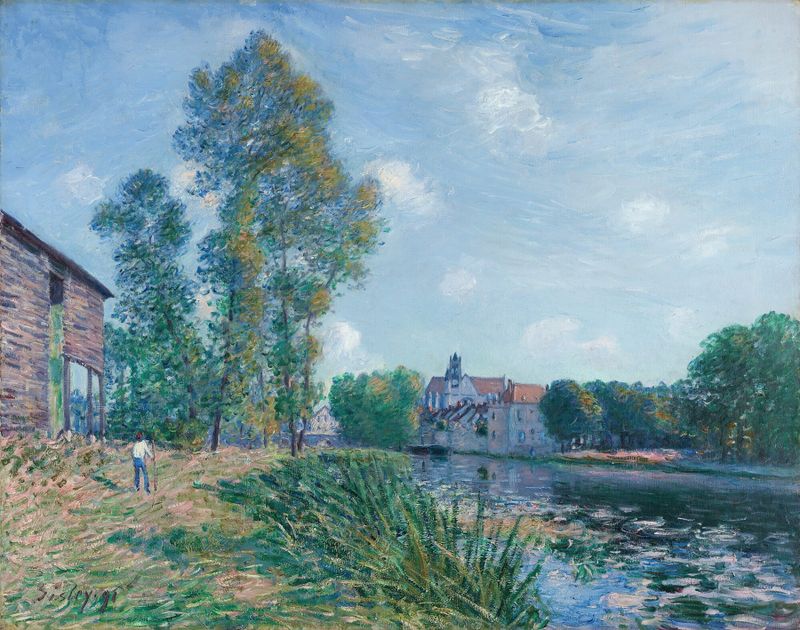
Le Loing À Moret, En Été
Alfred Sisley
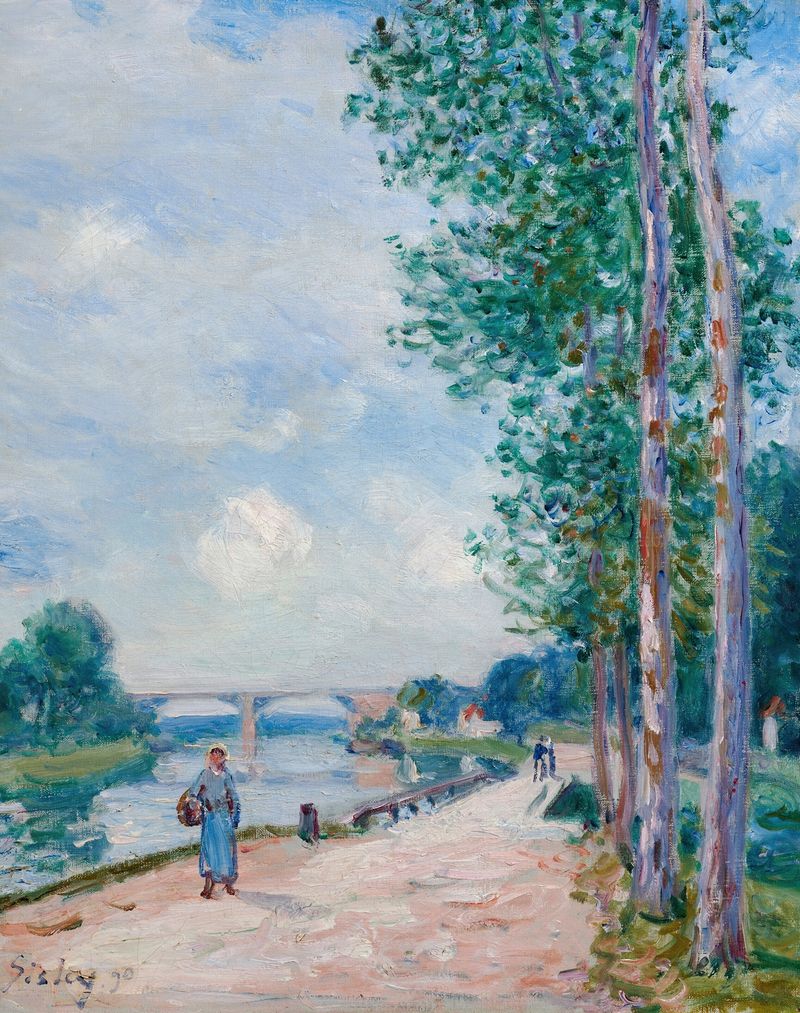
Les bords du Loing près de Moret
Alfred Sisley





