
La Seine à Rolleboise — História e Análise
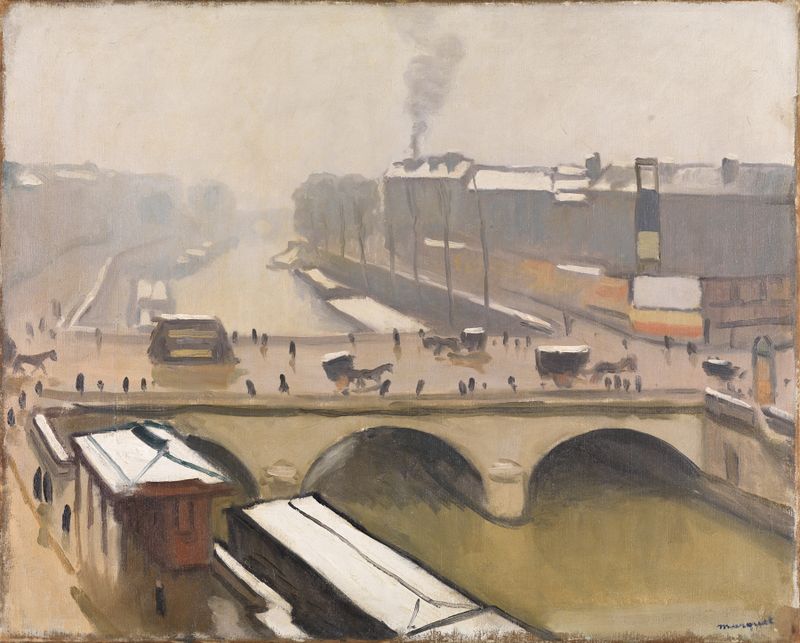
When did color learn to lie? This question lingers, probing the depths of perception and reality, much like the tranquil surface of the Seine in La Seine à Rolleboise. At first glance, the painting exudes serenity; yet beneath its vibrant hues lies an unsettling tension that speaks to the complexities of human experience. Focus on the gentle curve of the river, where the dappled sunlight dances on the water’s surface, drawing your eye to the rich blues and greens that intermingle like whispered secrets. Notice how the trees, bathed in warm golds and earthy browns, stand sentinel along the banks, their reflections a distortion of the landscape above.
Each brushstroke, seemingly carefree, belies a more profound emotional undercurrent, inviting viewers to linger in the dichotomy of beauty and violence that nature can embody. The stark contrast between the harmonious colors and the unsettling stillness of the scene reveals deeper meanings. The fluidity of the river evokes the passage of time, hinting at the inevitable change that looms beneath the surface. The vibrant palette might suggest joy, yet it also masks the darker realities of life—reminding us that beneath beauty often lies a hidden turmoil, waiting to break forth in unpredictable ways. Marquet painted this work during a period of exploration within the Fauvist movement, likely around the early 20th century.
Living in Paris, he was influenced by his contemporaries, who were redefining color and form in the modern world. This painting reflects not only his personal experimentation with color but also the broader artistic desire to capture emotion through abstraction amid an ever-evolving landscape of art and society.
Mais obras de Albert Marquet
Ver tudo →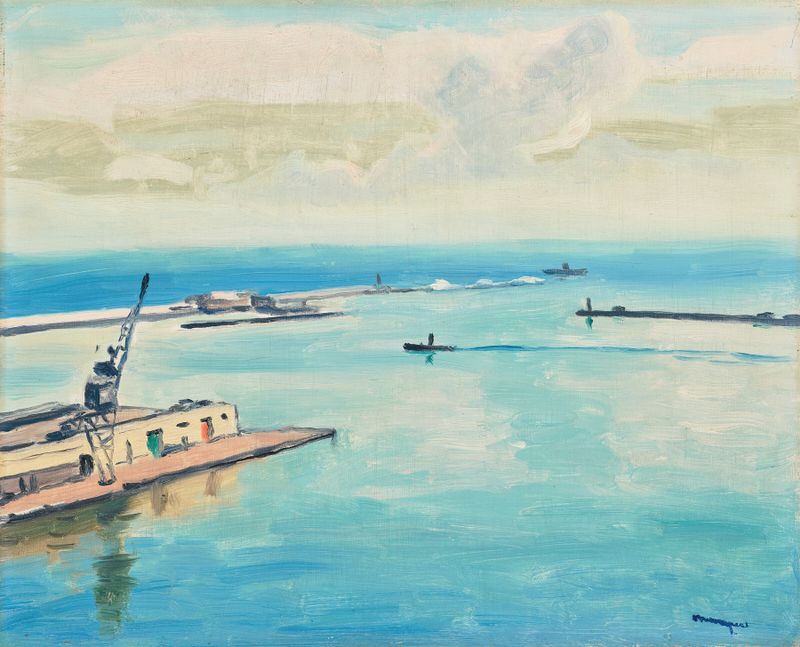
Le Port d’Alger
Albert Marquet
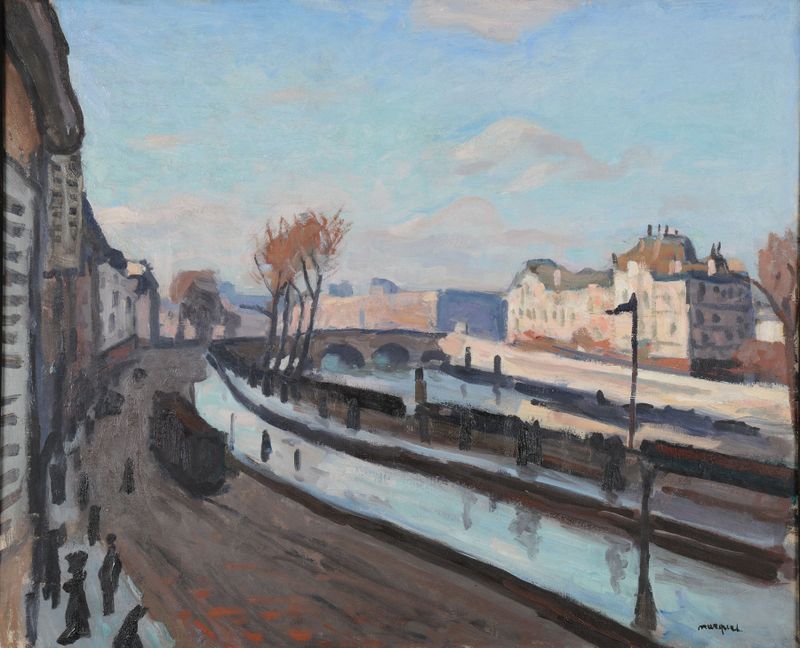
Le quai des Grands Augustins
Albert Marquet
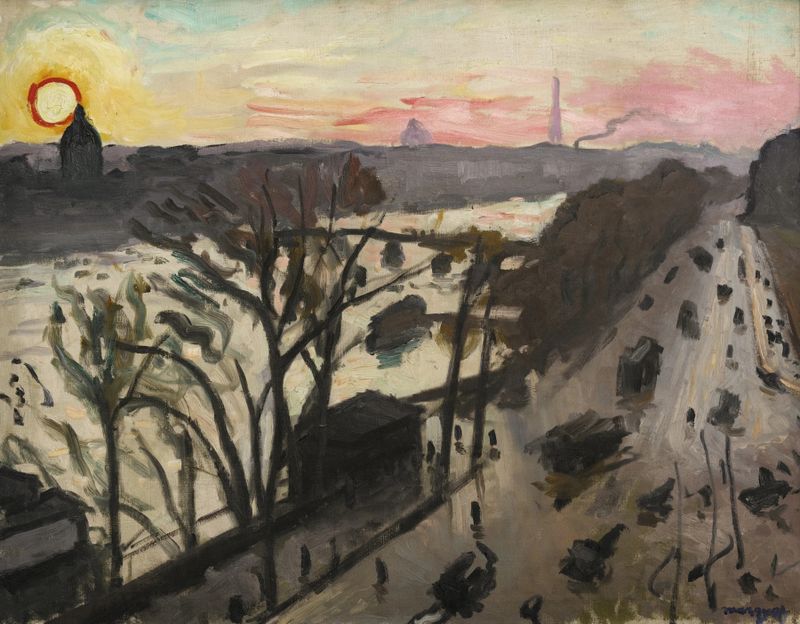
Paris, quai du Louvre, soleil d’hiver
Albert Marquet
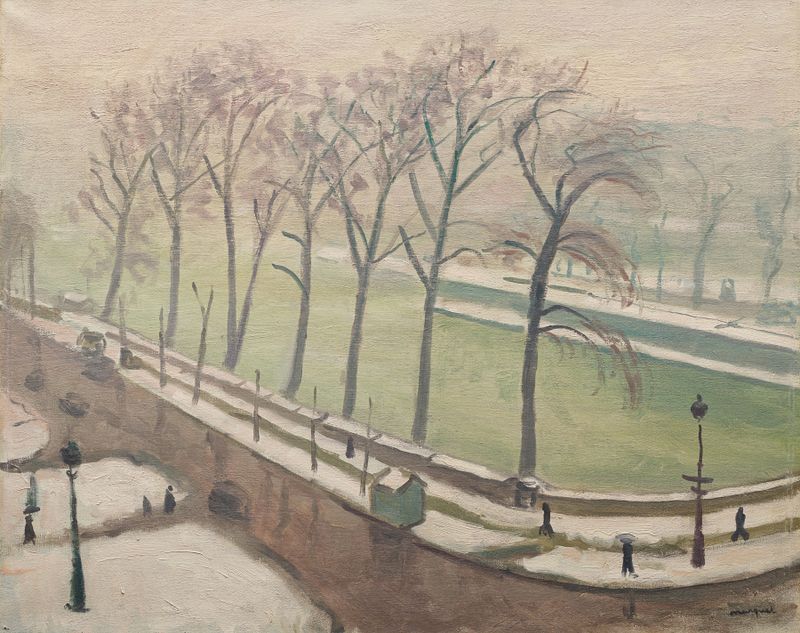
Pont-Neuf sous la neige
Albert Marquet
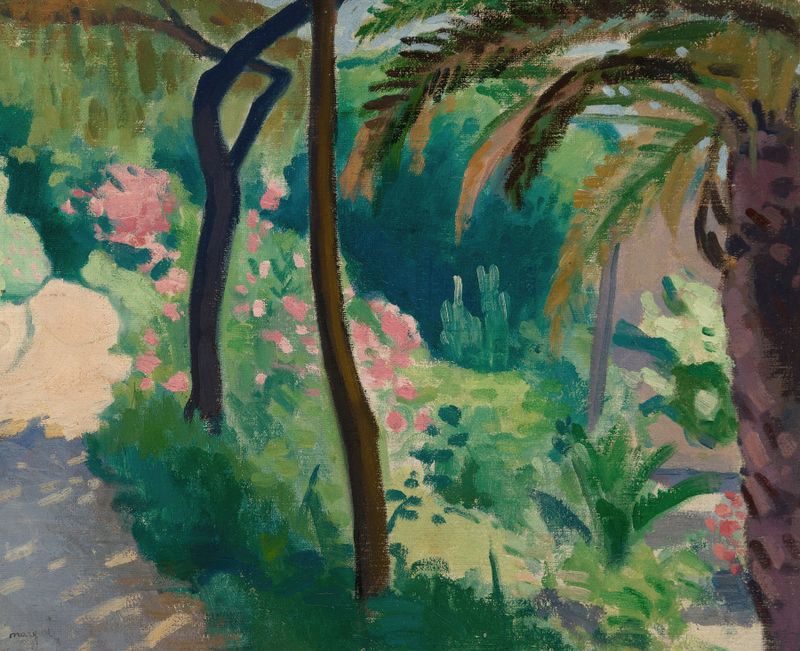
Le jardin à l’Estaque
Albert Marquet
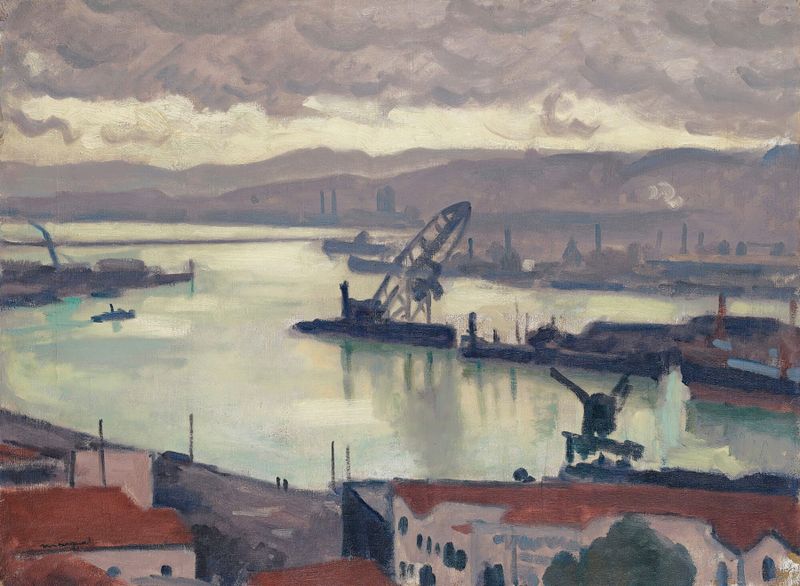
Alger, Temps Gris
Albert Marquet
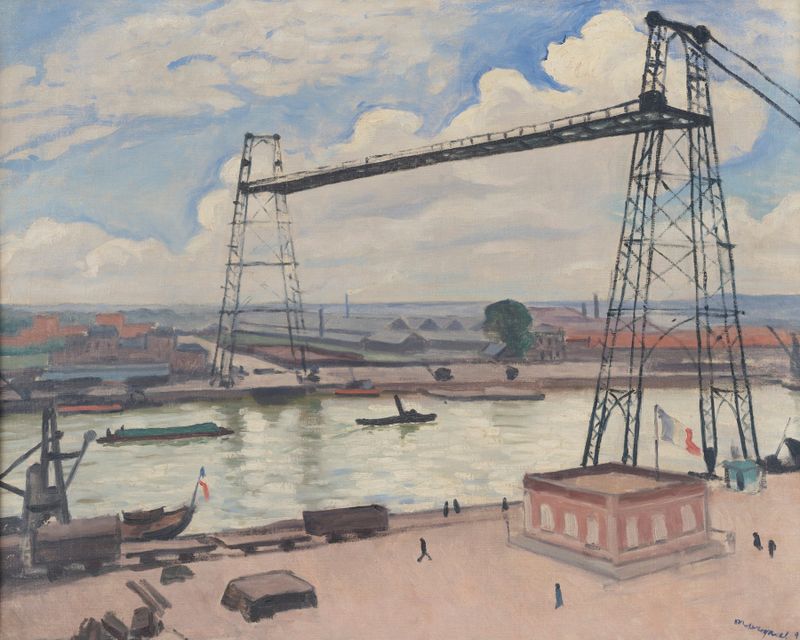
Rouen, le pont transbordeur
Albert Marquet
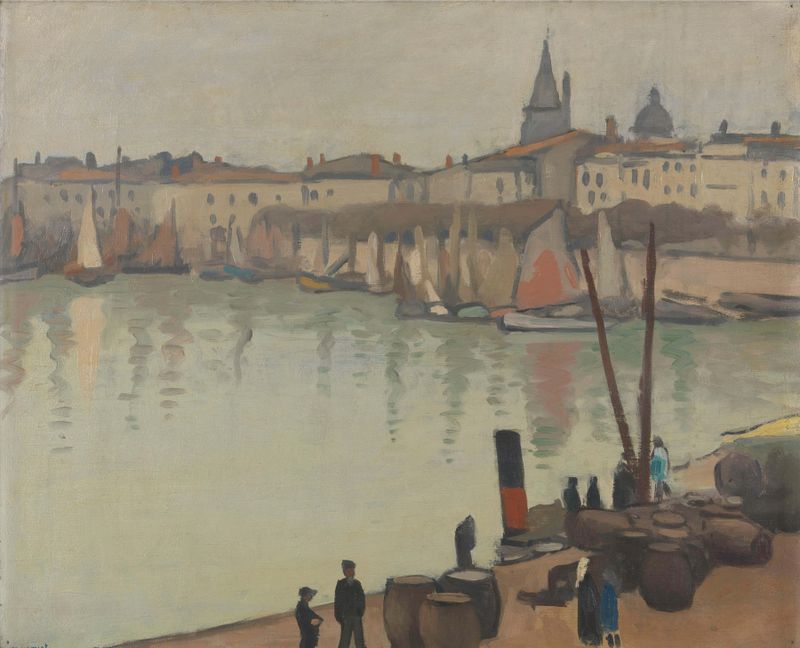
Port of La Rochelle
Albert Marquet

Berge de la Seine à Méricourt
Albert Marquet
View of the Pont Saint-Michel in Paris
Albert Marquet





