Landscape — História e Análise
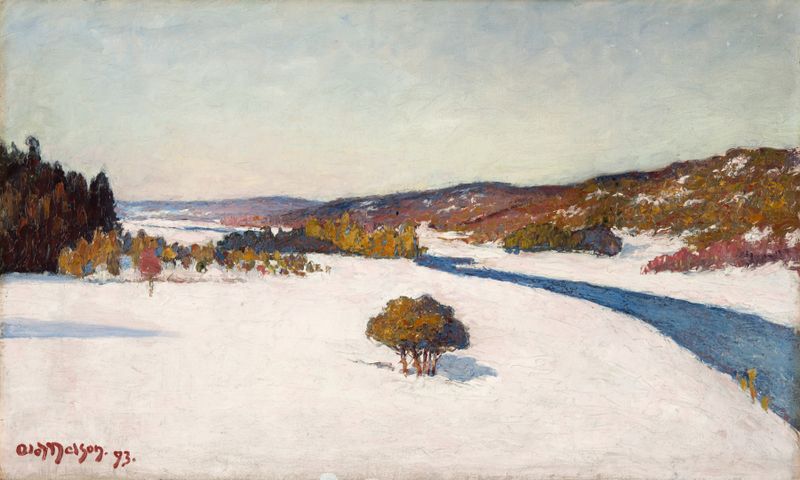
Where does light end, and longing begin? In the stillness of Landscape, a profound void whispers to the viewer, beckoning them to explore the depths between absence and presence. Look to the horizon, where soft, muted hues blend seamlessly into the sky, a gradient that suggests an eternal dusk. The delicate strokes of blues and greens create a sense of tranquility, yet this serenity is countered by an underlying tension. Notice how the light spills over the landscape, illuminating certain patches while leaving others shrouded in shadow, creating a dialogue between visibility and obscurity. In the foreground, the gentle rise of a hill, painted with textured brushwork, seems to embody both familiarity and the unknown.
There’s a poignant contrast between the lushness of the grass and the desolate emptiness that seems to stretch beyond the canvas. This interplay evokes feelings of nostalgia and introspection, prompting contemplation on what lies beyond the visible realm. The viewer is left grappling with the intersection of beauty and void, reflecting a deeper emotional narrative. Olof Sager-Nelson created Landscape in 1891, during a time when the art world was transitioning towards Impressionism.
Living in Scandinavia, he was influenced by the changing perceptions of nature and light, as well as the social and cultural shifts of the late 19th century. His work captured the transient qualities of the landscape around him, marking a significant moment in his artistic evolution as he sought to convey emotion through the natural world.