
Landscape — História e Análise
What secret hides in the quiet of the canvas? The stillness of Landscape invites us to explore the destiny that unfolds in every brushstroke. Look to the horizon where soft, muted colors blend seamlessly, creating a serene atmosphere. The gentle undulation of the hills leads the eye into the distance, with a palette dominated by rich greens and earthy browns. Notice how the light filters through the clouds, casting an ethereal glow on the landscape, as if whispering of hope and tranquility.
Each stroke conveys a sense of movement, suggesting life just beyond the frame, urging viewers to linger a little longer in the moment. Beneath the tranquil surface lies an emotional tension between the natural world and human existence. The vivid depth of the foreground contrasts with the softness of the sky, symbolizing the delicate balance between man’s aspirations and nature’s enduring presence. There is also a subtle interplay of light and shadow, evoking introspection about our place in the world and the cycles of life and death that govern it, hinting at the unyielding passage of time. In 1857, George Inness created this work during a transformative period in American art, as artists began to embrace a more personal approach to nature.
Living in New Jersey, he was influenced by the Hudson River School and the burgeoning philosophy of Transcendentalism, which emphasized the spiritual connection between humanity and the landscape. This period marked a significant turn towards emotional expressionism in landscape painting, a shift that Inness would come to embody throughout his career.
Mais obras de George Inness
Ver tudo →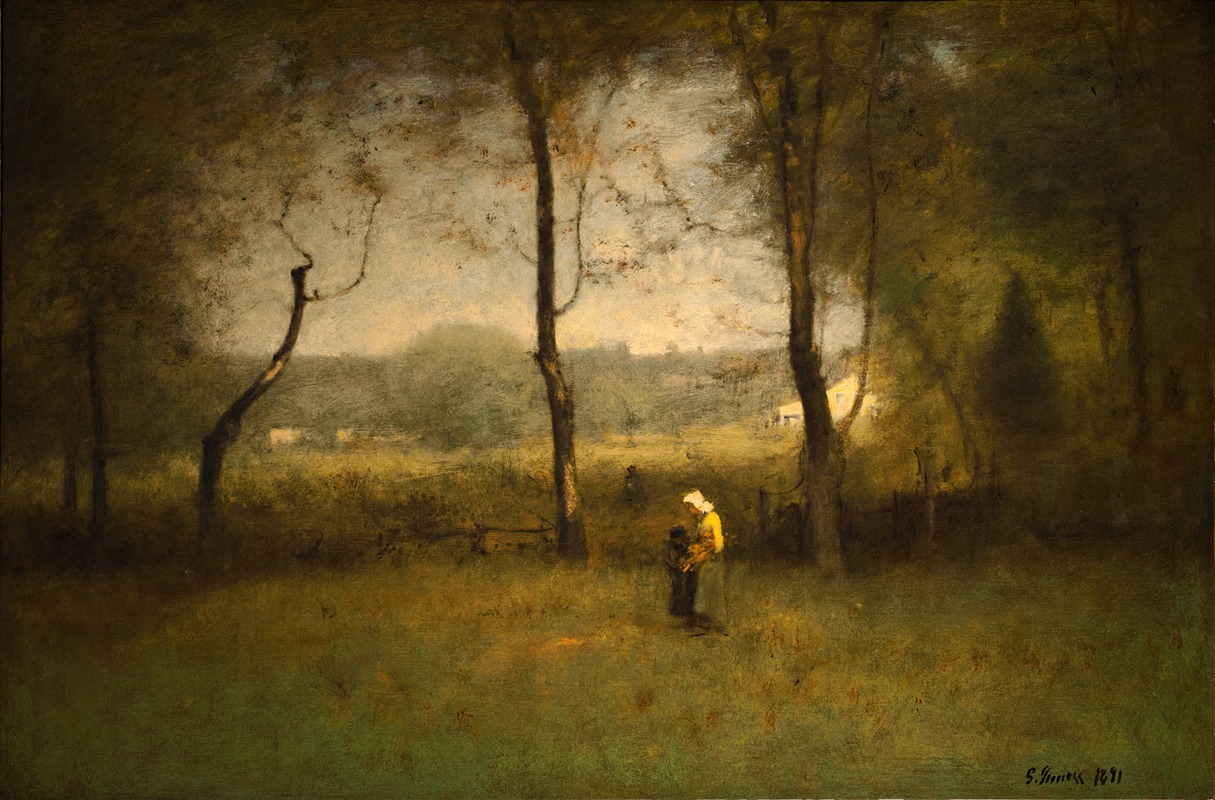
Autumn Woods
George Inness
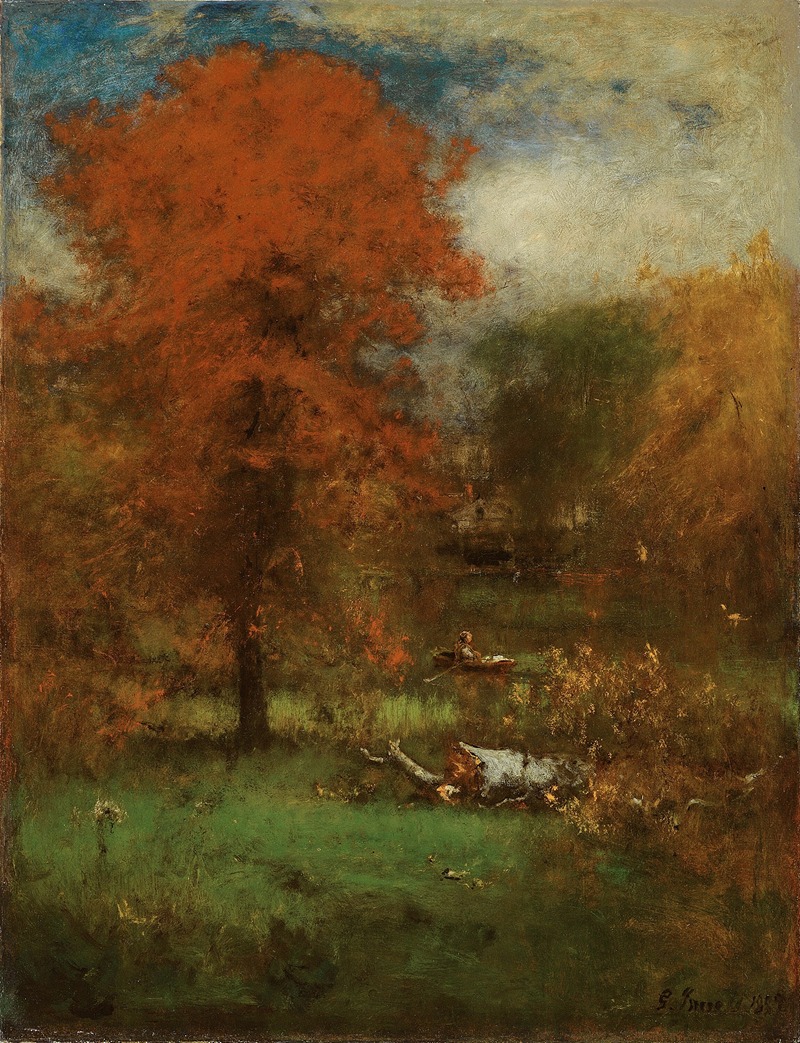
The Mill Pond
George Inness
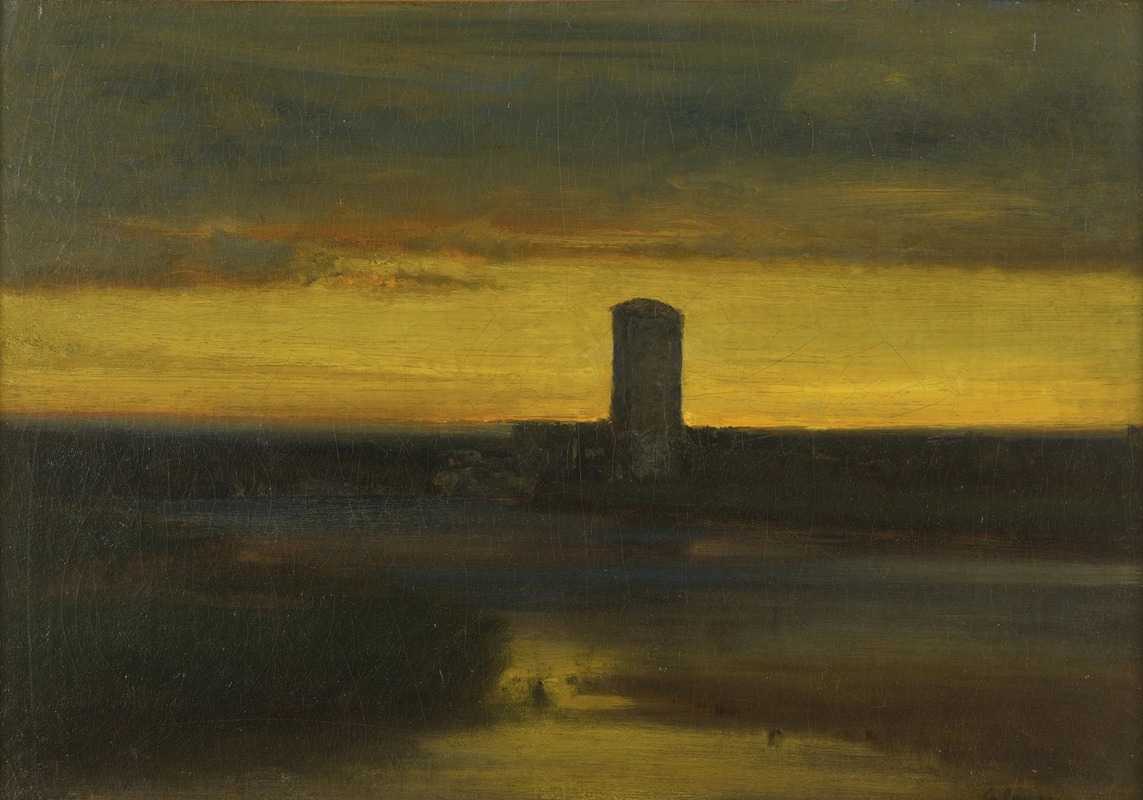
Afterglow
George Inness
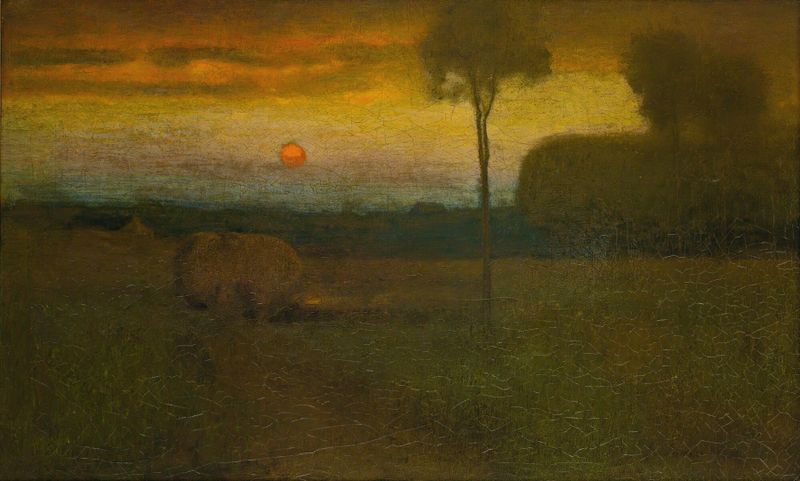
Landscape (Evening Landscape)
George Inness

Montclair
George Inness

View in Berkshire County, Massachusetts, Clearing Off after a September Storm
George Inness

October
George Inness
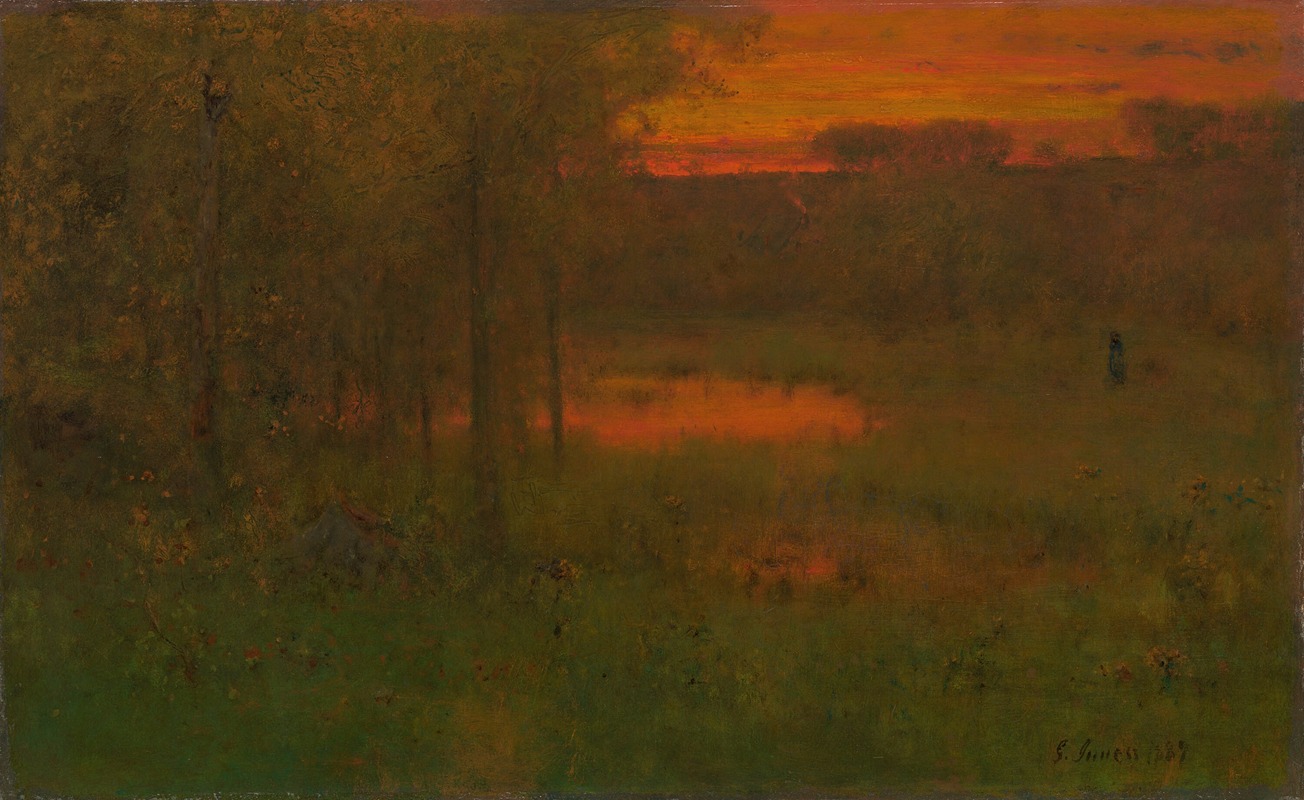
Landscape, Sunset
George Inness
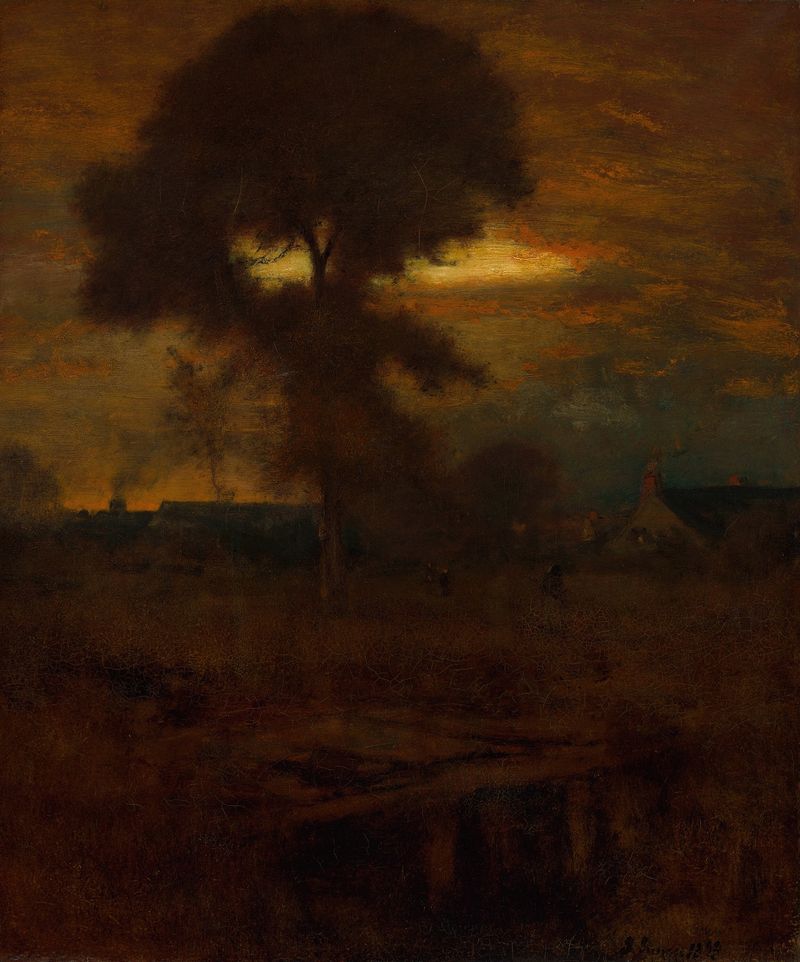
Afterglow
George Inness
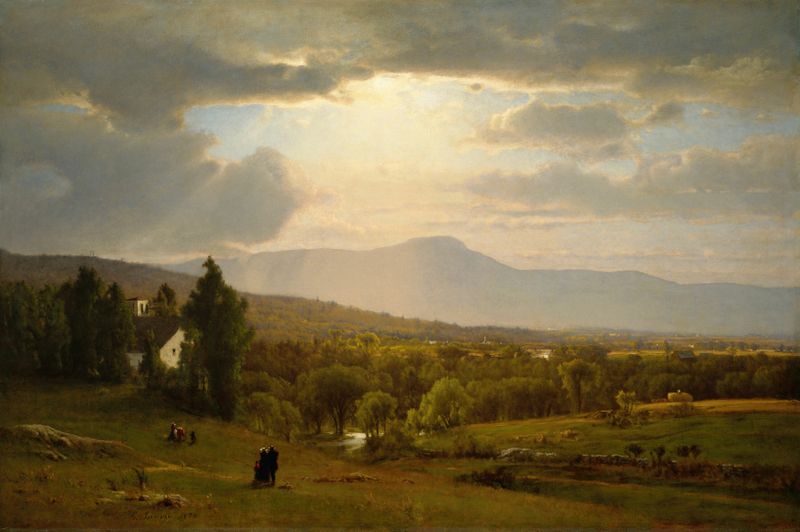
Catskill Mountains
George Inness





