Landscape with a Bridge — História e Análise
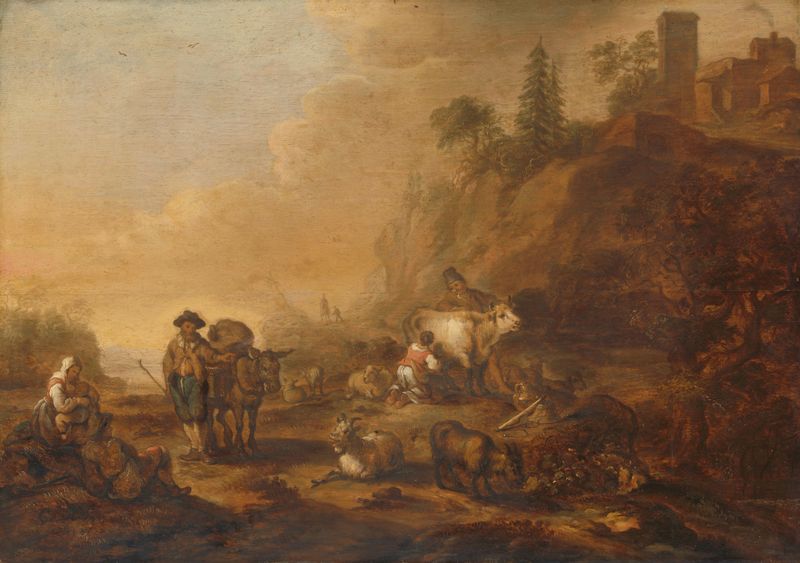
What if beauty was never meant to be finished? In Landscape with a Bridge, the canvas unfolds a tale of solitude, capturing a moment where nature meets the human touch in quiet resignation. Look to the left at the delicate arch of the bridge, its structure gracefully curving over the glistening water below. The muted greens and browns of the landscape caress the senses, inviting you to wander deeper into the scene. Notice how the fading light casts soft shadows across the gentle hills, evoking a sense of stillness, as if the entire panorama holds its breath.
The brushwork is meticulous yet unfussy, conveying the artist’s intimate understanding of both nature and man-made beauty. Deeper insights reveal the emotional undertones of loneliness within this serene landscape. The bridge, while a passageway, stands alone, suggesting both a connection and a barrier. It is a reminder of paths not taken, of journeys that may lead to isolation rather than union.
The lone figure, almost ghostlike in the distance, embodies the essence of solitude, contemplating the rich tapestry of life just beyond their reach. Cornelis de Bie painted Landscape with a Bridge in 1648, amidst a world caught between the embrace of the Baroque and the burgeoning whispers of realism. At this time, he was establishing himself in the Netherlands, balancing his pursuits in painting with his role as a writer. The art world was evolving, and de Bie's work reflects a keen observation of the natural world, simultaneously hinting at deeper human experiences that transcend mere representation.