Landscape with Ancient Archway — História e Análise
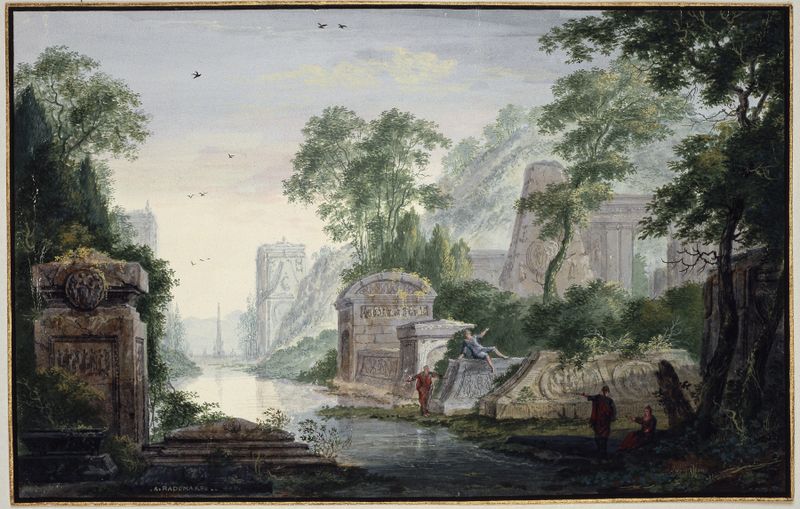
Can paint confess what words never could? In Landscape with Ancient Archway, the canvas whispers the secrets of time, carrying the weight of history within its brushstrokes. Look to the left at the intricately designed archway, standing resilient against the passage of time. Its weathered stones invite inquiry, while soft greens and golden hues of the surrounding landscape breathe life into the background. Notice how the light dances delicately across the scene, highlighting the interplay between shadow and brilliance, revealing the archway not just as a structure, but as a metaphorical gateway to forgotten realms. Delve deeper, and you’ll find a contrast between the natural splendor and the man-made relic.
The lush foliage enveloping the arch hints at nature’s reclaiming touch, suggesting that the void of human presence speaks volumes. There exists an emotional tension between permanence and decay, encapsulating the transient nature of life itself. The void is not merely absence; it becomes a presence, inviting contemplation of what once was. Rademaker painted this masterpiece between 1695 and 1700, during a period marked by a fascination with classicism and pastoral landscapes in Europe.
Living in the Netherlands, he was influenced by the Baroque movement, which emphasized drama and detail—not only in art but in the very essence of human experience. In this work, he elegantly bridges the ancient and the contemporary, capturing a moment that resonates through time.