Landscape with Four Trees — História e Análise
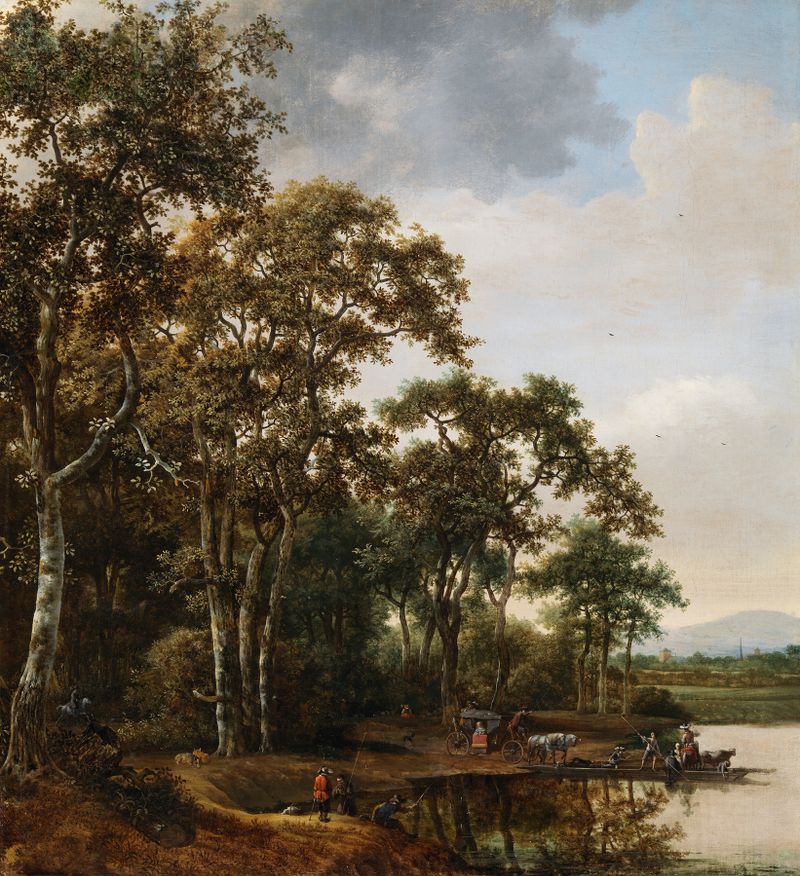
Can beauty exist without sorrow? In the quiet embrace of nature, we find reflections of our own tumultuous emotions and the subtle tension between joy and melancholy. Look to the left, where slender trunks rise from the ground, each tree a sentinel against a backdrop of soft, flowing hills. The artist employs a delicate palette of greens and browns, evoking a sense of tranquility, while the sky, washed in ethereal blues and whites, seems to cradle the scene above. Notice how the play of light dances through the foliage, casting gentle shadows that breathe life into the landscape.
The composition is carefully balanced, inviting the viewer to wander among the trees, each brushstroke a whisper of nature’s serenity. Yet, beneath this serene surface lies a complex interplay of emotions. The trees stand alone, their roots buried deep in the earth, suggesting isolation amidst beauty. The gentle curves of the hills contrast with the rigidity of the trunks, representing the struggle between stability and the winds of change.
This duality evokes a sense of longing, as if the landscape itself mourns the fleeting moments of joy it witnesses. The viewer is drawn to contemplate their relationship with nature and the bittersweet nature of existence. Jan Lagoor painted this work during a time when the Romantic movement was in full bloom, embracing themes of nature and emotion. Working in the late 18th century, he sought to capture the sublime beauty of the French countryside, reflecting the era's fascination with the natural world as a source of inspiration and introspection.
His approach to colors and forms aligns with the broader artistic shifts of the period, marking a pivotal moment in the evolution of landscape painting.