Landscape with Sheep and a Hay Wagon — História e Análise
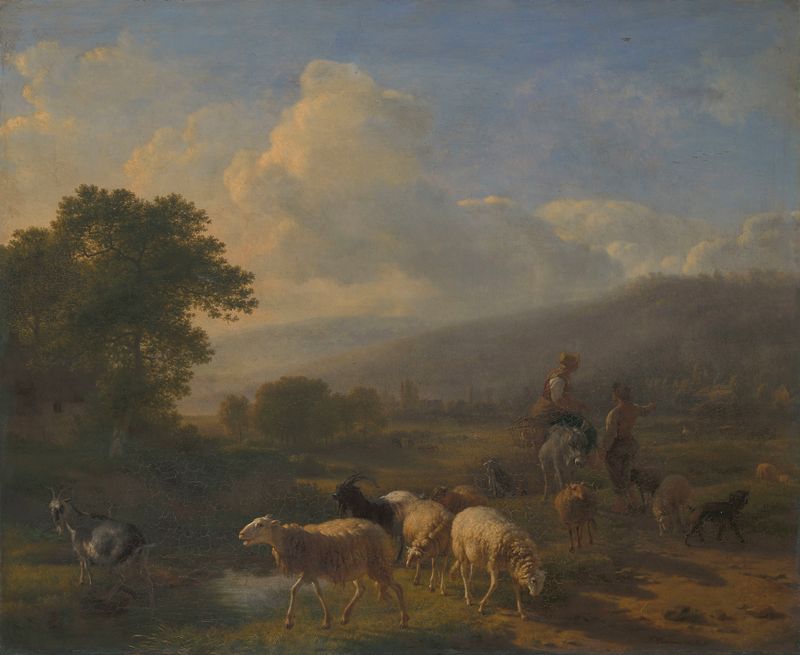
In the quiet embrace of nature, transformation unfolds—a gentle reminder of the life cycles interwoven within the landscape we inhabit. Look closely at the verdant fields, where the sheep graze peacefully beneath the sprawling sky. Notice how the artist masterfully captures light, illuminating wisps of grass and the soft contours of the hay wagon. The golden hues of the sun-drenched landscape contrast with the cool blues and greens, creating a harmonious balance that invites contemplation.
Each detail, from the textured wool of the sheep to the rustic elegance of the wagon, draws the viewer's eye across this pastoral tableau, evoking a sense of serenity amidst nature's bounty. Delve deeper into the painting's layers, and you'll find whispers of change. The presence of the hay wagon symbolizes labor and the passing of seasons, while the tranquil sheep hint at the cyclical nature of life. This juxtaposition of toil and ease suggests a relationship between humanity and the land, a dance between work and rest that resonates with timelessness.
The soft brushwork and delicate palette evoke feelings of nostalgia, as if capturing a fleeting moment in a world that is ever-evolving. In the early 1820s, amid a flourishing of Romantic ideals, the artist created this work while grounded in the pastoral traditions of European art. The period saw a growing appreciation for rural scenes, reflecting a shift toward valuing nature and the everyday life of agrarian communities. Ommeganck’s skillful rendering not only speaks to his personal artistic journey but also resonates with broader cultural movements, marking a significant moment for landscape painting during this era.