
Le Pont Neuf — História e Análise
What secret hides in the quiet of the canvas? As the viewer stands before the work, a profound sense of loneliness emerges, echoing the solitude of Paris's iconic landscape. Begin your exploration by looking to the center, where the bridge gracefully arches over the water, its stonework rugged yet dignified. Notice how Lepère captures the play of light: soft, muted tones contrast with the bolder strokes of the river's surface, suggesting a calm yet restless undercurrent. The figures scattered along the bridge, small and lost in their own worlds, draw the eye—each absorbed in thought, their presence emphasizing the vastness of the scene. Hidden meanings bloom in the details.
The emptiness of the space between the figures hints at unspoken stories, while the gentle ripples on the water reflect a yearning for connection. The palette, predominantly composed of grays and blues, amplifies a sense of nostalgia and the passage of time, as if the bridge stands as a witness to countless missed encounters, each ripple a reminder of fleeting moments. Created in 1901, this work represents a pivotal moment for Lepère, who was deeply engaged in the printmaking revival and the Impressionist movement. Living in Paris at the time, he sought to capture the essence of everyday life, revealing both its beauty and its isolation.
The world around him was shifting, yet his focus remained on the subtle poetry of the ordinary, finding depth in the loneliness that lingered in urban spaces.
Mais obras de Auguste Louis Lepère
Ver tudo →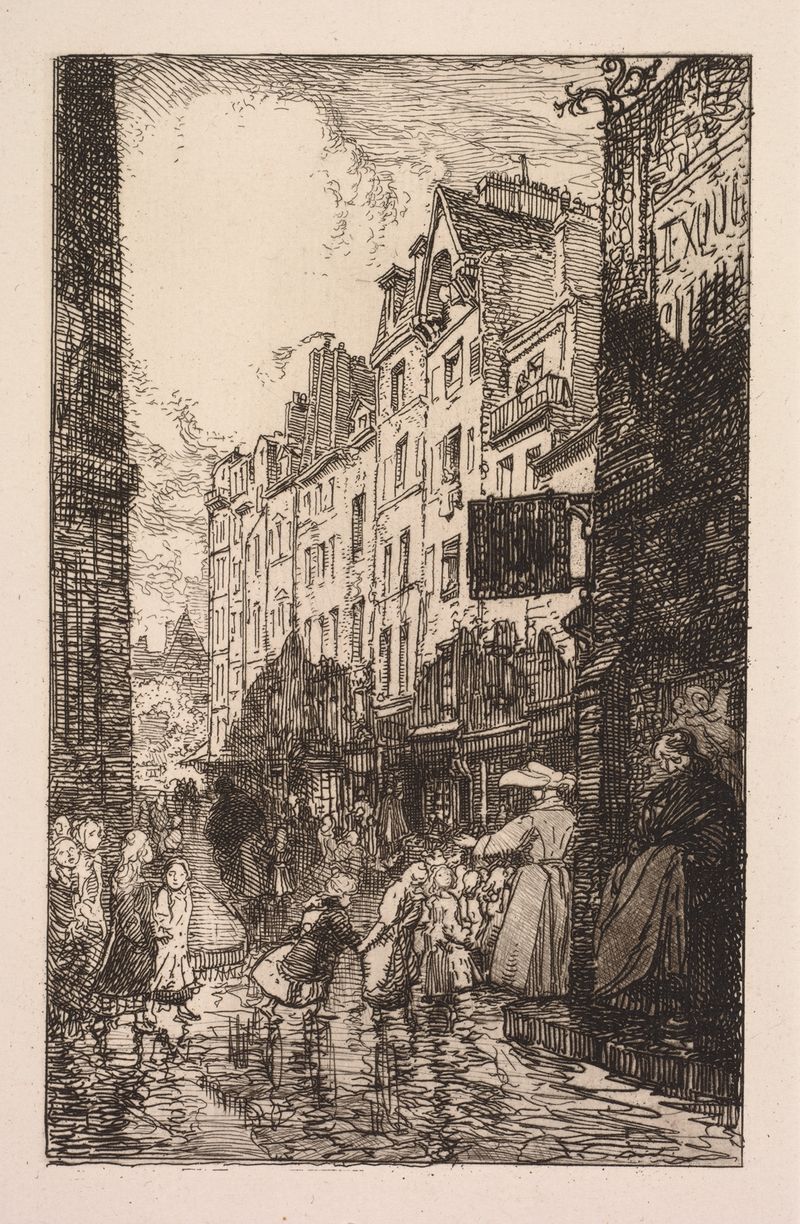
La Rue des Prêtres Saint-Séverin
Auguste Louis Lepère
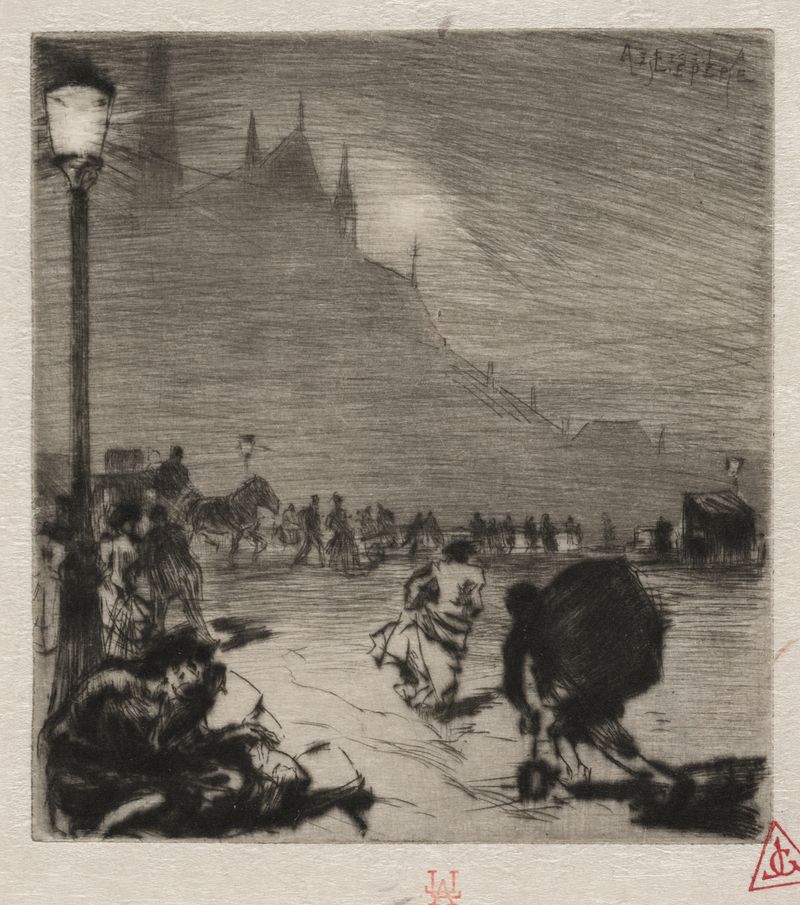
Au Coin du Pont-aux-Doubles
Auguste Louis Lepère
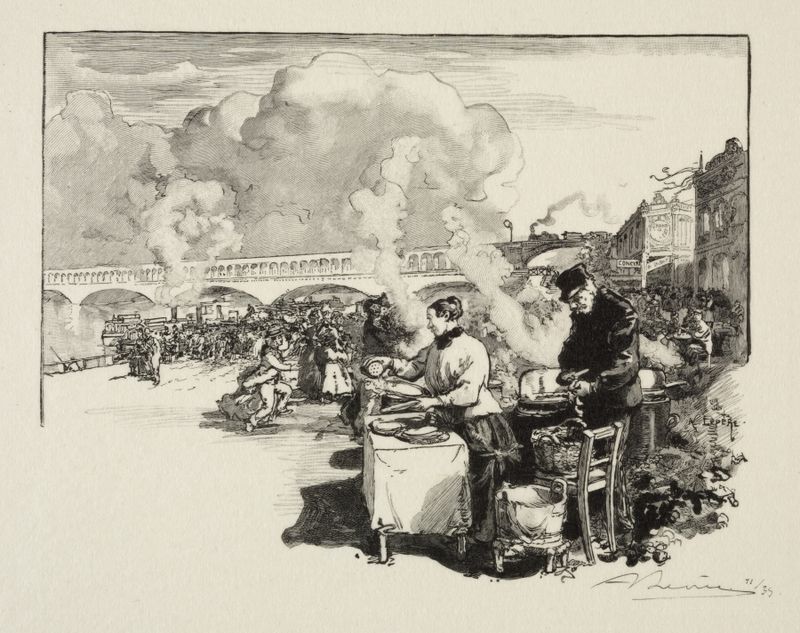
Debarcadère des bateaux-omnibus
Auguste Louis Lepère

La Seine, au quai de la Rapée
Auguste Louis Lepère
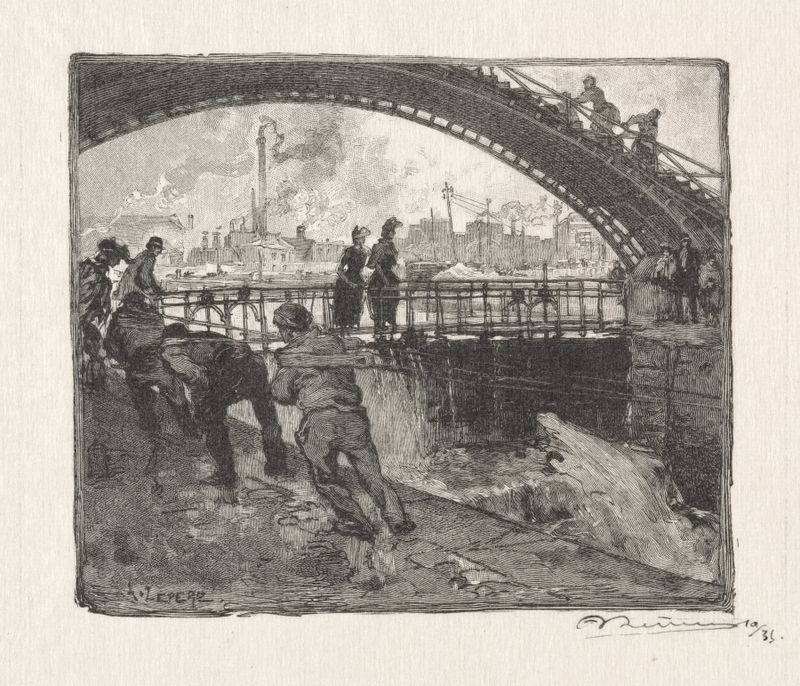
L’Ecluse du Canal St. Martin
Auguste Louis Lepère

Le Boulevard Montmartre, le Soir
Auguste Louis Lepère

Une Chasse au Mont Gérard
Auguste Louis Lepère
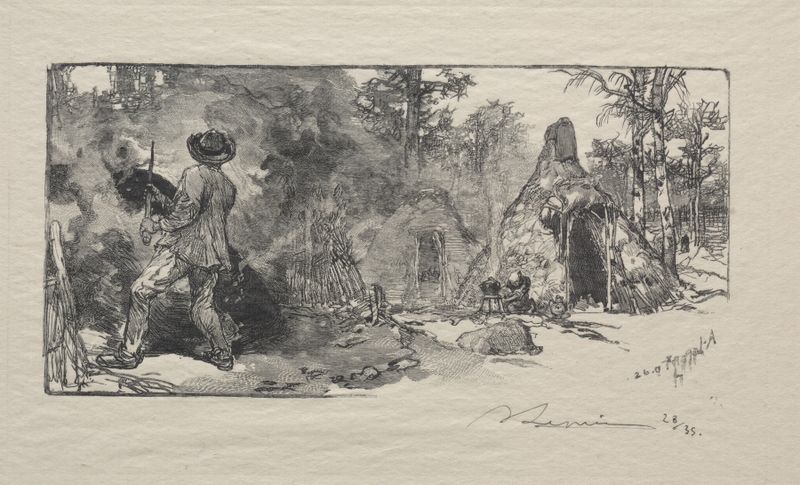
Les Charbonniere
Auguste Louis Lepère
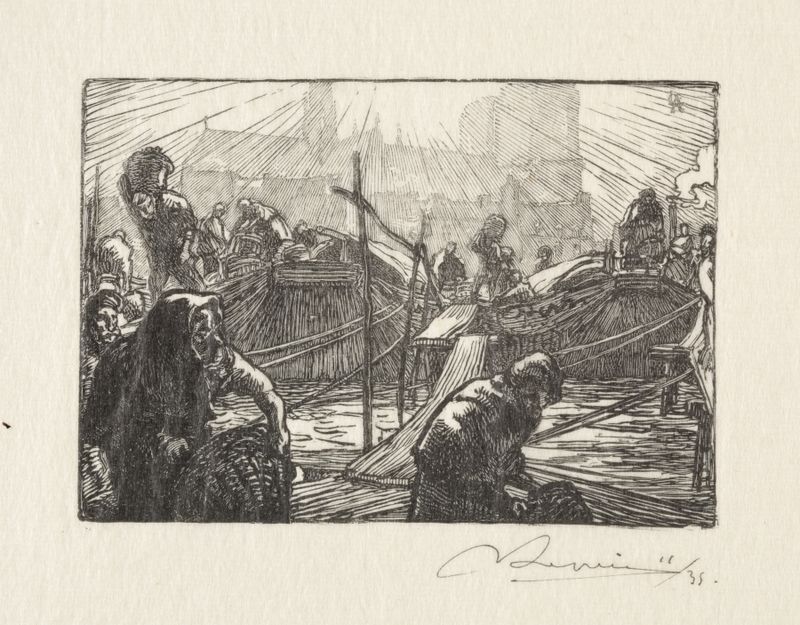
Notre Dame vue du Marché aux pommes
Auguste Louis Lepère

Le Palais des Arts Liberaux, Intèrieur
Auguste Louis Lepère





